Think-pair-share, and the phase that breaks
The think and the pair run in parallel. The share is a queue, and unless you pick the names it hears volunteers.
· Updated
Think-pair-share is three instructions and about five minutes. The evidence sits under the mechanism it uses rather than under the name. Freeman and colleagues pooled 225 studies of undergraduate science, technology, engineering and maths courses, comparing active learning against traditional lecturing. Across 158 of those studies, scores on examinations and concept inventories rose by 0.47 standard deviations under active learning. Across 67 of them, failure rates ran 21.8% under active learning against 33.8% under traditional lecturing.
The think and the pair happen everywhere in the room at once, so a bigger room barely costs them anything. The share does not, and that is where the structure quietly fails. A share is a queue, and unless the instructor picks the names, it fills with whoever puts a hand up. Eddy, Brownell and Wenderoth counted who spoke in 23 introductory biology classes at a research university, and the room heard a different population from the one sitting in it.
That is the phase worth fixing. It is also the phase a screen changes most, because the other two happen inside a head and inside a pair.
Start from one of these
Each one opens in your dashboard, ready to run. You can change every word of it.
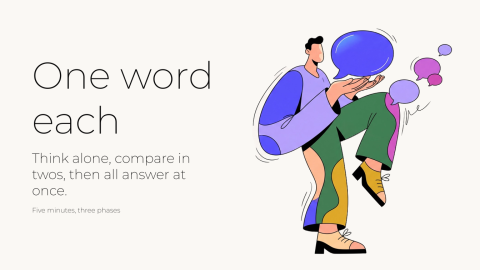
Think, pair, share in one word
The whole structure in about five minutes, with the share collected from everyone at the same moment instead of one voice at a time. Everyone types one word, and a word two pairs sent is drawn larger than a word one pair sent.
4 slides · 1 activity
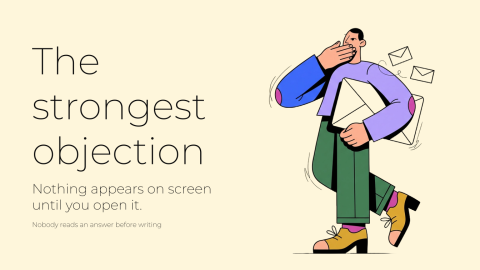
The strongest objection
A think-pair-share whose share stays sealed until you open it. Everyone writes the strongest objection to what you just said, submits it unseen, and you turn the answers over one at a time — so no answer was written against a screen that already held nine others.
4 slides · 1 activity
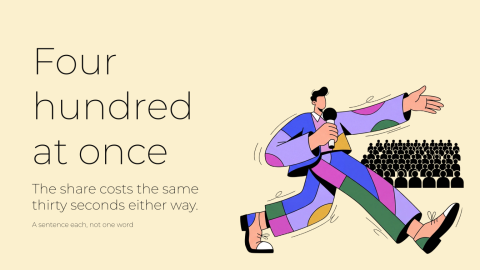
Think-pair-share in a lecture hall
The version for a room of four hundred. The think and the pair cost about what they cost in a room of thirty; the share is the phase that does not scale, so everyone answers in a sentence at the same moment and the answers are read as an aggregate.
4 slides · 1 activity
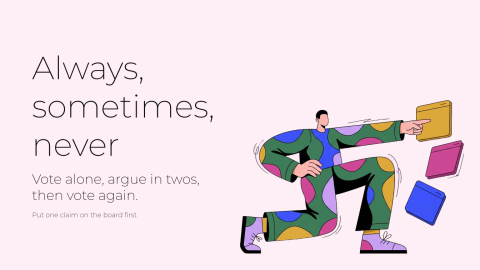
Always, sometimes, never
Put one claim on the board and force a three-way vote, pair on it, then take the identical vote again. It is the design the peer-discussion research actually ran, and the gap between the two counts is the only evidence that the pair did anything.
5 slides · 2 activities
What think-pair-share actually is, phase by phase
The structure comes from Frank Lyman, whose chapter on including every student in classroom discussion was published in the early 1980s at College Park by the University of Maryland Press. Lyman set it out again with Jay McTighe in Educational Leadership in April 1988. There it sits among six thinking tools meant to bring instructional theory into a classroom in a form teachers will use. The structure predates every piece of software that now claims to deliver it.
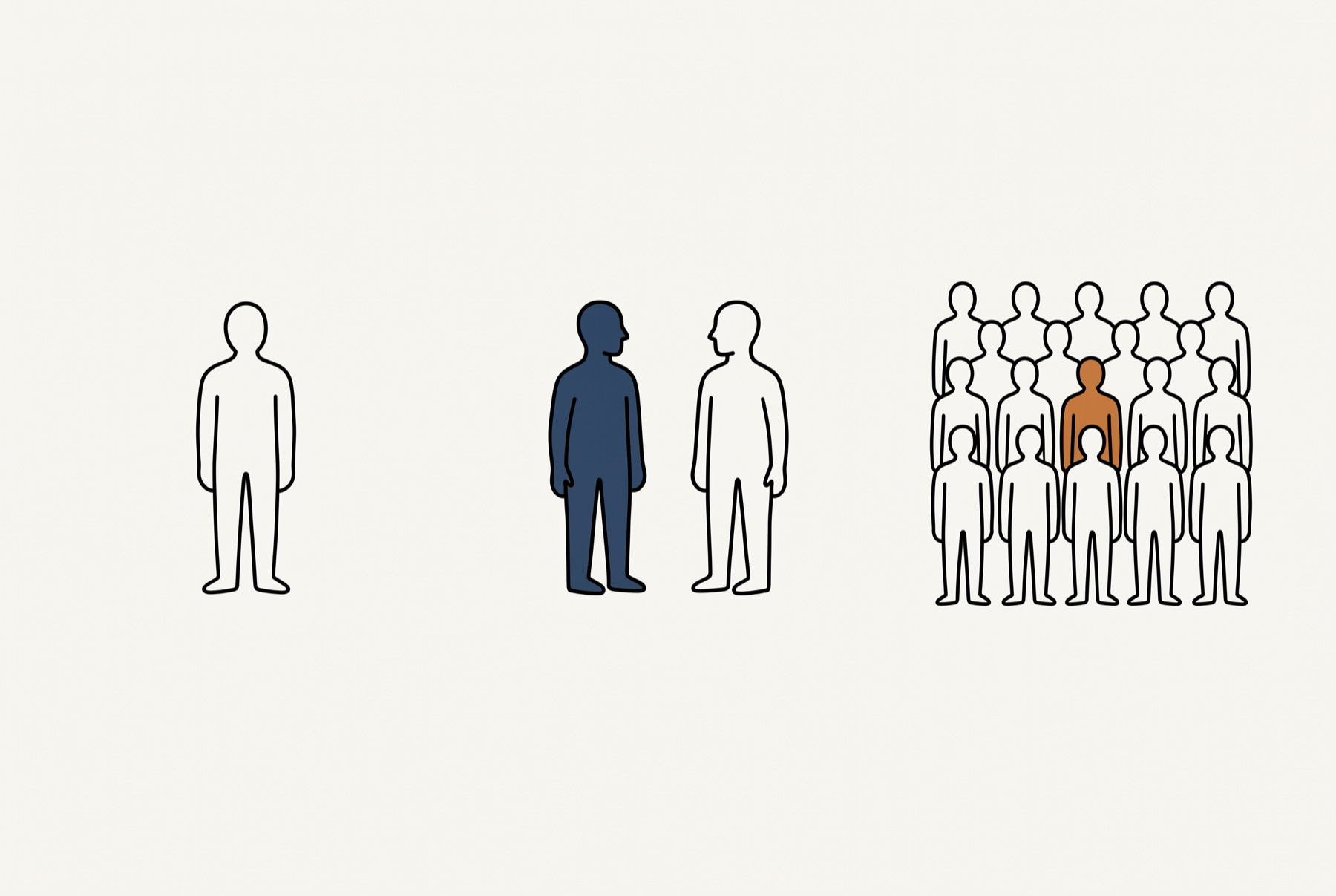
Think. One question, then silence, then something written. Kent State's teaching centre says to "think to themselves for about a minute and write down their thoughts". Tanner describes the same mechanics, "giving all students a minute or so to think (or usually write)". Carleton's science education resource asks for "open-ended questions", which it says "are more likely to generate more discussion and higher order thinking". The point of the phase is that everyone forms a position before anyone hears someone else's.
Pair. Twos, one to three minutes, comparing answers rather than agreeing on one. Make one group a three when the numbers leave somebody out. Talking through a wrong answer is itself the learning, which is what Smith and colleagues isolated when they tested students on a fresh question after peer discussion.
Share. The room hears what the pairs found. This is the only phase that runs one voice at a time, and everything below comes from that.
Why the think has to be timed, and why one second is not enough
The think phase is a wait time the whole room takes at once. Left to itself, a classroom does not wait at all.
Mary Budd Rowe spent five years on tapes of elementary science lessons and micro-teaching sessions. Analysis of over 300 tape recordings showed mean wait time "to be on the order of one second". After that second, teachers repeated the question, rephrased it, or called on somebody else. When a student did answer, the teacher responded in an average of 0.9 seconds, which Rowe described as intervening "between bursts to prevent completion of a thought".
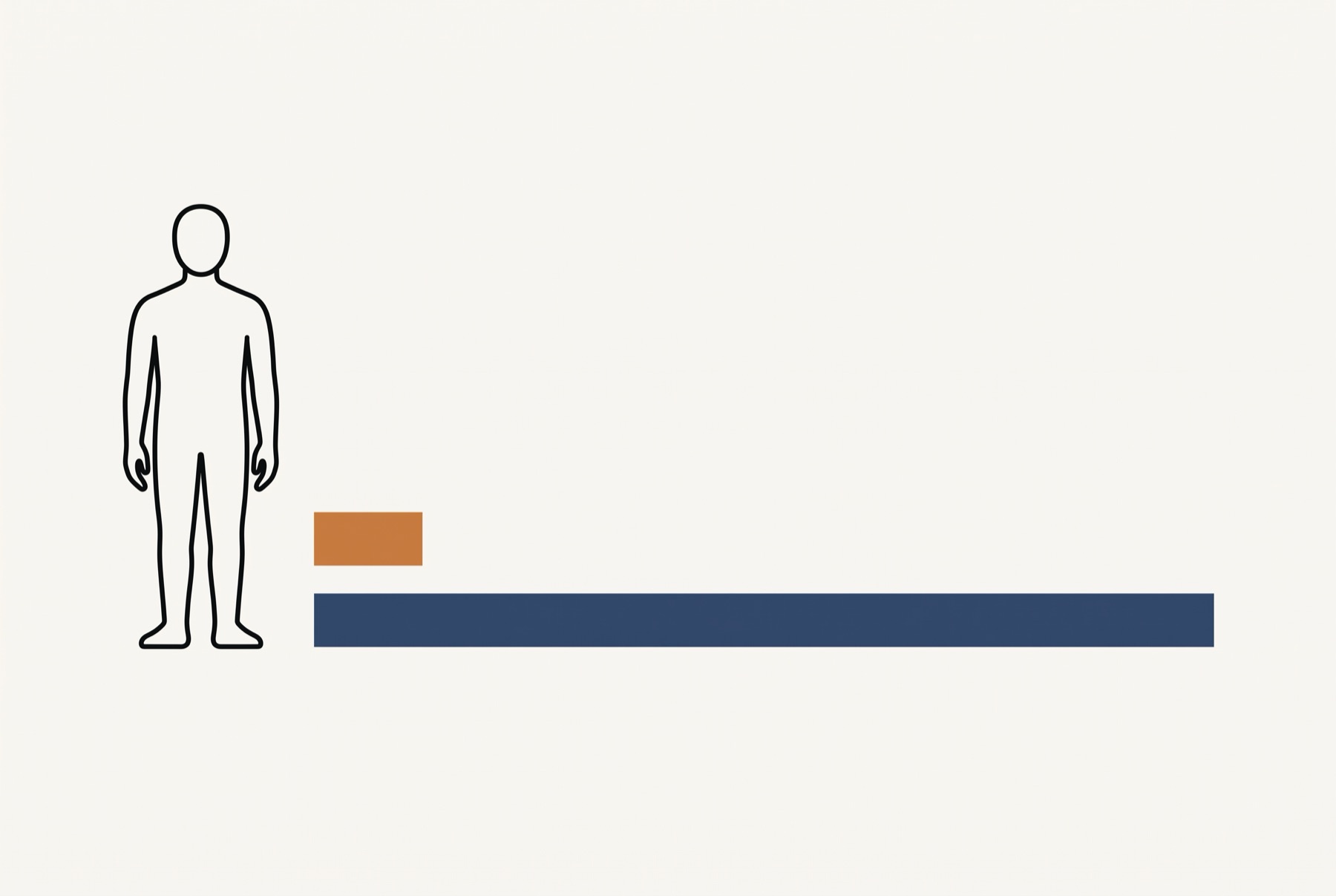
Train teachers up to three to five seconds and the room changes. Rowe's analysis of more than 900 tapes recorded nine changes in students. Responses get longer. Unsolicited but appropriate answers increase, failures to respond decrease, and speculation increases. Students compare data with each other and start citing evidence for their inferences. Student questions increase. And answers rise from the students their own teachers rated as slow.
One more finding from that work should make anyone uncomfortable. Rowe asked teachers to name their five best and five worst students, then measured the wait each group got. The top five got nearly two seconds. The bottom five got 0.9 seconds. Wait time was being rationed by expectation, which is exactly backwards.
Kimberly Tanner's summary is the one to hold on to. With an extension of wait time to about three to five seconds, "Rowe and colleagues showed dramatic effects: substantially more students willing to volunteer answers".
So put a timer on the think and let it run past the point where it feels awkward. Then make it written. One of the biggest challenges to the structure, ASCD's guide to the technique says, is making sure students do not "skimp on think" by rushing to talk. Its fix is ample think time before the pair and share steps. A written answer is a commitment. A thought is not.
Does think-pair-share work?
Yes, with a caveat that matters more than the yes.
The strong evidence is for the mechanism, not for the brand name. Richard Hake surveyed 62 introductory physics courses with 6542 students and found average normalised gains of 0.23 in fourteen traditional courses against 0.48 in 48 courses using interactive engagement. Crouch and Mazur ran ten years of peer instruction at Harvard. The same measure moved from 0.25 under traditional teaching to 0.49 in the first year, and reached 0.74 by 1997.
The result that settles the argument about the pair phase is Smith and colleagues' in Science. Students answered a concept question alone, discussed it with neighbours, revoted, then answered a second question testing the same idea alone. Of the students who got the first question wrong and the revote right, 77% then answered the fresh question correctly. Of those who got both the first question and the revote wrong, 44% still answered the fresh one correctly, better than chance on questions averaging four options.
The authors state the conclusion plainly: peer discussion "enhances understanding, even when none of the students in a discussion group originally knows the correct answer". The pair is not a delivery mechanism for the clever student's answer. Two people who are both wrong can reason their way somewhere better.
Even the simplest possible version pays. Michael Prince's review reports Ruhl's study of 72 students, where a 45-minute lecture was interrupted three times with two-minute pauses for students to clarify their notes with a partner. Free recall averaged 108 correct facts against 80 in straight lecture, and delayed test scores were 89.4 against 80.9 in one class.
Now the caveat, and it is Prince's own. His abstract reports "broad but uneven support for the core elements of active, collaborative, cooperative and problem-based learning". Direct studies of think-pair-share as a named routine are thin. The most relevant recent one is Guenther and Abbott's in PRiMER, which mapped a medical education seminar with and without it. They compared two six-minute segments inside one group of seven or eight first-year medical students. Without it they counted only two student-to-student interactions, against over 30 in the share that followed one. That is a striking ratio drawn from a very small base. The authors say so themselves and call for a larger sample.
What the evidence supports is that individual commitment followed by peer discussion beats lecturing. Think-pair-share is a cheap, well-shaped way to buy that.
Why the share falls apart
The share is sequential, and everything wrong with it follows from that.
Count the cost first. Twelve pairs at forty seconds each is eight minutes, which is longer than the think and the pair put together. So nobody actually shares twelve times. The instructor takes three or four contributions and moves on, which means the share is a sample, and the sampling is not random.
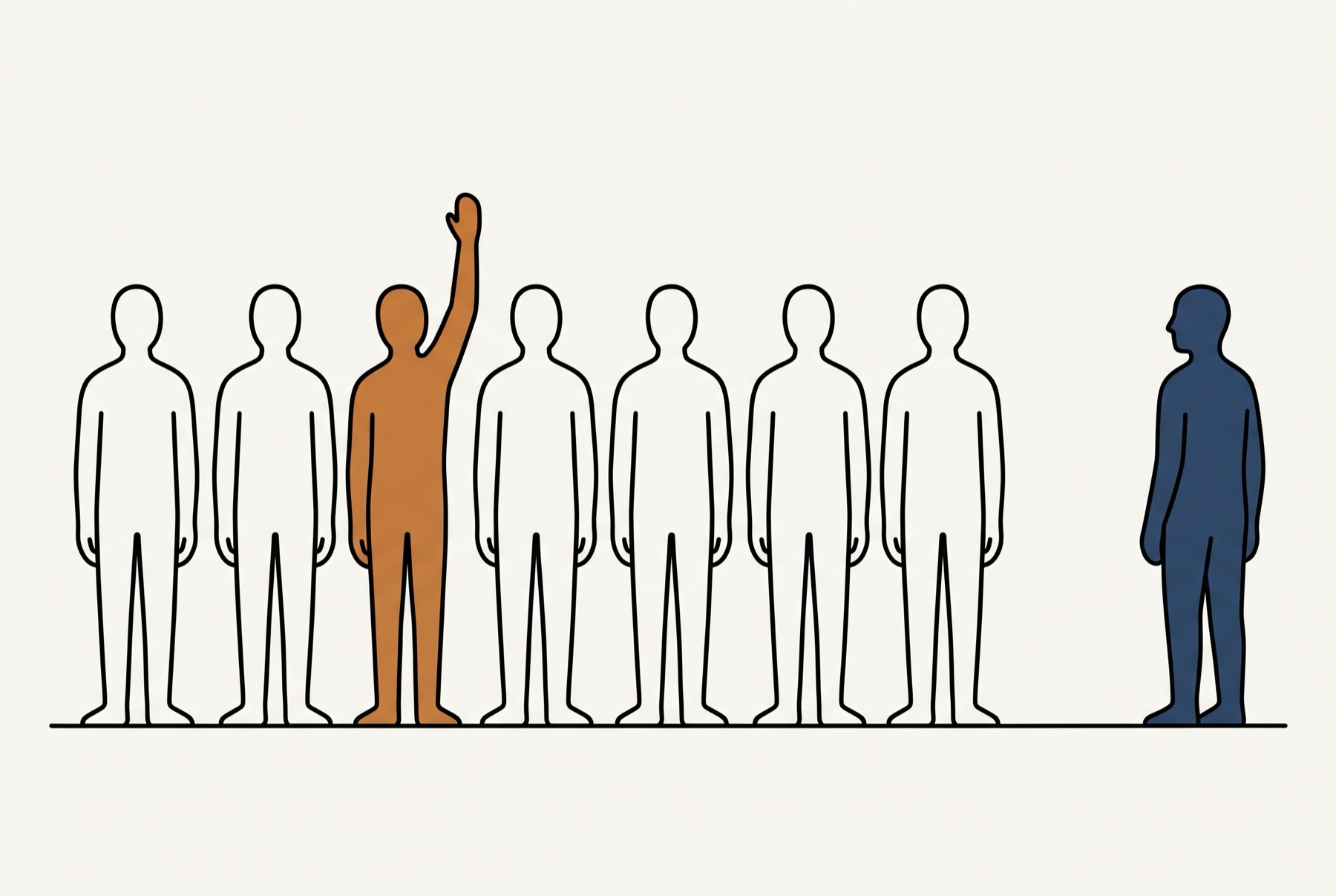
Eddy, Brownell and Wenderoth measured what that sample looks like. Across 13 classrooms where instructors solicited volunteers, women accounted for 36.7% of responses while making up 59.2% of enrolment, and in nine of the 13 the gap was statistically significant. In no classroom were women heard more than men when the instructor asked for volunteers.
The same study found the fix, and the fix has a price. In the four classrooms where instructors used random call, the gender difference vanished. 60.0% of the students called on were women, in classes that were 61.0% women. Random call makes the share representative.
It also makes it frightening. Cooper, Downing and Brownell interviewed 52 students in large active-learning science courses about three practices. Clicker questions and group work could raise or lower anxiety depending on how they were run. Cold call and random call "only increased their anxiety". The researchers name the mechanism as fear of negative evaluation, "the sense of dread associated with being unfavorably evaluated while participating in a social situation".
Eddy and colleagues say the instructors in their study took some of the edge off, by having students discuss their answers in small groups before anyone was called on. The pair is doing that job here.
That is the bind at the centre of the share. Volunteers give you a skewed room. Random call gives you a representative room and a frightened one. Tanner's middle path is to ask for "multiple hands and multiple voices" rather than one, which still leaves the room listening to three or four people out of thirty.
The structural problem is that a share is a sequence of solo performances. Change that and both halves of the bind change with it.
Collect every share at once instead of one at a time
Collecting every answer at the same moment removes the queue. Everyone submits, nobody is picked, and nobody has to put a name to an answer.
A live word cloud is the plainest version of that. Everyone types one word on their phone, and the words land on your slide as they arrive. A word two people sent is drawn larger than a word one person sent.
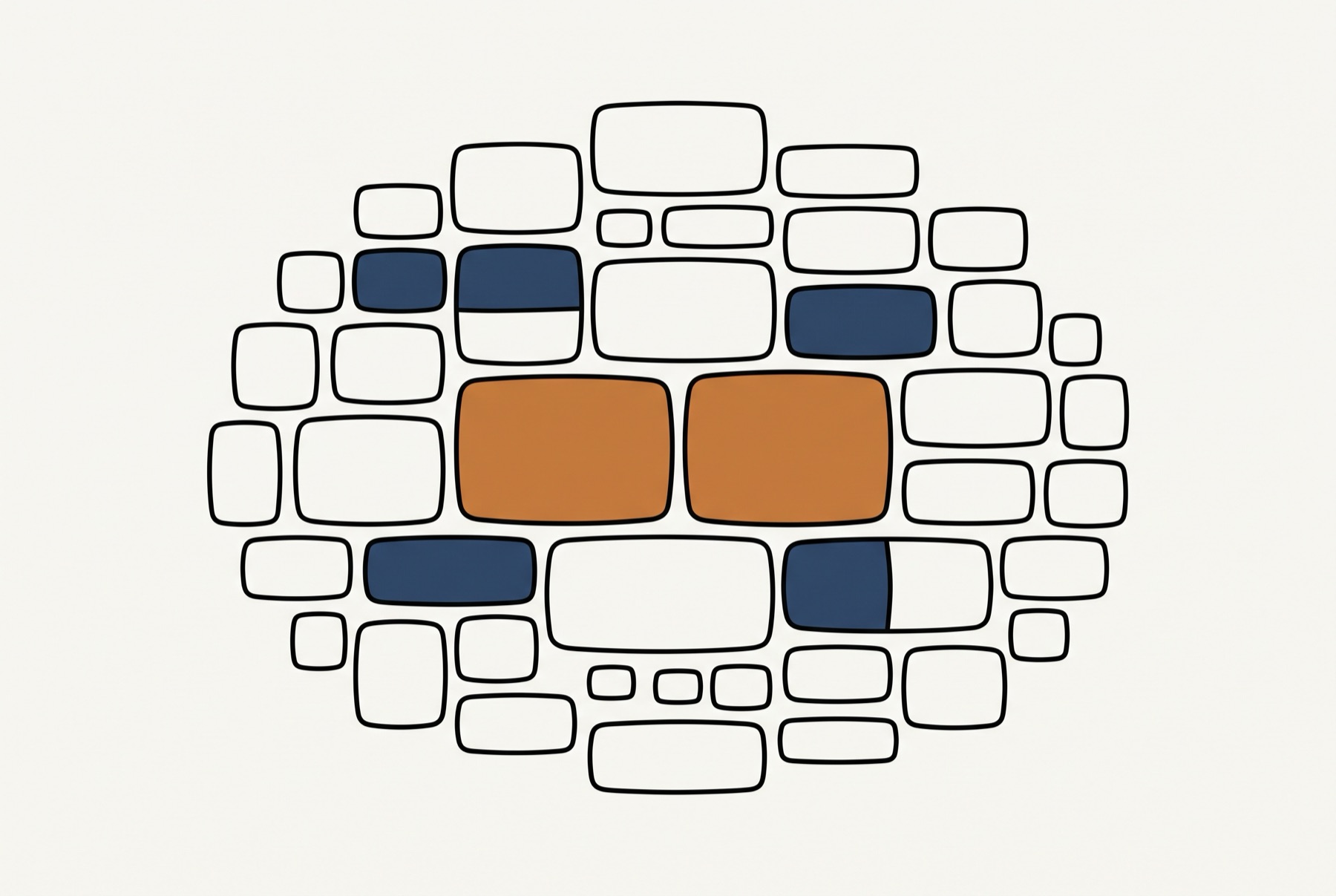
What that does to the share is specific. The queue becomes a picture, and the picture carries information the queue never did: how many pairs landed on the same idea. Three pairs saying "friction" is invisible when you take three contributions in turn and one of them says it. Sized by frequency, it is the first thing anyone in the room sees.
It also removes both of the things doing the damage. Nobody waits, so the eight or nine pairs a spoken share would have skipped are still in the activity. Nobody is named, so the fear of negative evaluation Cooper and colleagues identified has nothing to attach to. That is reasoning about the mechanism, not a measured result. The closest thing Cooper studied to an anonymous phone submission was the clicker question. Students reported that clicker questions and group work "had the potential to both increase and decrease their anxiety", with the effect depending on how the activity was run. Anonymity removes the thing Cooper's students named. It does not guarantee a calm room.
One caveat rides along with it. A cloud fills in the order the answers arrive. The tenth person types into a screen that already holds nine words, and a screen with words on it is a suggestion rather than a blank page. Think-pair-share is where that costs least, because the think phase already made everyone commit in writing and the pair already tested it. What you are reading off the picture here is convergence, which is what a cloud is for. If the answers have to stay independent of each other, run a round where nothing appears until you say so, like a Reveal.
Two more limits. A word cloud wants one word, and plenty of think-pair-share prompts deserve a sentence. For those, use an open-text live poll instead, where the room answers in its own words and each person chooses whether their name goes with their answer. Tick the box marked Show AI generated insights while you build it, and Decka summarises the responses and sorts them into topics once three have landed. That part is a paid feature, and which plans carry it is on the pricing page. A cloud built from long answers is unreadable, though the word cloud generator counts the words inside answers you paste into it rather than drawing each one whole.
The second limit is about seeding. A presenter can paste text while authoring so the cloud opens already populated, which is useful when you want last week's answers on screen before this week's arrive. Seeded words are stored as counts on the activity and never as responses, so they are never counted as participants. A seeded cloud in an empty room reports zero people, because zero people were there. Worth knowing before you show a full-looking cloud to a head of department.
On the big screen
Word cloud
What's one word that describes your ideal meeting?
Waiting for responses...
On their phone
What's one word that describes your ideal meeting?
Your name won't appear with your word on the slide.
Type one word on your phone, then submit.
Think-pair-share prompts that survive a pair
A prompt survives a pair when two people can disagree about it for ninety seconds. That rules out anything with a single recallable answer, and it rules out anything so open that there is nothing to be wrong about. Crouch and Mazur put a number on it. Aim for questions where 35% to 70% of the room gets it right alone, because past that "there is little benefit from discussion".
Frames that work in any subject
- Here are two answers people commonly give. Which is wrong, and what would have to be true for it to be right?
- What is the one word you would use to name what just happened?
- What is the strongest objection to what I just said?
- Predict what happens next, and write it down before we find out.
- Explain this to someone two years younger, in two sentences.
- What is the first step, and why that one first?
- Where does this stop working?
- Which of these four is the odd one out, and on what rule?
- What would you need to know before you could decide?
- Rank these three and defend the one you put last.
Maths prompts
- Here is a worked solution with one error in it. Which line breaks, and why?
- Estimate the answer before you calculate. What order of magnitude?
- Give me a number that satisfies this condition, and one that nearly does.
- Two students got different answers. What did each of them assume?
- Sketch the graph before you solve. What shape do you expect, and why?
- Write a word problem that this equation answers.
- What happens to the answer if I double this input?
- Always true, sometimes true, or never true?
Science prompts
- Name the one variable you would change first, and say what you expect.
- What would count as evidence against this explanation?
- Which of these is the control, and what is it controlling for?
- Same experiment, different planet. What breaks?
- Where does the energy go?
- What is the smallest change to this setup that would ruin the result?
- Give an everyday example where this is obvious, and one where it is hidden.
- If the result had come out the other way, what would we conclude?
English, reading and literature prompts
- Which sentence in this paragraph is doing the most work?
- What does this character want, and what do they say they want?
- Change one word to change the tone. Which word?
- Whose point of view is missing here?
- What is the writer assuming you already believe?
- Fact, opinion, or a fact chosen to make a point?
- Read the last line first. What does it change?
- Give this chapter a title that gives nothing away.
History and social studies prompts
- Who benefits from this account, and who is absent from it?
- What would somebody alive at the time have found unremarkable here?
- Which of these causes could you remove and still get the same outcome?
- What is the earliest point at which this became likely?
- Two sources disagree about the same day. How would you choose between them?
- What does this source tell you that its author did not mean to tell you?
- Name one thing that had to exist before this was possible.
- Argue the other side. What is your best line?
University lecture and seminar prompts
- Which assumption in this model would you attack first?
- What is the most plausible alternative explanation for this result?
- What would this paper have had to show for you to change your mind?
- Where would this method fail on your own data?
- Give the one-sentence version a first-year would understand.
- These two terms get used as synonyms. What is the difference?
- Which figure in this paper is doing the persuading?
- What is the next experiment?
Meeting, workshop and training prompts
- What is the one risk on this plan that nobody has written down?
- If this project fails in six months, what killed it?
- What would you cut first if the deadline moved two weeks earlier?
- Who outside this room is most affected by the decision?
- What is the smallest version of this we could ship on Friday?
- Which of our current rules would you delete?
- What do new joiners get wrong in their first week?
- What do we do that a customer would find strange?
- Which single change from last sprint would you keep if you could keep only one?
- If we had to say no to one of these three, which one goes?
First day, onboarding and cold rooms
- What is one thing your team does that other teams misunderstand?
- Name one thing you want to be told today, and one that can wait a month.
- What will the hardest part of this course be, and what makes you say so?
- Which of these two definitions matches the one you have been using?
- One word for what this group is here to do. Compare your two words and keep one.
- What do you already know about this topic that you would bet money on? Take your partner's claim and try to break it.
Prompts to skip
- Anything with one recallable right answer. The pair becomes a spelling check.
- Anything everyone answers identically. There is nothing to compare.
- Anything personal enough that the pair turns into a confession.
- Anything so open that a pair has no way to disagree.
How to run think-pair-share, minute by minute
The whole thing fits in about five minutes, and most of the decisions inside it get made by accident. Make them on purpose.
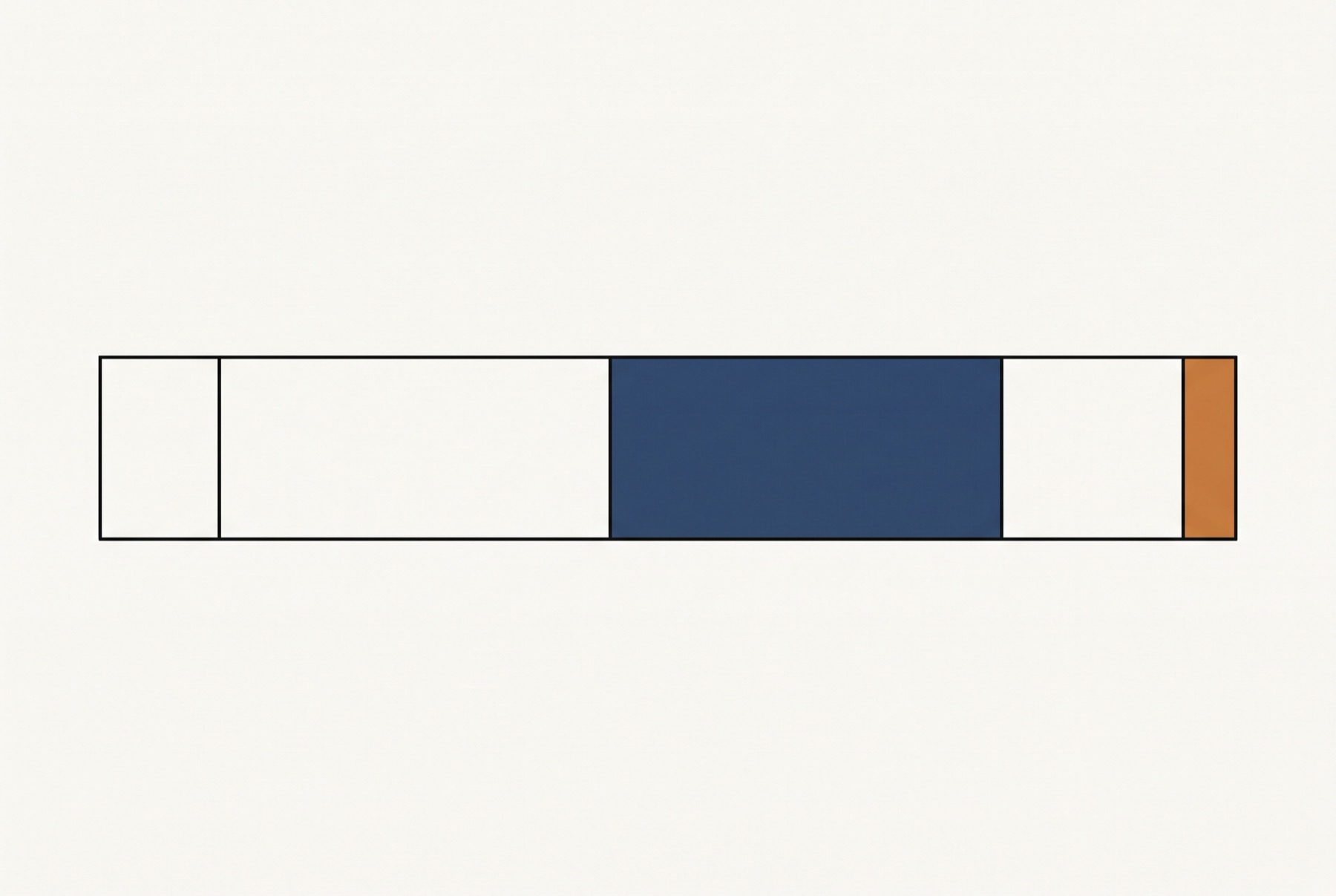
Say the three steps once, then ask the question. In a room new to this, somebody answers out loud the moment you stop talking, and the think is gone before it starts. Leave the question on the screen while they work, or the pair starts by rebuilding it.
Think: sixty to ninety seconds, silent, written. Kent State's version is about a minute of thinking to yourself with the thoughts written down, and Tanner's is "a minute or so". Writing is not optional. ASCD has students "write down their initial responses" during thinking time, and that is what makes the phase visible from the front of the room.
Pair: ninety seconds to three minutes, in twos. Crouch and Mazur's peer instruction discussion runs "two to four minutes", with the instructor moving around the room listening. Twos are the default, because in a three one person can sit out without it showing.
Give the pair a job that is not agreeing. ASCD tags the two students A and B, and tells them each is likely to be asked to report what their partner said. It turns listening from polite into load-bearing.
Share: everyone at once, thirty seconds. Everybody answers on their phone at the same moment. Say whether you want a word each or one from the pair, because a pair that agreed and both typed it counts twice. Then read the picture out loud: the word the room converged on, and one that only a single pair sent.
Then close the loop. Smith's students improved on the fresh question without being told the answer, but they had been asked a second question on the same concept. Say what the right answer is and why, or ask that second question. A share that ends in ambiguity teaches ambiguity.
In a large lecture. The think costs the same in a hall of four hundred as in a room of thirty, and so does the pair itself, because they run in parallel. What gets longer is ending the pair. Four hundred people do not stop talking on a hand signal, so say the ten-second warning into the microphone. The sequential share is the part that fails at scale, and simultaneous submission is what stops it getting worse as the room grows. It costs the same thirty seconds whether ten people answer at once or four hundred. What a four-hundred-seat hall changes is which plan you need, because the number of people who can join one activity is set by your plan. The caps are on the pricing page.
Online and hybrid. A pair needs two people talking at the same time, and a call has one channel for that. Breakout rooms give you the second channel and cost the trip out and the trip back, so send people out for three minutes or not at all. The cheaper version is a written pair, with each person sending their answer to one named partner in chat. The share has no such problem, because everyone submits at once from wherever they are, which gives a remote attendee the same activity as somebody in the third row.
Frequency. Two or three an hour is a working default, which is what Prince's review says of the pause procedure Ruhl tested. That is a cheaper interruption than this one, so treat two or three as a ceiling. Put yours where the material has a real question in it, not on a clock.
Start from one of these
Each one opens in your dashboard, ready to run. You can change every word of it.
Think, pair, share in one word
The whole structure in about five minutes, with the share collected from everyone at the same moment instead of one voice at a time. Everyone types one word, and a word two pairs sent is drawn larger than a word one pair sent.
4 slides · 1 activity
The strongest objection
A think-pair-share whose share stays sealed until you open it. Everyone writes the strongest objection to what you just said, submits it unseen, and you turn the answers over one at a time — so no answer was written against a screen that already held nine others.
4 slides · 1 activity
Think-pair-share in a lecture hall
The version for a room of four hundred. The think and the pair cost about what they cost in a room of thirty; the share is the phase that does not scale, so everyone answers in a sentence at the same moment and the answers are read as an aggregate.
4 slides · 1 activity
Always, sometimes, never
Put one claim on the board and force a three-way vote, pair on it, then take the identical vote again. It is the design the peer-discussion research actually ran, and the gap between the two counts is the only evidence that the pair did anything.
5 slides · 2 activities
What to do when the share produces silence
Silence at the share is the ordinary failure, and most of what causes it has a repair you can make from the front of the room.
Wait longer than feels reasonable. Rowe's teachers moved on after one second. Count to five in your head before you rescue the room. ASCD adds a second pause on the other side, "at least several seconds" after a first answer, so the rest of the room can reflect on it before responding.
Ask for the pair's answer, not the person's. What did your partner say is easier to answer than what do you think, because being wrong on someone else's behalf costs less.
Switch the question from open to forced. If nobody will start, put two answers on screen and take a vote. A room that will not talk will usually still vote. Then ask what the losing answer has going for it.
Make one specific wrong guess yourself. Say it out loud, let somebody correct you, and carry on. That is one wrong answer the room has watched cost nothing.
Check the question, not the room. If almost everyone got it right alone, there was nothing to discuss, and Crouch and Mazur say exactly that about questions above the 70% mark. If almost nobody did, the pair had nothing to work with either. Silence is often a report on the prompt.
Stop calling on individuals. If the same three people answer every time, you are sampling volunteers, which is the pattern Eddy and colleagues measured. Their argument for random call is that it stops a few students monopolising an instructor's time. Collecting from everyone at once does that too, without putting anybody on the spot.
Do not fill it with your own summary. A share the instructor completes is a lecture with extra steps, and the room learns to wait it out.
Where think-pair-share is not enough
Five minutes inside a lecture is a small intervention, and the largest results in this literature come from changing the course rather than the hour. Eddy and Hogan's moderate-structure course added graded preparatory work and in-class engagement, and the failure rate fell from 26.6% to 15.6%. Course performance rose for every student population, and the black-white achievement gap halved. Theobald and colleagues pooled 15 studies of examination scores and 26 of failure rates. Active learning cut the gap between underrepresented and overrepresented students in examination scores by 33%, and in passing rates by 45%. Only high-intensity active learning did it.
So run think-pair-share, and do not expect five minutes of it to close a gap that size. What moved those numbers was preparation that carried marks, something for the room to do in every class, and graded review. Finding out what a room understood while you can still act on it has thirty-two forms, and this is one of them.
When not to use think-pair-share
Sometimes the answer is to skip it.
When the question has one recallable answer. Ask it, take the answer, move on. Discussion adds nothing to a definition, and Crouch and Mazur put the floor at 35% correct. Below that, they say, either the question is ambiguous or too few students understand the concept for the pair to get anywhere without further guidance from you.
When the room is small enough that nobody can hide. With three or four pairs, a sequential share costs almost nothing and a conversation beats a structure. Just talk. The exception is a room where one person outranks the rest, because the silent minute is what stops everyone else agreeing with them.
When the last two have produced the same shape of answer. The structure works partly because it interrupts. A room that can predict the question stops thinking and starts producing the format, and the think becomes an admin pause.
When you are judging the session by how it felt. Deslauriers and colleagues randomised Harvard physics students between active and passive versions of identical content. The active group scored almost half a standard deviation higher on the test and reported more than half a standard deviation lower feeling of learning. If your evidence is the room's mood, you will conclude the wrong thing.
When you hope the format alone will do it. Jensen, Kummer and Godoy compared a flipped and a non-flipped classroom that both used active learning. They found "both low-level and deep conceptual learning were equivalent between the conditions". Both classrooms already ran on active learning, so the flip had nothing left to contribute. What you ask still decides what they learn.
FAQ
Common questions
What is think-pair-share?
Think-pair-share is a three-step discussion structure. You pose one question and students think alone for about a minute, writing an answer down. They then compare with a partner for one to three minutes, and the room hears what the pairs found. Frank Lyman set it out in the early 1980s, in a chapter published by the University of Maryland Press.
Why does think-pair-share work?
Because individual commitment before discussion is what makes the discussion useful. Smith and colleagues in Science found that students who got a question wrong alone, then right after discussing it, usually got a fresh question on the same idea right too. Students who were wrong both times still beat chance on the fresh question. Peer discussion improved understanding even in groups where nobody knew the answer at the start.
What are the disadvantages of think-pair-share?
The share phase is the weak point. It is sequential, so only three or four contributions fit, and by default those are volunteers. Eddy, Brownell and Wenderoth found women were heard far less than their share of enrolment when instructors asked for volunteers. Random call fixes the imbalance, but Cooper and colleagues found that cold call and random call only raised student anxiety.
How long should think-pair-share take?
About five minutes. Roughly a minute to think and write, one to three minutes to pair, and under a minute to share if everyone submits at once. Kent State's guidance is about a minute of silent thinking with the answer written down. Much past that and you are running a seminar rather than an interruption.
What are some think-pair-share examples?
Good prompts have two defensible answers. Ask which line of a worked solution breaks and why. Ask what would count as evidence against an explanation. Ask which of two common answers is wrong and what would make it right. In a meeting, ask what would kill this project in six months.
Does think-pair-share work in a large lecture?
The think and the pair run in parallel, so a hall of four hundred costs them about what a room of thirty does. Getting four hundred people to stop talking is the part that stretches. The share does not run in parallel, because it is a queue and the queue gets no faster as the room grows. In a large hall, collect every answer at once on phones and read the aggregate, rather than taking four volunteers.
How do you run think-pair-share online?
A pair needs two people talking at once, and a call has one channel for that. Use breakout rooms and leave people there for three minutes, or run the pair in writing, with each person sending their answer to one named partner. Collect the share from everyone at once, so a remote attendee gets the same activity rather than a worse version of it.
Run this with your own team
Start free, no credit card. Your audience joins from their phones with a code — nothing to install.