Get to know you questions
210 questions, sorted by the room, plus the format fix that saves them
Aron and colleagues sat strangers down in pairs for 45 minutes with a set of escalating personal questions, and gave matched pairs small talk instead. The question pairs came out at 4.06 against 3.25 on a closeness composite, a gap the paper puts at .88 standard deviations. Asked in pairs, in order, the questions work.
The way they are usually delivered is the problem. Going round a table, one person at a time, with a name attached to every answer, is the part people brace for. YouGov reported in January 2022 that 60% of Britons who had been put through a workplace team building exercise called it embarrassing or cringe-worthy. That number covers team building of every kind, and not the round on its own.
This page has 210 questions on it, grouped by the room you are standing in. It also has the ones to cut, and the change to the format that makes the rest of them worth asking.
Start from one of these
Each one opens in your dashboard, ready to run. You can change every word of it.
A round with no queue
The article's format fix, built: one question asked of everybody at the same moment, answers collected face down, turned over one card at a time. Two rounds, shallow then a notch deeper, because escalation was the ingredient that mattered.
5 slides · 2 activities

One word, from the back
A room too big to go round: everybody answers one short question at once and the answers land on the screen together. No name is stored, and the biggest word is the room's rather than the loudest voice's.
4 slides · 1 activity
Stand the room up
For a big group whose real goal is that people meet somebody. The room pairs off, gets a question, then pairs off again with somebody new — ten of the article's own questions, shallow ones first.
4 slides · 1 activity
The room writes the round
Nobody can add a question to a round once it is running, so this one collects them first. The room submits the questions it would like this team to answer and upvotes them, and next week's round is whatever came back at the top.
4 slides · 1 activity
Why a round of questions goes flat, and what is actually breaking
We have argued against this format on our own site. The ice breakers page says a drawing game beats a round of questions, and it is right about the round. It is not a verdict on the questions.
Three things happen when you go round a table. Everybody waits their turn. The ones still waiting have a turn coming with their name on it, and rehearsing it competes with listening. And the first answer sets the level the rest of the round is measured against.
The waiting is the expensive part, and it has been measured directly in a neighbouring task. Diehl and Stroebe sat people in separate rooms with a light for each speaker, and told them to talk only when every light was off. People free to speak the moment they had an idea produced approximately twice as many as the ones made to wait their turn. Their conclusion was that production blocking accounted for most of the productivity loss of real brainstorming groups.
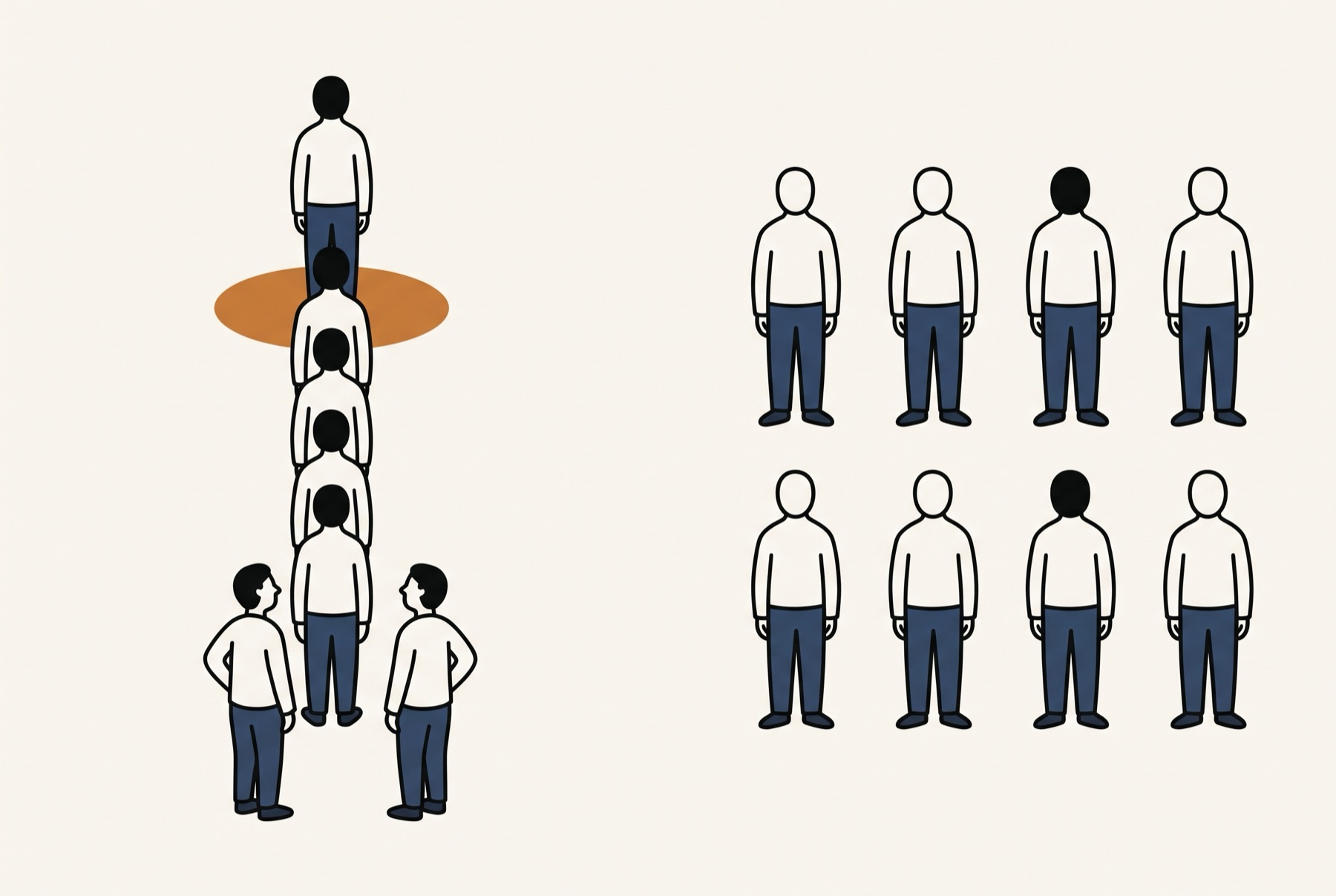
Ideas are not disclosures, so take that as a fact about queues rather than about closeness.
Being the person talking feels worse than it looks. Gilovich, Medvec and Savitsky sent people into a room in an embarrassing T-shirt and asked how many observers could say who was on it. The wearers' average estimate was exactly twice the observers' actual accuracy, a mean discrepancy of 23 points. The person on the spot is running a private worst case, and the room is taking in less of it than they think.
Then there is that first answer. It arrives into silence, and every answer after it arrives into a comparison. Somebody gives a one word answer and the round is now one word long. Somebody tells a four minute story and everyone else is now expected to have one.
Aron's team built four ingredients into their procedure: escalating reciprocal disclosure, matching people on attitudes, an expectation of mutual liking, and naming closeness as the goal. Tested one at a time, only the nature of the tasks made a significant overall difference. The task was reciprocal by design. Two people gave up something at the same rate, at the same time.
A round has the disclosure without the reciprocity. One person gives something up and everybody else watches, and nobody is doing it at the same moment as anybody else. Ask the same question of everybody at once, take the answers privately, and reveal them together, and the reciprocity comes back. That is the position this page takes, and it is the same one behind never have I ever and this or that.
What makes one question land and another die
Four tests, and a question has to pass all of them. They are the same rules behind the bank in our own icebreaker questions generator.
It has a concrete answer. "What are you passionate about?" is a job interview. "What did you spend too much money on and not regret?" is a story. Nobody has to invent a persona to answer the second one.
It can be answered badly. Somebody who draws a blank needs an exit that costs nothing. Every question below can be answered in one flat sentence and left there.
It hands the conversation back. The good ones are symmetric. Whatever you say, the obvious next move is "what about you", which is what keeps it going without either person performing. Where the asking runs one way, as in a one to one or a first lesson, the fix is a second set the other person asks back.
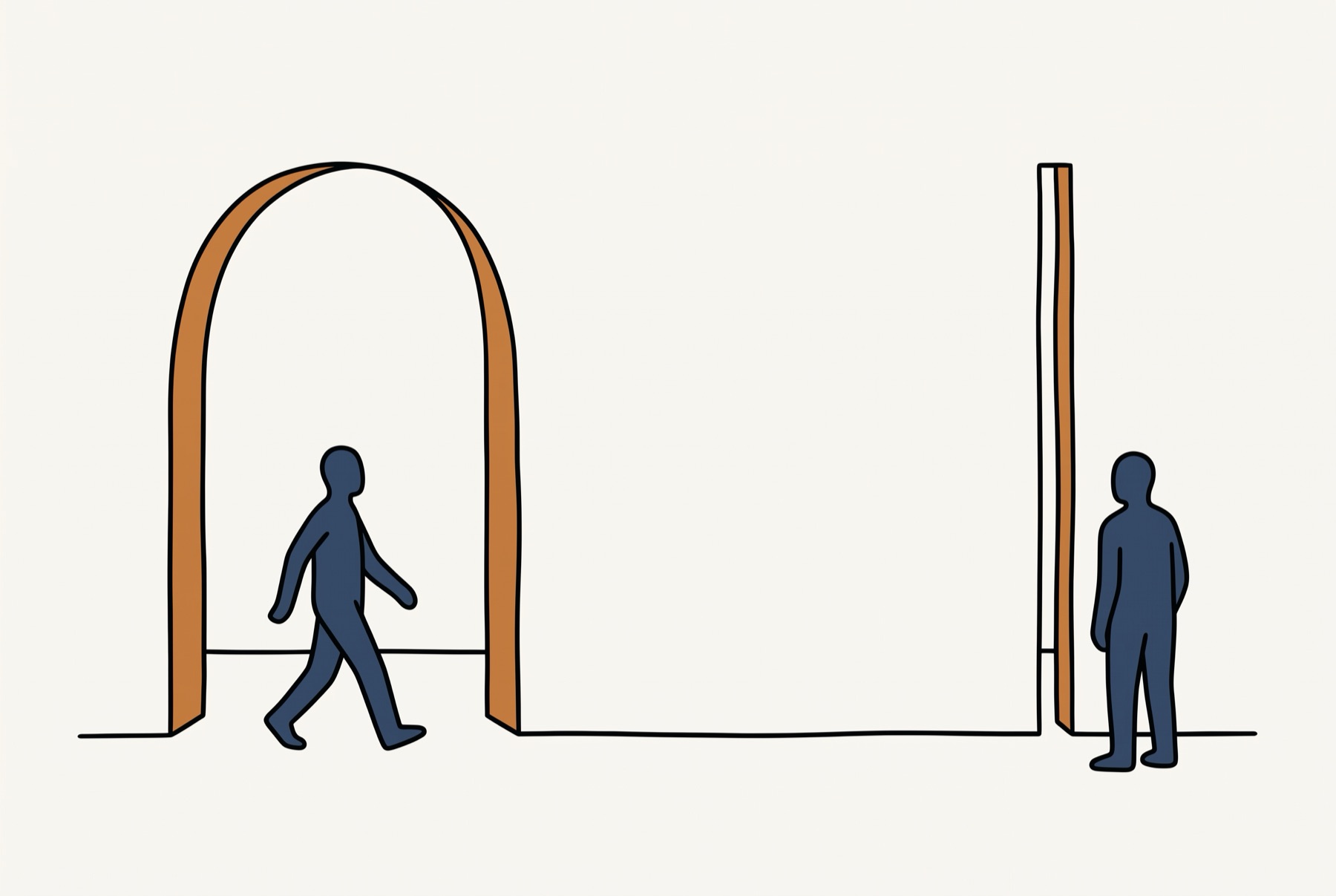
Nobody learns anything about you that you did not choose to share. That rules out pay, debt, health, family status, faith, politics and why anybody left their last job. What you spent money on is fine. What you earn is not. The exposure is the harm, and a question does not have to name the thing to expose it.
The payoff runs to the person asking, too, and it is larger than they expect. Huang, Yeomans, Brooks, Minson and Gino ran three studies of live conversations and one of speed dating. People instructed to ask nine questions rather than four were better liked by their partners, and follow-up questions carried most of the effect. In the same paper, participants did not anticipate that asking would help them at all.
So a question is worth more for the follow-up it invites than for the answer it collects. The set below is written that way.
Aim slightly deeper than feels safe. Mehl, Vazire, Holleran and Clark recorded four days of conversation from 79 undergraduates. Compared with the unhappiest participants, the happiest had roughly one third as much small talk, at 10.2% against 28.3%, and twice as many substantive conversations. The authors call their own finding causally ambiguous in as many words, so this is a reason to try a real question rather than proof that one will make anybody happier.
Get to know you questions for a team that already works together
Names are not the gap here. A team two years in has the names and the calendar. What it often does not have is what anybody did before this job, or what they are actually spending the week on.
So point the questions at three places the org chart cannot reach: the work as it really is, the person outside this job, and the opinions nobody says out loud. Avoid anything that sounds like a survey your team has already filled in.
Their actual week
- What did you spend the most time on last week, and was that the plan?
- What is the piece of work you are proudest of that nobody outside this team saw?
- What did you finish this month that took far longer than it should have?
- What is the one meeting you would delete from your own calendar?
- What part of your job would surprise somebody who has watched you do it for a year?
- What do you get asked for that you wish somebody else could answer?
- What have you quietly stopped doing because it never mattered?
- What has been on your list the longest?
- What did you learn the hard way this year?
- Who did you help last month who probably never noticed?
- What is the smallest change that made your week easier?
- What decision are you still not sure about?
- What would you spend a free week on, if it had to be work?
The person outside the job
- What did you want to be at ten, and how close did you get?
- What is the strangest job you have ever had?
- What are you unreasonably good at that never comes up here?
- What did you nearly study, or nearly become?
- What do you know far more about than your life requires?
- What is the longest you have stuck at anything?
- What is on your home screen that would surprise us?
- Where did you live before this, and what was it like?
- What is the best thing you have made with your hands?
- What language did you learn and then lose?
- What is the one meal you can cook without looking anything up?
- What did you spend your first proper pay on?
- What do you do on a Sunday that you would defend in court?
- What is the last thing you fixed instead of replacing?
Opinions worth saying out loud
- What do we do that would look strange to somebody joining tomorrow?
- What did we try that did not work and was still worth trying?
- What should we be celebrating that we have not?
- What have you changed your mind about since you joined?
- What is the best piece of feedback anyone has given you here?
- What would you protect if the week got cut in half?
- What question should this team be asking more often?
- Whose work here would you like to understand better?
- What do you wish the rest of us knew about your part of it?
- What would you fix first with a free week and nobody to ask?
- What is a rule we all follow that nobody ever wrote down?
- Who outside this team makes our work possible?
- What are we quietly good at?
Get to know you questions for a room that has just met
A cold room is harder to read than it feels, and the error runs one way.
Boothby, Cooney, Sandstrom and Clark ran five studies on people who had just talked to somebody new. Participants systematically underestimated how much their conversation partners liked them and enjoyed their company, an illusion the authors named the liking gap. Among first year students sharing a suite it lasted for months, and had closed by the end of the year.
The dread is overstated in the same direction. Kardas, Kumar and Epley ran a long series of experiments on conversations between strangers. Those conversations felt less awkward, and created more connectedness and happiness, than the participants had expected, and people were especially prone to overestimate the awkwardness of the deeper prompts.
That is a licence to go a notch past the weather, not to open on the deepest thing you have. Kardas paired people off, and a room is not a pair. Open with something anybody can answer in four words, then escalate, which is the ingredient Aron's procedure turned out to need.
First answers, no run-up
- What is the best thing that has happened to you this week?
- How did you end up in this room?
- What did you eat last, and was it any good?
- What is the last thing that made you laugh out loud?
- What are you reading, watching or listening to at the moment?
- What is the last thing you looked up because you genuinely did not know?
- What did you do with your last completely free day?
- What is a small thing that reliably improves your day?
- Where did you travel from today?
- What is the most useful thing you own that cost almost nothing?
- What is your order at the place you go to most?
- What is the first thing you do when you get home?
- What is the last new thing you tried?
- What would you be doing right now if you were not here?
A little more of a person
- What are you unreasonably good at?
- What did you want to be when you were ten?
- What have you been meaning to do for years?
- What did you try once and will never try again?
- What have you changed your mind about recently?
- What skill did you pick up entirely by accident?
- What do you do purely because you enjoy it?
- What rabbit hole have you gone down lately?
- What is the best advice you have completely ignored?
- What do other people find boring that you find restful?
- What are you learning right now, badly?
- What is the best thing you have ever been talked into?
- What do you always pack that nobody else does?
Where they came from
- Where did you grow up, and would you go back?
- What is the smallest place you have ever lived?
- What was your first job, and what did it teach you?
- What food from home is hard to explain to anybody else?
- What place from your childhood could you still walk around in your head?
- What did you get wrong about being an adult?
- What is the trip you talk about most?
- What piece of music puts you somewhere specific?
- What did you collect?
- Who was the first person who took you seriously?
- What is the furthest you have ever travelled in one go?
- What did you believe as a teenager that you find funny now?
- What is a place near you that you would take a visitor to?
Get to know you questions for a new starter's first week
Point the first week at the newcomer rather than at the company, because that version has been through a field experiment.
Cable, Gino and Staats rebuilt the first day at Wipro around new hires themselves. Writing up their own experiment, they report those employees were more than 32 percent less likely to quit in the first six months. The comparison is the company's own standard onboarding. The bar is low. Gallup finds only 12% of employees strongly agree their organisation does a great job of onboarding new people.
Ask a new starter these in a one to one, never in front of the team. A first week is the worst possible time to be performing.
Questions to ask the new person
- What do you want to be doing well by the end of your first month?
- What are you most worried about getting wrong?
- How do you like to be given feedback?
- What time of day is your good thinking time?
- What did your last team do well that we probably do not?
- What do you already know that we do not know you know?
- What would you like your first small win to be?
- How do you prefer to be interrupted?
- What is the fastest way to make you feel welcome?
- What do you need that nobody has given you yet?
- What has surprised you so far?
Questions the new person should ask back
- What does everybody here know that nobody writes down?
- Who should I meet in my first fortnight, and why them?
- What went badly last year that I should know about?
- What does a good week look like on this team?
- What do people here disagree about?
- Which meeting is the one that actually decides things?
- What is the fastest way for me to be useful this month?
- Who will tell me when I am wrong?
- What did you find confusing when you joined?
- What should I not try to change for at least six months?
Round two, at the end of week one
- What makes sense now that did not on Monday?
- What is still completely opaque?
- Who has been most helpful, and what did they actually do?
- What did you expect that has not happened?
- What have you been afraid to ask?
- What tool or access are you still missing?
- What has been more fun than you expected?
- What would have made day one better?
- What do you want more of next week?
Those three sets are for a one to one. Everything after this is for a room.

The one meeting you would delete from your own calendar?
3 answered, 0 revealed
Answers stay hidden until you reveal them.
Get to know you questions for an all-hands or a large room
Fay, Garrod and Carletta compared five person and ten person groups on the same task. In the fives, members were influenced most by whoever they had actually interacted with. In the tens, by whoever talked the most. Those were the only two sizes they ran, so what it gives you is a direction rather than a cut-off at ten.
So a big room needs a format the loudest voice cannot set. Take every answer at once and put them on the screen, which means each one has to be short enough to read from the back.
Anonymity is doing real work at that size too. Walklet and colleagues surveyed 84 students who had been answering from their phones in lectures. Twenty-six of them said anonymity increased engagement, which was more than said any other positive thing about it. Eight named the reverse problem, that seeing other people's answers first put them off sending their own.
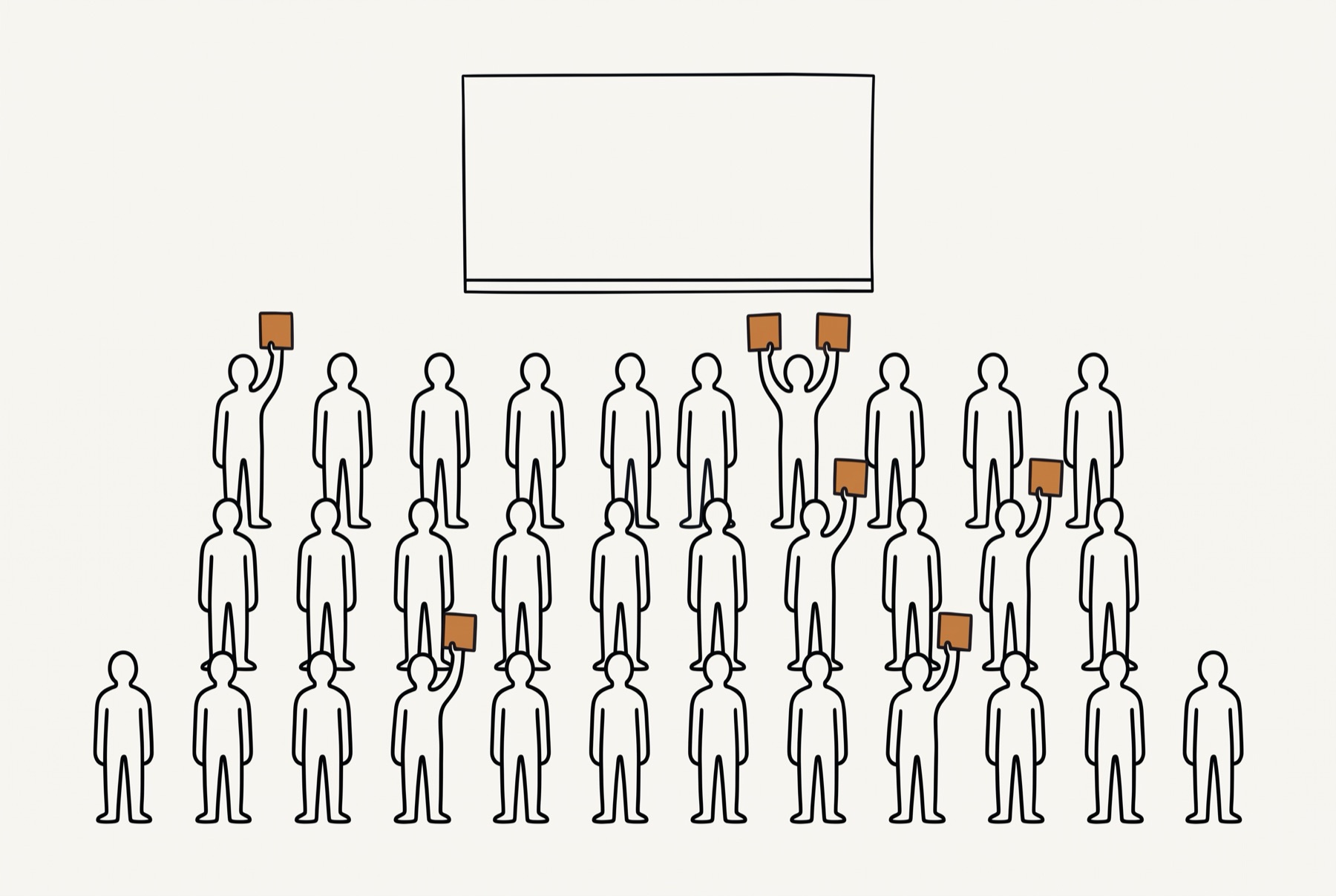
Decka ships one of these ready made. The This or That preset carries a pack called "Getting to know the room": five opinion questions on a short per-question timer, with no right answer and no score attached. Morning person or night owl. Beach or mountains. Cats or dogs, or neither. Plan the whole trip or just turn up. Then whether the best part of a meal is the starter, the main or the dessert. It is the two-minute version of this page, and this or that questions has 255 pairs of its own.
One word or one line
- What is one word for how this quarter has gone?
- What is the best thing you have read this year?
- Where would you go with a free ticket for next week?
- What skill would you pick up instantly if you could?
- What did you have for breakfast?
- What is the last photo you took?
- What is one thing you are looking forward to?
- What would your walk-on song be?
- What city do you wish you had more time in?
- What small thing made this week better?
- What is the best film you have seen this year?
- What would you name a boat?
- What is the best meal you have had that cost almost nothing?
For a room that works together but never meets
- Which team do you depend on and rarely speak to?
- What is one thing your team finished this quarter?
- What is a question you have never had the chance to ask?
- What is a word your team uses that nobody else understands?
- What is your team most often asked for?
- Who outside your team saved you this year?
- What do people most often get wrong about your work?
- What have we all stopped noticing?
- What is one thing you would show a customer?
- What did you learn from another team this year?
- What would you like to be asked about?
- What small change would you make everywhere at once?
Get to know you questions for a classroom
A classroom is not a meeting. Attendance is compulsory, the person asking the questions is the one who grades the students, and a prompt that reaches into home life reaches into something a child cannot decline.
Chopik and Oh ran the Fast Friends question set as a class activity, in a remote synchronous course, and then asked the students what to change. Every student who answered the survey rated it a positive experience on the whole, and 25.0% of the undergraduates also said the exercise made them feel uncomfortable. Both numbers come from the same survey.
Two questions came back flagged, and both were about death: 26.0% of students flagged one about a family member and 22.1% flagged one about dying with something unsaid. The authors recommend cutting both from any class that runs the exercise. That is a set psychologists designed, losing two items because a quarter of the room objected. Cut yours before the room has to ask.
Primary
- What is the best thing you have ever built?
- What animal would you be, and would you be any good at it?
- What do you do when nobody tells you what to do?
- What is the best day you have had at school?
- What do you like to do when it rains?
- What is your favourite place in this school?
- What have you taught somebody else?
- What is the funniest thing that has happened to you this year?
- What would you invent, if you could invent one thing?
- What is your favourite thing to do outside?
- What game do you always want to play at break?
- What are you better at now than you were last year?
Secondary
- What do you know a lot about outside school?
- What is the best thing you have watched or read this year?
- What have you practised until you were good at it?
- What do adults get wrong about people your age?
- What job would you like to try for a week?
- What is the best advice anybody has given you?
- What subject would you add to the timetable?
- What have you made that you were proud of?
- What is the hardest thing you have finished?
- What do you do first when you get stuck on something?
- What do you do to switch off?
- What would you change about this school with no money to spend?
- What have you changed your mind about this year?
Sixth form and university
- What made you pick this course?
- What did you expect that has turned out differently?
- What are you good at that has nothing to do with your studies?
- What do you want to be able to do a year from now?
- What is the best thing you have learned outside a classroom?
- What do you do when you get properly stuck?
- What piece of work would you show somebody?
- Where do you do your best work, and when?
- What do you wish you had started earlier?
- What question would you like this course to answer?
- What would you do with a month and no obligations?
- What are you quietly optimistic about?
The first lesson of a new class
- What do you want to be called?
- What is one thing that helps you learn?
- What is one thing that stops you learning?
- What did you enjoy most last year?
- What do you already know about this subject?
- What do you want to be able to do by the end of the year?
- What should I know about how you work?
- What would you like to ask me?
Start from one of these
Each one opens in your dashboard, ready to run. You can change every word of it.
A round with no queue
The article's format fix, built: one question asked of everybody at the same moment, answers collected face down, turned over one card at a time. Two rounds, shallow then a notch deeper, because escalation was the ingredient that mattered.
5 slides · 2 activities
One word, from the back
A room too big to go round: everybody answers one short question at once and the answers land on the screen together. No name is stored, and the biggest word is the room's rather than the loudest voice's.
4 slides · 1 activity
Stand the room up
For a big group whose real goal is that people meet somebody. The room pairs off, gets a question, then pairs off again with somebody new — ten of the article's own questions, shallow ones first.
4 slides · 1 activity
The room writes the round
Nobody can add a question to a round once it is running, so this one collects them first. The room submits the questions it would like this team to answer and upvotes them, and next week's round is whatever came back at the top.
4 slides · 1 activity
Get to know you questions for a remote or hybrid team
Remote teams get the format for free, because everybody is already answering from their own device. What they lose is the corridor, and the corridor is where the unplanned part of this used to happen.
Structured questions still work on a screen. Chopik and Oh's class ran online from end to end, and those students reported feeling closer to the classmate they were paired with. Nobody ran the same class in a room to compare, so that is evidence the format survives a screen rather than that the screen costs nothing.
The obstacle is the calendar. A remote round works best written rather than spoken, so the timezone that is asleep still gets to answer. The exception is a team meeting for the first time, which is worth everybody being awake for.
Answered in a thread, not on a call
- What is the view from wherever you are working today?
- What time of day are you sharpest?
- What is the last thing you cooked?
- What is on your desk that has nothing to do with work?
- What is your commute now, if you have one?
- What did you do at lunch?
- What is the best thing about where you live?
- What is playing while you work?
- What is the one thing you miss about an office?
- What is the one thing you would never go back to?
- What is the weather doing where you are?
Questions about working apart
- What is the hardest part of working with people you have never met?
- What have you learned about somebody here from their background on a call?
- Which timezone do you forget about most often?
- What is the message you always reread before sending?
- What do you do to mark the end of the working day?
- What would you want to do first if this team were ever in one room?
- What is easy to get wrong about somebody you only ever see in a chat window?
- What is hard to do over video that is easy in a room?
- What habit did you build at home that you would keep forever?
- What would you fix about how we work across timezones?
A distributed team's first call
- Where are you, and what is it like there?
- What would you like to be known for by the people on this call?
- What time is it where you are, and is that a normal working hour?
- What did you do before this?
- What is a word from where you live that we should all start using?
- What is the best thing you have eaten this week?
- How do you like to be contacted?
- What would make this team easy to work with?
- What would you like to know about somebody else here?
The questions that leave no way out
The bank above is built so that any of it can be answered in one flat sentence and left there. The four shapes below take that exit away. Each of them makes the way out louder than the answer.
The obvious ones are obvious. Salary, debt, rent, family, grief, health, faith, sexuality, immigration status, anything illegal, and anything that asks the room to judge somebody sitting in it. Never have I ever sorts that list properly, because a game built on admissions has to. What follows is the set that survives a check like that and still charges somebody for the round.
Anything where declining is louder than answering. "Tell us one thing nobody here knows about you" is the common version, and passing on it is itself an answer. John, Barasz and Norton ran seven experiments on people who withhold information. Their own summary is that declining a request to disclose often makes a worse impression even than divulging unsavory personal information. Those were judgements about strangers in a vignette rather than colleagues in a meeting, so take the direction rather than the size. An obvious pass is not a neutral move, which means "you can skip this one" is not the safety net it sounds like.
Anything that puts a disclosure decision on a clock. Ragins, Singh and Cornwell surveyed 534 gay, lesbian and bisexual employees. Among those who had not fully disclosed, the fears attached to disclosure predicted job attitudes, psychological strain, work environment and career outcomes, while actual disclosure was unrelated to all four. That is one group, surveyed once, so the size does not transfer. The direction does: the cost sat in the deciding. A warm-up that puts that decision on a clock has charged them before they have typed anything.
Anything that cannot be answered badly. "What is your hidden talent" and "tell us a fun fact about yourself" both demand a performance. Neither has a flat version, so the person who has not curated one has to say that out loud. "What are you unreasonably good at" is the same question with the demand taken out, because the honest answer is usually parallel parking or folding a fitted sheet. If you cannot tell which of the two you have written, ask about last week. Everybody has a last week.
Anything with one right answer in this room. What do you love about working here, what is your proudest moment on this team. Everybody can see which answer is wanted, so the round collects it. The one person who gives a different answer has made a statement they did not mean to make.
The test that catches all four is the exit rather than the answer. If the only way out of a question is one the room will notice, the question has done the choosing.
How to run a round without a queue
Five questions is a round, and ten minutes is the outside edge of one. That ceiling is a facilitation judgement rather than a finding. What the evidence fixes is the floor. Chopik and Oh, reporting earlier work, put openings as short as six minutes inside the range that generates closeness. A short round is not a thin one.
Ask one question of everybody, not a different one each. The point of the format is that everybody answers the same thing at the same moment. A different question for each person is a queue with extra steps.
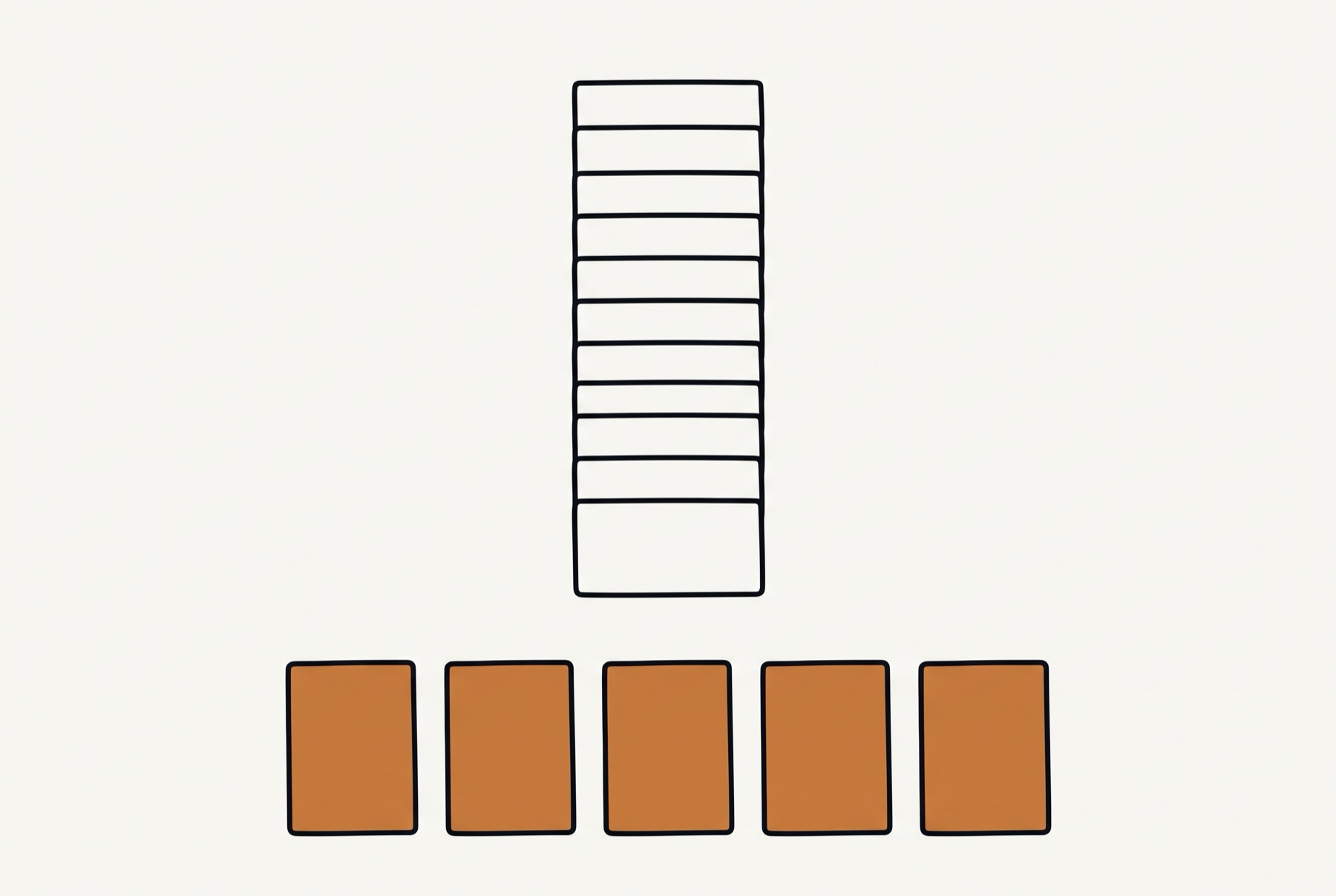
Collect the answers before anybody sees one. Reveal is built for exactly this. You write the prompt, everybody answers on their phone, and the answers stay hidden from the room until you turn the cards over. The phone says "Nobody sees this until the presenter turns the cards over". The big screen shows the prompt, one face-down card per answer, and a line counting how many have answered and how many are revealed.
Read them before the room does. Every card that is still face down is listed for you alone, with a Drop beside each one. Dropping one removes it for good. Nobody is told whose it was.
Seed a starter answer or two for a cold room. The form has a "Starter answers" list. Each one appears on every phone as a way to fill the box, never as an answer already sent. They are the presenter's own, so they are public by design.
Decide up front whether names are attached. The authoring form asks "Whose answer is it?" and offers Anonymous, described as "No name is stored at all", or Show names. Anonymous is exact about the name and no wider than that. The answer is saved with no name on it and the board never shows one. It still carries the id of the phone that sent it, in the same store that knows which name that id joined under. So it is unattributed to the room rather than unlinkable, which is the honest way to describe it to people before they answer. Names are the right choice only when finding out who wrote it is the fun.
Turn the cards over one at a time in a room you can get through. "How the answers come out" in the authoring form sets it. The presenter's button then says "Reveal next" or "Reveal all", and one press turns over one card. A beat between two cards is where a room reacts. In an all-hands that outruns the ten minutes above, so flip them all and read a few out.
Use a poll when you want a count instead. If the answer is one of a few fixed options, a live poll draws the bars in seconds. Open text is for when you want to be surprised.
Expect to write the questions yourself. Participants answer a Reveal prompt rather than write one, so nobody in the room can add a question mid-round. If you want the room's own questions in next week's round, collect them with a Q&A first, then write the round out of what came back.
Put it before the agenda. Allen, Lehmann-Willenbrock and Landowski surveyed 252 working adults and found pre-meeting small talk predicted how effective people rated the meeting, over and above good meeting procedures. The effect was stronger for the less extraverted people in the room.
Offer a choice of set. Patall, Cooper and Robinson's meta-analysis of 41 studies found that providing choice enhanced intrinsic motivation, effort, task performance and perceived competence. Name the two sets before you start and let the room pick one. That costs a sentence.
Answer your own question. A presenter who asks five questions and answers none has built a survey and called it a game. Say yours once the cards are face up and not before, because going first is the anchoring this whole format exists to remove.
Ask one follow-up out loud. Huang and colleagues found follow-up questions carried most of the liking effect, and that people do not anticipate that asking helps them. Pick one revealed answer and ask the room, not the author, what they want to know about it.
Do not chase the outlier. One answer is strange and everybody wants to know whose it is. Say something about the answer and move on. If the author wants to claim it they will, and that is their call rather than yours to extract.
Below about eight people, drop the format rather than the questions. Everybody can work out who wrote what, so the anonymity is theatre and a conversation is better. Skip it altogether in a meeting carrying bad news. A round of personal questions the week of redundancies asks people to be open with an employer that is about to be closed to them.
Stand the room up instead when the goal is mixing. For a large group where the real aim is that people meet somebody, a mixer beats a question round. Mingle Match pairs the room off again each round, giving people somebody new while there is anybody left to meet, and an odd number makes one group of three. Everybody in a group sees the same shape and colour so they can find each other, and the question appears once they tap "Found them". For more of this argument, see team building activities for work and icebreaker games.
FAQ
Common questions
What are good get to know you questions?
Ones with a concrete answer that can be answered badly and handed back. What did you want to be at ten, what are you unreasonably good at, what is the best thing that happened to you this week. Avoid anything that asks for a confession, and anything about pay, family, health or faith.
How do you run get to know you questions without going round the table?
Ask one question of everybody at once and collect the answers privately, then reveal them together. Nobody waits a turn, nobody rehearses instead of listening, and the first answer stops setting the level for the rest. Answering also takes the same time whether ten people are in the room or a hundred.
What are good get to know you questions for work?
Ask about last week and about the person before this job. What did you spend the most time on, what would surprise somebody who has watched you work for a year, what did you nearly become. Anything a colleague could not answer without disclosing something they had not chosen to share is out.
What questions should you never ask?
Salary, debt, rent, family status, health, faith, politics, immigration status, anything illegal, and anything that asks the room to judge somebody else in it. Chopik and Oh's students flagged two Fast Friends questions about death, and the researchers recommend cutting both.
How many get to know you questions should you ask?
Five is a round, and ten minutes is the outside edge. That ceiling is a judgement. Chopik and Oh report closeness from openings as short as six minutes, so the floor is lower than people assume. Past ten minutes the room has stopped treating it as an opener. If you only have two minutes, ask one question, take the answers on phones, and read out three of them.
Are get to know you questions a waste of time?
The questions are not, and the usual format is. Aron and colleagues found pairs given escalating personal questions came out significantly closer than pairs given matched small talk. Allen and colleagues found the informal talk before a meeting predicted how effective people judged it to be. Keep the questions and drop the queue.
What are good get to know you questions for a large group?
Ones answerable in a handful of words, so they read from the back of the room. One word for the quarter, the last photo you took, where you would go with a free ticket next week. Have everybody answer at once from their phones rather than passing a microphone, because the bigger the room gets, the more the loudest voice sets the tone.
Run this with your own team
Start free, no credit card. Your audience joins from their phones with a code — nothing to install.