Never have I ever questions for work, friends and the classroom
Play it without asking anyone to confess in front of colleagues
· Updated
Never Have I Ever runs on one trade. Somebody reads a statement out loud, and everyone who has done the thing admits it, in public, on the spot. Among friends that trade is cheap. In a room of colleagues you are handing a fact about yourself to people who decide what you work on next, and you cannot take it back.
The game survives that room if you change one thing. Everyone still answers, and what the room sees is a count instead of a name. The three sets below are sorted for three rooms, because a statement that is funny among friends is a fact about somebody in front of their manager.
Start from one of these
Each one opens in your dashboard, ready to run. You can change every word of it.
Never have I ever, counted
Six work-safe statements answered privately from phones, with the screen drawing two bars instead of naming anyone. The game everybody knows, with the one part that costs somebody something taken out.
4 slides · 1 activity
Never have I ever, unsigned
Everybody writes their own never have I ever and every card stays face down until they are all in. The presenter turns them over one at a time, and can drop one from their own remote before the room ever sees it.
4 slides · 1 activity
Never have I ever, for a class
A classroom round where the wheel picks the statement and the screen counts the answers, so the person at the front is neither choosing what gets asked nor seeing who admitted what.
5 slides · 2 activities
Never have I ever, in twos
The version for a room too small to hide a count in. Everyone is paired off on a clock and takes one statement per round, so the disclosure happens in twos instead of in front of the room.
4 slides · 1 activity
Why Never Have I Ever is riskier at work than it looks
The game is a disclosure engine, and the disclosure is the fun. Collins and Miller's meta-analysis of the self-disclosure literature concluded that the controlled experiments support a causal reading: in first encounters, higher disclosure leads to increased liking. It runs in the other direction too. Across the five experiments that manipulated a person's own disclosure, people induced to disclose more tended to like their partner more, at d = .317.
So the mechanism is real. The question is what it costs the person doing the disclosing.
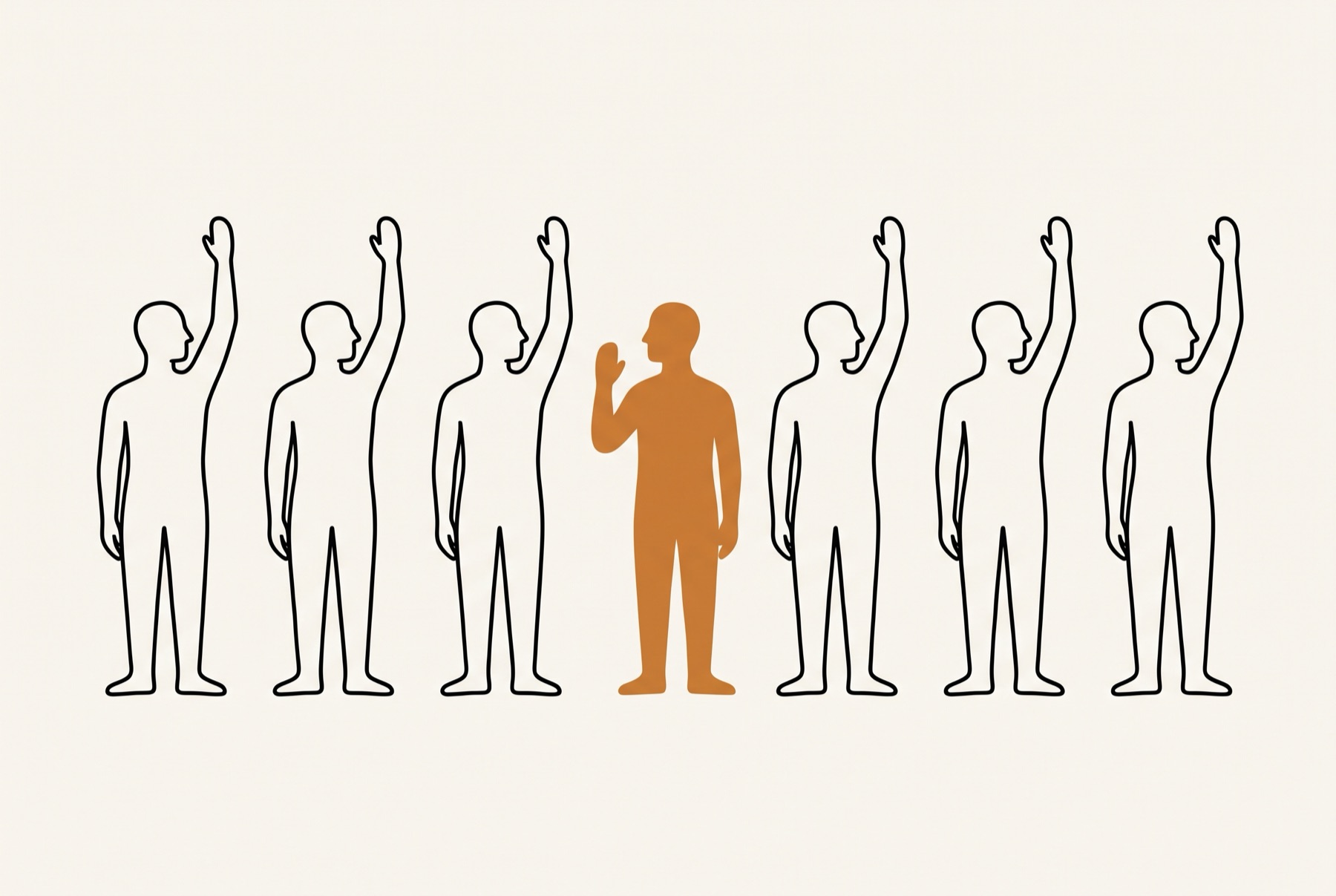
Aron's closeness procedure, the one the thirty-six questions came from, is built on what his team called sustained, escalating, reciprocal, personalistic self-disclosure. A round of Never Have I Ever has two of those four. It is reciprocal, because everybody answers every statement, and it is personalistic, because every statement is about your own life. It is not sustained and it does not escalate. One person picks the statements, so the depth arrives at whatever level that person set instead of building towards it. The bigger difference is the shape of the question. An Aron question is open, and the person answering decides how much to give. A never-have-I-ever statement names the thing in advance and leaves two moves: admit it, or deny it.
Colleagues also carry things they are managing. Ragins, Singh and Cornwell put a national survey to 534 gay, lesbian and bisexual employees, then looked separately at the ones who had not fully disclosed at work. In that group the fear around disclosure predicted job attitudes, psychological strain, work environment and career outcomes. Whether somebody had actually disclosed predicted none of the four. The design is cross-sectional and the sample is one group of employees, so treat it as a finding about that group rather than a law. What it leaves a facilitator is the timing. The cost lands while a person is deciding, before anybody has said anything.
A prompt that lands near somebody's private life does not read to them as a party game. It reads as a decision, made in the time it takes to put a hand up or not, in front of everyone.
Why "you can always pass" does not fix it
The usual defence is that nobody has to answer. It is weaker than it sounds, because a visible pass is itself an answer. The experiments on what a room concludes from a refusal sit on get to know you questions, under the questions that leave no way out. They are the reason this page does not count the offer of a pass as a fix.
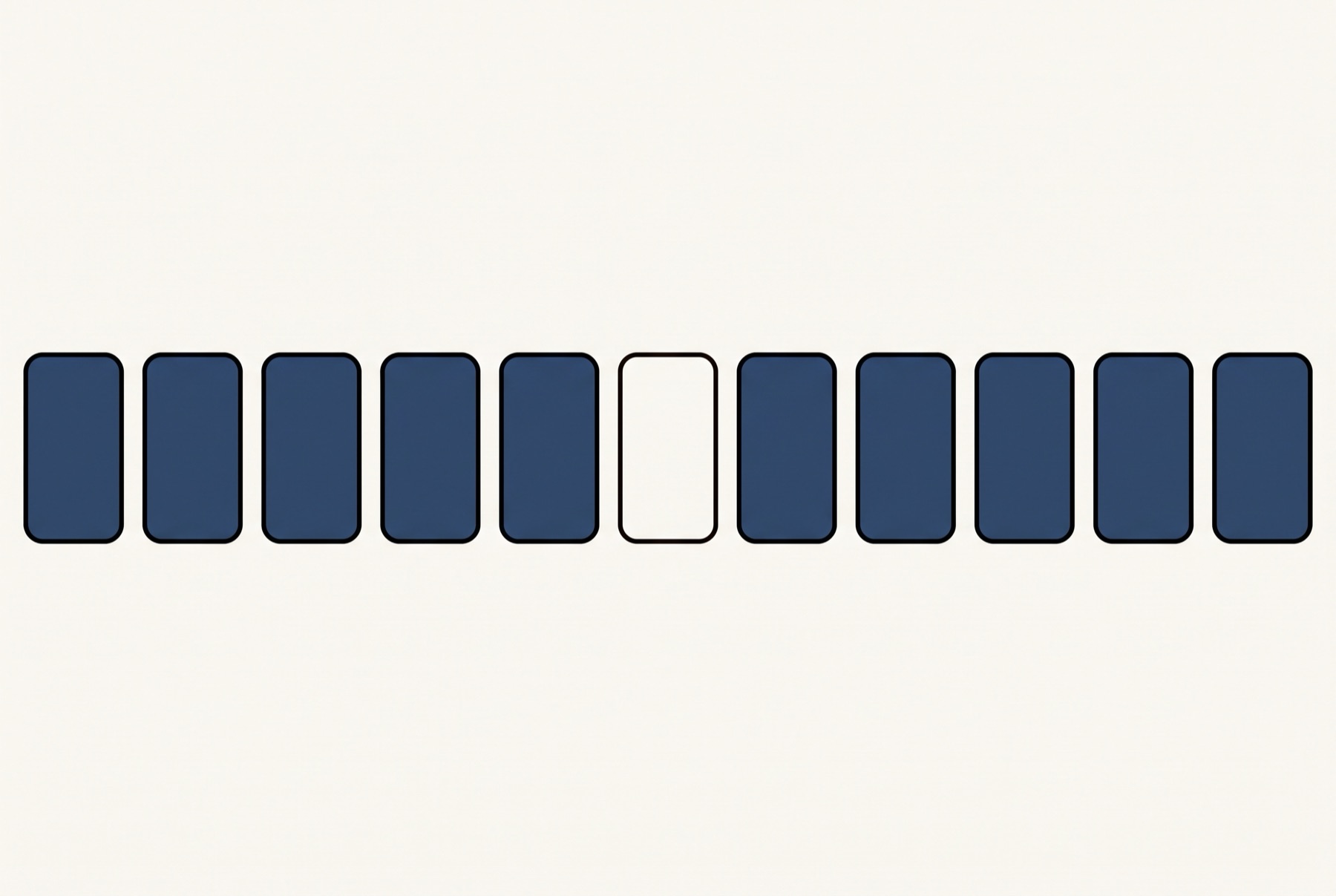
The person offering the pass is also badly placed to judge how easy it is to take. Flynn and Lake had people predict whether others would agree to a direct request, and across the first three studies they underestimated the likelihood of a yes by as much as 50%. The reason they found in their sixth study is the useful half: help seekers were less willing than potential helpers to appreciate the social costs of refusing, the costs of saying no. Swap the request. A manager asking a room to play sees the cost of joining in. The room is weighing the cost of visibly not joining in.
There is a second gap running the other way, and it is worth knowing before you panic about any of this. Bruk, Scholl and Bless named it the beautiful mess effect, and the follow-up work describes their result as showing vulnerability being evaluated more positively in others than in oneself. Your own admission feels heavier to you than the identical admission from the person next to you. Both things are true at once: the room judges you less harshly than you fear, and it is still not your call to make on somebody else's behalf.
The change that makes the game safe to run
Take the public part out and keep everything else. The statement still goes up, everyone still answers, the room still finds out how many people have done it. What changes is that the answer arrives privately, and what the room sees is either a count or an unsigned card.
That is not a cosmetic difference. It changes what people are willing to say.
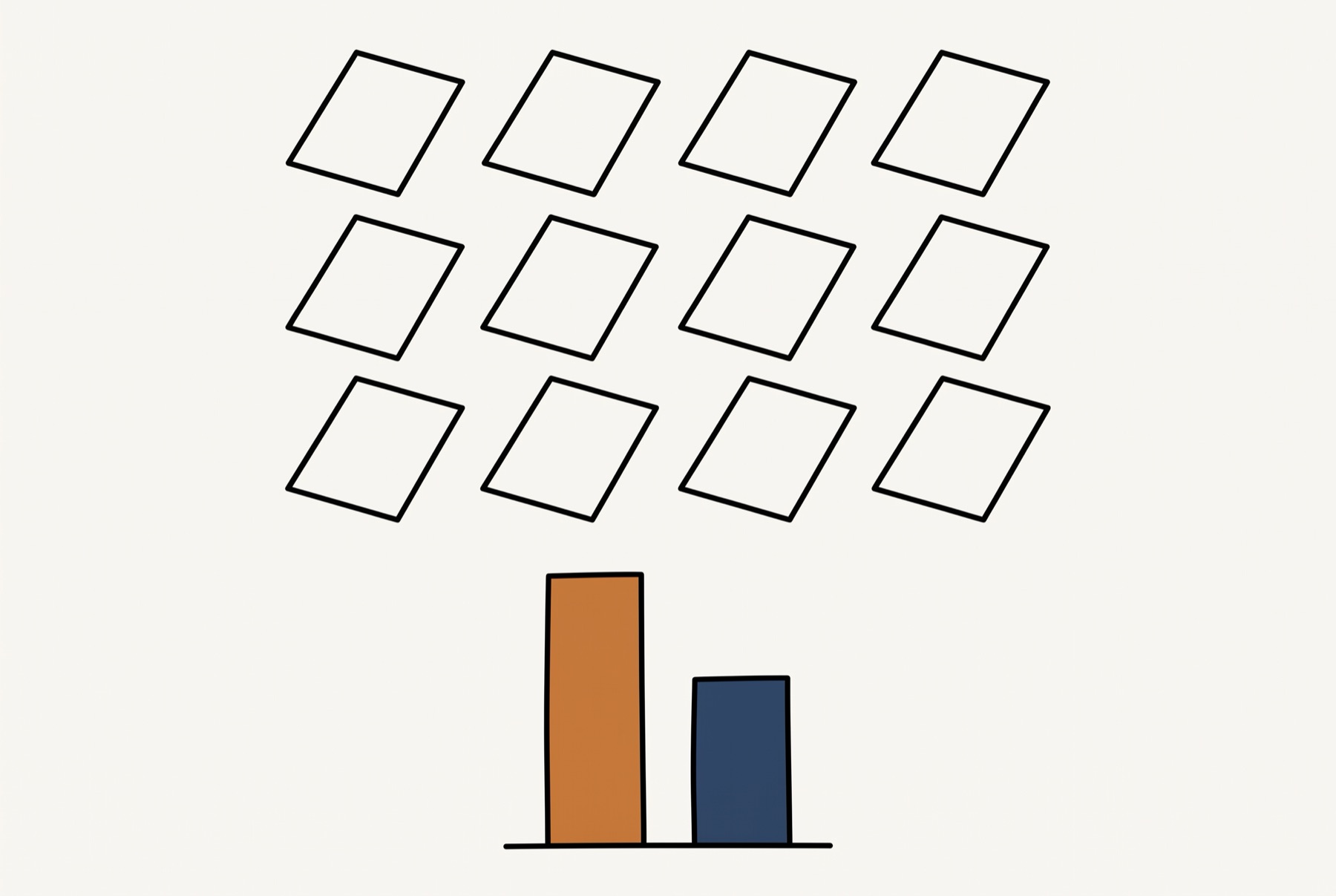
Joinson ran three studies on self-disclosure in computer-mediated conversation. Study Two confirmed that visually anonymous people communicating using computers disclose more about themselves than people communicating non-anonymously. The same effect shows up in what a survey returns. Turner and colleagues randomised whether a computer or a person asked the questions in a telephone survey. Reports of a sensitive sexual behaviour rose from 25.5% to 36.7% when the computer asked. Nothing changed about what any of those people had done. What changed was who was listening.
Students describe the mechanism themselves. Walklet, Davis, Farrelly and Muse collected 84 open-ended responses on phone polling in psychology lectures. The positive theme named most often, by 26 of the 84, was that anonymity increased engagement. One student wrote that it let them express thoughts without the stress of speaking out loud in class.
Two formats do this, and they answer different questions.
The count. Put the statement on screen with two options, "I have" and "I have never", and run it as a live poll. Everyone votes from their phone and the screen draws two bars. Nobody's name is on a bar. This is the version that answers the question the game is actually asking, which is how many of us.
The unsigned card. Ask everybody for their own never-have-I-ever instead, and hold every answer until they are all in. Reveal is built for this. Answers sit on the server and are not broadcast to the room until you turn a card over. The big screen shows the question, a face-down card for each answer, and two counts: how many have answered and how many have been revealed. You are the exception. Every answer reaches your own remote as it lands, each with its own Drop button, so you can take one off the board before the room sees it. The attribution setting is either "Anonymous", which the authoring form describes as "No name is stored at all", or "Show names". That is exact about the name and no wider. An anonymous answer is saved without one, the board never shows one, and what reaches your remote is the text and never a name. The answer does still carry the id of the phone that sent it, in the same store that knows the name that id joined under. Call it unattributed to the room rather than untraceable.
Holding the cards until every answer is in is what keeps the answers independent. In an ordinary open-text round the third person to answer has already read the first two, and it is hard not to write a version of what is already on the screen. The wait is the price, and the slowest person in the room sets it rather than the average one.
The count has a limit worth saying out loud before you use it. A count is only anonymous if there are enough people to hide in. With six in the room and a bar showing five, everybody is doing arithmetic, and with three it is not a poll, it is a roll call. Below about eight people, drop the anonymity claim and just talk instead, using icebreaker questions that ask for an answer rather than an admission.
Never have I ever questions for work
The test for a work-safe prompt is narrow and it is worth applying literally. Saying "I have" must cost the person nothing, in this meeting or in six months. That rules out anything about sex, money, drink, drugs, health, family, faith or breaking a rule at this employer, and it leaves an enormous amount of ordinary human material.
A second test applies only to the counted version. A bar showing one person in twelve is a spotlight rather than a count. That is fine when the rare answer is one somebody would happily own, like reading a terms and conditions page to the end. It stops being fine the moment the rare answer is one they would not.
Meetings and the working day
- Never have I ever talked for a full minute before noticing I was muted.
- Never have I ever joined the wrong meeting and stayed for a while to be polite.
- Never have I ever read a document for the first time while somebody presented it.
- Never have I ever said "you too" when a waiter told me to enjoy my meal.
- Never have I ever blamed the wifi.
- Never have I ever agreed to a deadline before checking my calendar.
- Never have I ever pressed reply all and regretted it inside a second.
- Never have I ever taken a call from a stairwell.
- Never have I ever forgotten why I walked into a room.
- Never have I ever written a message, deleted it, and sent the same thing anyway.
- Never have I ever eaten lunch at my desk five days in a row.
- Never have I ever booked a meeting I could have replaced with two sentences.
Working from home and getting there
- Never have I ever worn something smart on top and something else entirely below the camera line.
- Never have I ever missed my stop because I was reading.
- Never have I ever taken a video call from a car park.
- Never have I ever worked a whole day without going outside.
- Never have I ever been on a call with an animal in the background.
- Never have I ever forgotten where I parked.
- Never have I ever moved house on a working day.
Things you can and cannot do
- Never have I ever folded a fitted sheet properly.
- Never have I ever changed a tyre.
- Never have I ever baked bread from scratch.
- Never have I ever fixed something with tape and left it that way.
- Never have I ever been in a school play.
- Never have I ever sung in front of strangers.
- Never have I ever cut my own hair.
- Never have I ever built furniture without reading the instructions.
- Never have I ever kept a plant alive for more than a year.
- Never have I ever won a trophy for anything.
- Never have I ever spoken a second language on the phone.
Life admin, and putting it off
- Never have I ever read a terms and conditions page to the end.
- Never have I ever renewed something the day before it ran out.
- Never have I ever kept a receipt for something I never took back.
- Never have I ever found something in a coat pocket a year later.
- Never have I ever written a list and then lost the list.
- Never have I ever put something somewhere safe and never found it again.
- Never have I ever kept a box of cables I cannot identify.
- Never have I ever missed the same delivery three times.
- Never have I ever thrown away a manual and needed it a week later.
- Never have I ever tidied a drawer by moving the mess into another drawer.
Food
- Never have I ever eaten something I could not identify.
- Never have I ever sent food back in a restaurant.
- Never have I ever eaten breakfast for dinner.
- Never have I ever tried a dish because of a photograph of it.
- Never have I ever set off a smoke alarm with a microwave.
- Never have I ever grown something and then eaten it.
Computers, and the small crimes against them
- Never have I ever lost work because I did not save it.
- Never have I ever fixed something by turning it off and on again.
- Never have I ever searched for my own name.
- Never have I ever left a voice note longer than three minutes.
- Never have I ever printed something and never collected it.
- Never have I ever kept more than fifty tabs open.
- Never have I ever photographed a whiteboard and never looked at the photo.
- Never have I ever run a to-do list inside a spreadsheet.
The board below is a Reveal round with names on, running most likely to, because that is the round where finding out who wrote what is the point. Set the same board to anonymous and the cards come up bare, which is the never-have-I-ever version.

Never have I ever…
3 answered, 0 revealed
Answers stay hidden until you reveal them.
Never have I ever questions for friends
Different room, different rules. Among friends the disclosure is the point, the worst thing that happens is being teased about it, and nobody's promotion is in the room. You still want prompts that produce a story rather than a wince, so these are built around the ordinary embarrassing and the mildly reckless.
If your group wants the spicy set, that is your business and this is not the page for it. One rule survives the change of register: never write a prompt that points at the people in the room. "Never have I ever lied to somebody in this room" is not a game, it is a trial with snacks.
School and growing up
- Never have I ever been sent out of a classroom.
- Never have I ever broken a bone.
- Never have I ever had a nickname I hated.
- Never have I ever won something on sports day.
- Never have I ever hidden a report card.
- Never have I ever pretended to be ill to miss school.
- Never have I ever had braces.
- Never have I ever kept a diary and reread it later.
- Never have I ever run away from home for less than an hour.
- Never have I ever had a poster of a band on my wall.
Pure embarrassment
- Never have I ever walked into a glass door.
- Never have I ever waved at somebody who was waving at the person behind me.
- Never have I ever called a teacher or a boss the wrong name to their face.
- Never have I ever fallen over in public and pretended it was on purpose.
- Never have I ever laughed at completely the wrong moment.
- Never have I ever sent a message about somebody to that somebody.
- Never have I ever left a shop with something I had not paid for by accident.
- Never have I ever forgotten a name halfway through introducing two people.
- Never have I ever worn something inside out for an entire day.
- Never have I ever hugged somebody who was going in for a handshake.
Travel and small risks
- Never have I ever jumped off something taller than me.
- Never have I ever booked a trip on the day I took it.
- Never have I ever got a tattoo.
- Never have I ever been lost in a city with no map and no phone.
- Never have I ever slept outdoors with no tent.
- Never have I ever driven somewhere with no destination in mind.
- Never have I ever swum where a sign told me not to.
- Never have I ever taken a night bus I regretted.
- Never have I ever hitchhiked.
- Never have I ever missed the last train home.
Food and habits
- Never have I ever eaten food that fell on the floor.
- Never have I ever had cereal for dinner.
- Never have I ever eaten something past its date on purpose.
- Never have I ever cooked something so badly I threw it away.
- Never have I ever ordered the same meal three times in a week.
- Never have I ever pretended to like a meal somebody cooked for me.
- Never have I ever eaten in a car with no cutlery.
- Never have I ever finished somebody else's leftovers without asking.
Phones and the internet
- Never have I ever posted something and deleted it within the hour.
- Never have I ever looked somebody up before meeting them.
- Never have I ever left a message unanswered for more than a day on purpose.
- Never have I ever taken fifty photos of one thing.
- Never have I ever pretended not to have seen a message.
- Never have I ever bought something at two in the morning that I did not need.
- Never have I ever watched a whole series in a weekend.
- Never have I ever read reviews of a restaurant while sitting in it.
Friends, and being one
- Never have I ever kept a secret for more than ten years.
- Never have I ever lied about liking a haircut.
- Never have I ever been the last one awake.
- Never have I ever cancelled plans to stay in and been delighted about it.
- Never have I ever cried at a film in front of somebody.
- Never have I ever passed on a gift I had been given.
- Never have I ever borrowed something and never given it back.
- Never have I ever fallen asleep at a party.
Never have I ever questions for a classroom
A classroom sharpens both of the problems the work room has. The person reading out the statements is the one who grades the people answering. Most of the room is required to be there, and the same people are back in it tomorrow.

There is a precedent for cutting an item rather than trusting your own read of the room. Chopik and Oh ran the Fast Friends questions as a class activity and asked students afterwards which items were inappropriate or too personal. Two came back: a question about the death of a family member, flagged by 26.0% of students, and one about dying with something unsaid, flagged by 22.1%. Their conclusion was to remove both items in any class, to reduce potential harm among those who might have an adverse reaction. That is a set psychologists designed, losing one item because a quarter of the room objected and the other because a fifth did.
Run these as a count on the screen rather than as hands in the air, and the students who never put a hand up are in the round too. If phones are locked away for the day, the same thing works on folded slips into a box, counted at the front.
The other thing to keep out is a prompt that sorts a class by what a family can afford. Been abroad, been to a concert, had a party. Each one reads as ordinary and lands as a means test.
Lessons and school life
- Never have I ever answered a question and been completely wrong.
- Never have I ever left my homework at home.
- Never have I ever put my hand up and then forgotten what I was going to say.
- Never have I ever read a whole book in one day.
- Never have I ever presented in front of the whole class.
- Never have I ever been the first to finish a test.
- Never have I ever written on my hand.
- Never have I ever drawn on the back page of an exercise book.
Reading, screens and making things
- Never have I ever finished a video game.
- Never have I ever watched the same film more than five times.
- Never have I ever built something out of cardboard.
- Never have I ever taught myself something from a video.
- Never have I ever read past bedtime under a blanket.
- Never have I ever learned every word of a song.
- Never have I ever drawn a map of a place that does not exist.
- Never have I ever made up a story and told it as though it were true.
Food
- Never have I ever tried a food I was sure I would hate and liked it.
- Never have I ever cooked something entirely on my own.
- Never have I ever eaten a whole lemon.
- Never have I ever grown a vegetable.
- Never have I ever made a cake that did not rise.
- Never have I ever eaten something I had to be shown how to eat.
Outdoors and sport
- Never have I ever climbed a tree.
- Never have I ever scored a goal.
- Never have I ever swum in a river or the sea.
- Never have I ever ridden a bike with no hands.
- Never have I ever played outside until it was too dark to see.
- Never have I ever slept in a tent.
- Never have I ever seen a wild deer.
- Never have I ever been out in a thunderstorm.
Getting things right and wrong
These run the other way. What gets admitted is a credit rather than a confession, so the person the count exposes is whoever has not done it. Use them to start a conversation and not to score the room.
- Never have I ever apologised first after an argument.
- Never have I ever helped somebody I did not know.
- Never have I ever owned up to something nobody saw me do.
- Never have I ever stood up for somebody in front of other people.
- Never have I ever broken something and told the truth about it straight away.
- Never have I ever given away something I liked.
- Never have I ever written a thank you letter.
- Never have I ever changed my mind because of something a classmate said.
For older students
- Never have I ever applied for a job.
- Never have I ever taught somebody younger than me a skill.
- Never have I ever spent a whole day somewhere with no adult.
- Never have I ever missed a bus and had to work out another way home.
- Never have I ever written something I was proud of and shown nobody.
- Never have I ever changed my mind about something important after an argument.
Start from one of these
Each one opens in your dashboard, ready to run. You can change every word of it.
Never have I ever, counted
Six work-safe statements answered privately from phones, with the screen drawing two bars instead of naming anyone. The game everybody knows, with the one part that costs somebody something taken out.
4 slides · 1 activity
Never have I ever, unsigned
Everybody writes their own never have I ever and every card stays face down until they are all in. The presenter turns them over one at a time, and can drop one from their own remote before the room ever sees it.
4 slides · 1 activity
Never have I ever, for a class
A classroom round where the wheel picks the statement and the screen counts the answers, so the person at the front is neither choosing what gets asked nor seeing who admitted what.
5 slides · 2 activities
Never have I ever, in twos
The version for a room too small to hide a count in. Everyone is paired off on a clock and takes one statement per round, so the disclosure happens in twos instead of in front of the room.
4 slides · 1 activity
Never have I ever questions to avoid at work
The categories below all fail in the same place. Each one names a subject where one of the two answers costs somebody in the room something, and the game only has two answers. Making the answers anonymous does not rescue any of them. It hides who answered and leaves the asking exactly where it was.

Anything about sex or bodies. Acas states plainly that employers must take steps to prevent sexual harassment happening in the first place. It also says employers can be held responsible for the actions of their workers, which it calls vicarious liability. A prompt about somebody's sex life at a work event is not something the room chose. It is something the organiser chose for them.
Drink and drugs. The classic version of this game is a drinking game and the forfeit is a sip. Keep the subject at work and you have made a health, faith or recovery question look like a party prompt. For part of the room saying "I have" costs something, and for the rest saying "I have never" does.
Money. Salary, debt, rent, whether you own a home. Admitting one of these tells the room where somebody sits, and the rest of the round does not take it back.
Anything that exposes a protected characteristic. Acas lists nine of them, religion or belief, sexual orientation and disability among them. Health and immigration status are not on that list and belong here anyway. A prompt does not have to name the characteristic to expose it, and the exposure is the harm.
Rule breaking at this employer. Taking a sick day you did not need, wiggling the mouse to keep a status green, expensing something creatively. These get big laughs and produce an admission that a manager is now holding. Nobody sets out to run a compliance interview and it takes one prompt.
Anybody in the room. Crushes, complaints, who you have lied to. Turning the game on the audience ends it fastest, and it is where anonymity makes things worse rather than better. An unsigned card is where somebody writes the thing they would never sign.
Grief, death and family. Who you have lost, who you live with, who you are no longer speaking to. None of it belongs in a round somebody scheduled for a Tuesday morning.
Illegal acts. Stealing, trespassing, driving in a state you should not have been driving in. A confession does not stop being a confession because it was funny.
Both tests at the top of the work list are underneath these. Saying "I have" has to cost the person nothing, and the rare answer is a spotlight whichever side of the bar it falls on. There is another kind of bad question, the one nobody can refuse without the refusal saying something, and get to know you questions has that list.
How to run a round in five minutes
Sixty seconds a question is plenty, and a good round is over before anybody looks at the time.
Pick the format before the questions. A count answers how many of us. Unsigned cards answer what is the strangest thing in this room. Choose one, because running both in the same five minutes makes the round feel like a form.
Say the rules out loud, first. Three things: answers are private, the screen shows numbers rather than names, and nobody is being asked to explain an answer. That last clause matters as much as the anonymity, because a follow-up question aimed at whoever laughed puts the name straight back on.
Offer the room a choice of set. Patall, Cooper and Robinson's meta-analysis of 41 studies found that providing choice enhanced intrinsic motivation, effort, task performance and perceived competence. Say two of the headings above out loud and go with whichever gets more hands.
Buy-in is what separates the people who enjoy it from the people who resent it. Mollick and Rothbard studied a basketball-themed game run among several hundred salespeople at one e-commerce company. They scored how far each employee had embraced it, using survey items on following the game closely, understanding the rules and thinking it fair. High scorers had strong increases in positive feelings. The ones who scored low reported negative feelings about their job and some decrease in performance. Nobody in that study was asked for permission, so it does not tell you that asking helps. It does tell you that mandatory fun splits a room rather than averaging out, which is reason enough to ask.
Keep it short. Chopik and Oh note that previous research has found durations as short as 6, 12 and 30 minutes sufficient to generate closeness between people. A Never Have I Ever round is doing much less work than that and needs much less time. Five or six questions, then stop while people still want one more.
Answer your own questions. If you are running it, you are in it. A count hides your vote along with everybody else's, so say your own answer out loud on at least one prompt. Read out six and answer none of them, and what you have run is a survey.
Do not chase the outlier. One person voted "I have" and everyone wants to know who. That is the moment the format dies. Say the number out loud, say something about the number, move on. Whoever it was can own it if they want to, and that decision is theirs.
When it lands flat, wait. Gilovich, Medvec and Savitsky put people in an embarrassing T-shirt and asked them how many observers could name the face on it. The guesses came in at twice the observers' real accuracy, a 23-point overestimate. From the front of a room, a quiet twenty seconds feels like a disaster. From the seats it is twenty seconds.
The dread is bigger than the event. Kardas, Kumar and Epley put strangers into conversation across a series of experiments. The conversations felt less awkward, and produced more connectedness, than the participants had expected beforehand. Their participants had agreed to the conversation. Your room has not, so keep the answers private and the exit invisible.
When to skip it entirely. In a room of fewer than about eight, in a meeting carrying bad news, and with a group that has just been reorganised. If this game is not right and you want people talking, run a mixer instead. Mingle Match pairs everyone off, shows both halves of a pair the same shape to hold up, and rotates on a clock. The disclosure then happens in twos rather than in front of the room.
FAQ
Common questions
What is Never Have I Ever?
A group game where somebody reads out a statement beginning "never have I ever", and everyone who has done that thing indicates it. In the party version the signal is putting a finger down or taking a drink. In the version worth running at work, everyone answers privately from their phone and the screen shows a count rather than a set of names.
What are good never have I ever questions for work?
Ones where admitting it costs nothing. Being muted for a full minute, losing work you never saved, keeping fifty browser tabs open, photographing a whiteboard and never looking at the photo. The test is whether you would happily answer it yourself, out loud, with your own name attached, in front of the exact room you are asking.
Is Never Have I Ever appropriate for the workplace?
The standard format is not, because it asks for a public admission that the person cannot retract in front of people who make decisions about them. The format is fixable. Collect answers privately and show the room counts rather than names, and the same questions stop being a disclosure with a name on it.
How do you play Never Have I Ever without drinking?
Score it or count it instead. Everyone starts with ten fingers up and puts one down each time they have done the thing. In a big room, have everyone vote I have or I have never on their phone and let the screen draw the two bars. The count is more interesting than the forfeit anyway, because the number is the surprise.
What never have I ever questions should you avoid?
Sex, bodies, drink, drugs, money, health, faith, immigration status, grief, anything illegal, anything that breaks a rule at your own employer, and anything aimed at a specific person in the room. Chopik and Oh recommended removing two Fast Friends questions about death after a quarter of their students flagged one as too personal and a fifth flagged the other.
How many never have I ever questions do you need for one round?
Five or six. At about a minute each that is a five or six minute opener, which is roughly where a warm-up should stop. Ten or more and it has stopped being the start of the meeting and become the meeting.
Can you play never have I ever with a large group or online?
Yes, and a large group is where the private version works best, because a count only hides people when there are enough of them. Below about eight players a count stops being anonymous, since everyone can do the arithmetic. Online it works the same way: everyone answers on their own phone, so remote and in-room people get the identical game.
Run this with your own team
Start free, no credit card. Your audience joins from their phones with a code — nothing to install.