Most likely to questions
Everyone points at somebody, so collect the answers face down
· Updated
Every answer in this game is a name. Somebody in the room gets pointed at, and the round only works because everyone finds out who. That makes it one of the fastest question formats for showing a group how it sees itself, and the easiest one to turn into a vote about who is least popular.
Kruger, Gordon and Kuban put the same tease to both people in it. Across 35 pairs of roommates, each pair rated one tease on five scales: funny, light hearted, mean, hurtful and annoying. Averaged into one score for how positively the tease read, on a scale to 11, the person who told it came out at 7.77. The person it was aimed at came out at 6.82.
The room is playing one game and the person named is playing a slightly different one. Two things close that gap, and neither is the question list. Collect every answer before any answer is visible, and cut the prompts that name a body, count what somebody drinks, or ask who the room would leave out.
Start from one of these
Each one opens in your dashboard, ready to run. You can change every word of it.
Most likely to, at work
Two rounds of work-safe prompts, collected face down and turned over one card at a time. Nobody sees an answer until everybody has written one, and every card carries its writer's name, because at work that is what stops somebody lobbing a grenade for the laugh.
5 slides · 2 activities
Most likely to, for a class
The classroom setting of the same board, with all three settings flipped: no card carries a name, every card turns at once, and each pupil writes three names rather than one. The prompt is one any child would be pleased to be named for.
4 slides · 1 activity
Most likely to happen here
The same prompts with the person taken out of them, run as a fixed-option poll so identical answers merge into a bar instead of into twelve identical cards. A live poll shows the room its own votes as they arrive, which is a fair trade for a question about the week and a bad one for a question about who in the room.
4 slides · 1 activity
Something with a right answer, first
Four questions about how rooms actually behave, each with a real answer, and then one nomination round. For a group that works together but is in one room for the first time: get a round with a right answer in before anybody points, so no single voice frames the one that follows.
5 slides · 2 activities
What a most likely to round actually measures
Peer nomination is a real research method with a long history. A researcher shows a class every classmate and asks each child to name the ones who fit a description, one description at a time. Perry-Parrish, Waasdorp and Bradshaw ran it with 523 first graders across nine schools, with pictures on a scan sheet and every item read aloud by trained staff.
What the method produces is a status map. Slotkin, Bierman and Jacobson, citing van Lier and Koot, put the share of elementary school children who come out rejected at 10% to 15%. Rejected means named as most liked by few classmates and least liked by many. That position tracks with later school and mental health difficulties, which is why researchers bother to measure it at all.
So the prompt on your slide is a research instrument with the safeguards removed. Perry-Parrish and colleagues had each child fill in a bubble under a classmate's photograph on a scan sheet, one item at a time, read out by trained research staff. The party version reads the answers back to the room, on purpose, because the reveal is the fun.
The harm question has been asked properly, and the answer is more comfortable than you would guess. Mayeux, Underwood and Risser interviewed 91 third graders after sociometric testing. The children were not hurt or upset by it, most of them enjoyed it, and they did not feel their peers treated them differently afterwards.
Take that result at its real width. It covers sociometric testing run as research, with the answers going to the researchers. It says nothing about a round where thirty answers go up on a wall and the room reads them together. No study behind this page tests that design.
The reason to run it anyway is the reason the method exists. A group's pooled view of a person is information that person does not have. The peer nomination of emotional expressivity showed modest six-month test-retest reliability, r = .47, in Perry-Parrish and colleagues' first-grade sample. Peer-rated negative emotion in the same study lined up with teacher-rated social competence in the expected direction, r = -.22. The room knows things. The job is to get them out without any one person paying for the round.
Why the first answer out loud ruins the round
Ask the question aloud and the first confident answer becomes the frame that every later answer sits inside. The second person adjusts to the first. The fifth is agreeing with a name rather than choosing one.
Levy, Yardley and Zeckhauser split 22 audiences of students, faculty and executives in half. Each half got the same question, one by a show of hands and the other on private clickers. The two halves' vote shares differed by an average of 14.37 percentage points, and 57% of the questions produced a gap wider than ten points. Their word for what hands do is herd.
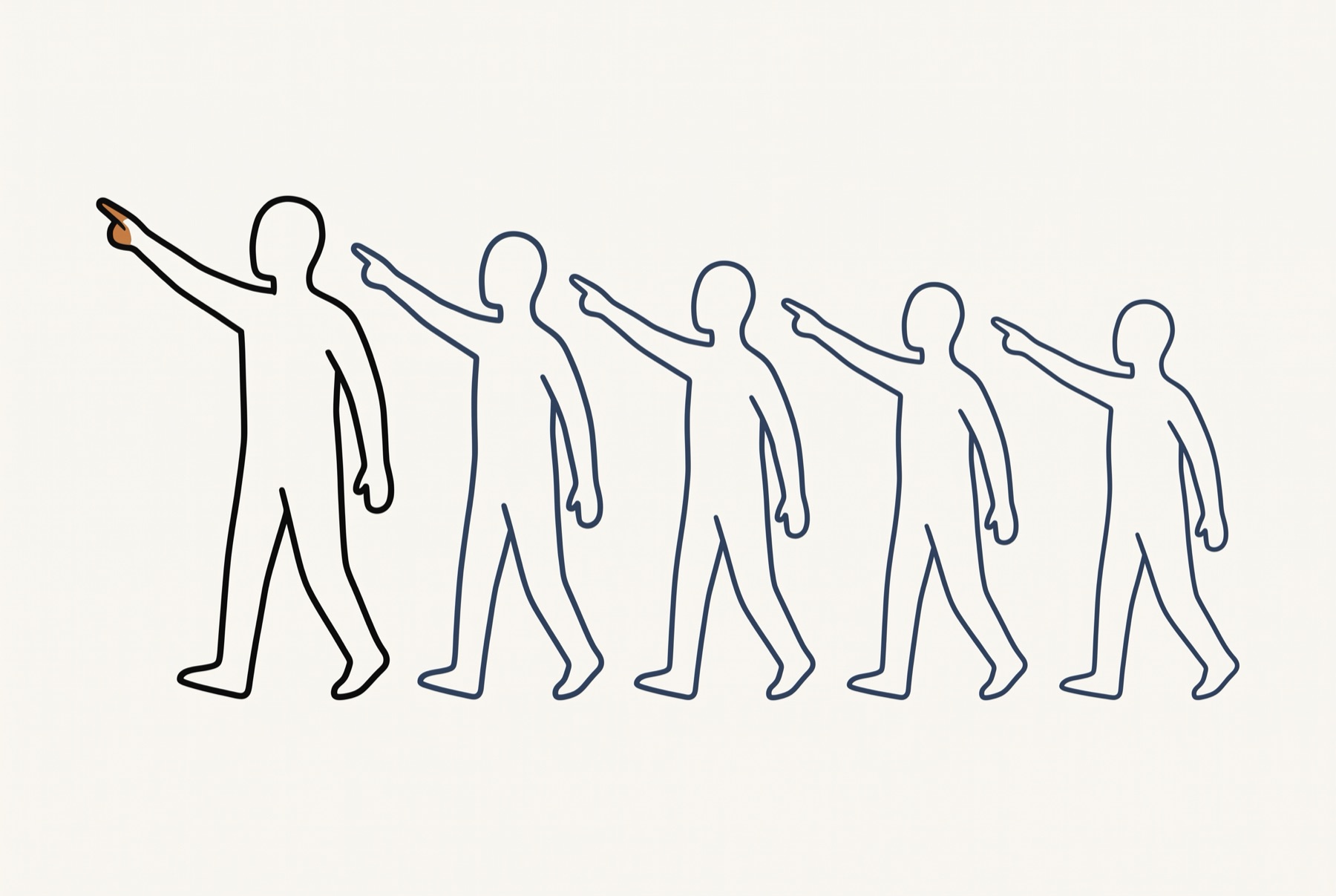
One visible vote is enough to start it. Muchnik, Aral and Taylor secretly up-voted new comments on a news site as they appeared, and that single manufactured vote raised a comment's final rating by 25% on average. Salganik, Dodds and Watts ran 14,341 people through a music market where some could see what earlier participants had downloaded. Seeing the counts made the hits bigger and made which song became a hit less predictable.
The worst part is that it feels like agreement. Lorenz and colleagues had 144 participants estimate facts, and letting them see each other's answers narrowed the spread without improving accuracy while raising how confident everyone felt. A room that has just converged on one name is more sure and no more right.
Room size changes who does the framing. Fay, Garrod and Carletta found five-person groups behave like a conversation, where you are swayed by whoever you actually talk to. Ten-person groups behave like serial monologue and follow the dominant speaker. Fay and colleagues tested five and ten, and nothing larger, so treat ten as the edge of the evidence rather than the start of a curve.
What it feels like to be the one named
Two errors run in opposite directions at the moment of the reveal, and both land the facilitator in the same place.
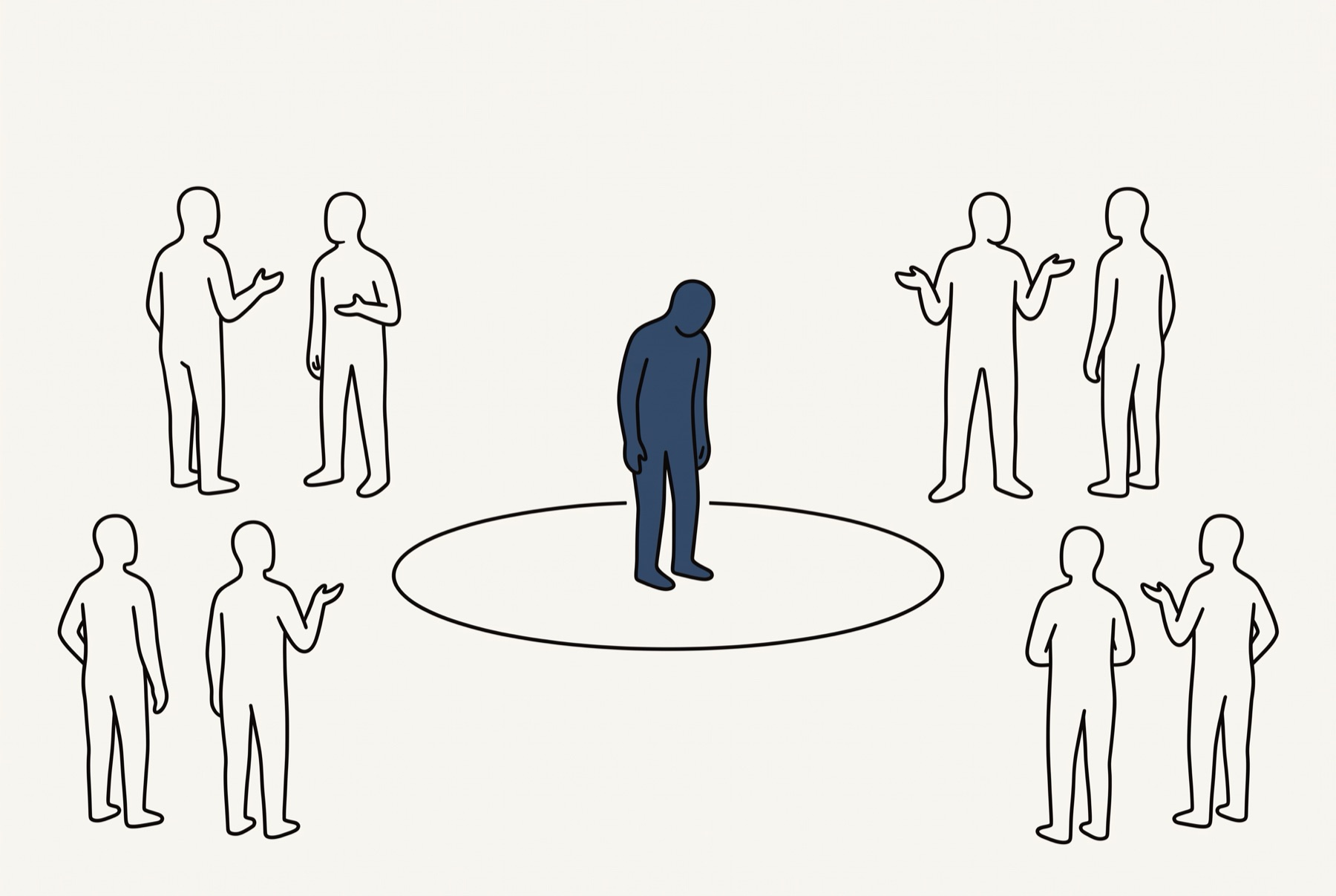
The first belongs to whoever wrote the answer. Kruger, Gordon and Kuban found that teasers and targets differ systematically in how they read the identical tease, with targets construing it as considerably more malicious than the teaser did. Good intentions are obvious from the inside and invisible from the outside.
Acas puts the same point in workplace terms: behaviour "can still be bullying even if they do not realise it or do not intend to bully someone". So does the law. Under section 26 of the Equality Act 2010, whether conduct counts as harassment turns partly on the perception of the person it landed on. The other circumstances count too, and so does whether it was reasonable for the conduct to have that effect. Intent is not the test.
The second error belongs to whoever gets named, and it runs the other way. Gilovich, Medvec and Savitsky sent people into a room in an embarrassing T-shirt and asked how many observers could say who was on the shirt. The wearers guessed exactly twice as many as actually could, a 23-point overestimate. Boothby, Cooney, Sandstrom and Clark found another error pointing the same way, in lab conversations between strangers. Across 102 people talking for anywhere from two to forty-five minutes, each underestimated how much the other one liked them.
Assume the person writing thinks it is kinder than it reads, and assume the person named thinks it is bigger than it was. Neither of them corrects themselves in the room, so the prompts and the pace are what you actually control. Keep the prompts pointed at habits and keep the reveal moving.
The most likely to questions to cut
Three kinds of prompt earn a target and give nothing back. Cut them from any list you copy, including the ones further down this page if you decide they do not suit your room.
Anything about a body. Lampard and colleagues surveyed 2,793 adolescents across twenty schools and found that at the average school, 27% of students reported weight-related teasing. Where more of it went on, girls reported lower self-esteem and more body fat dissatisfaction and boys reported more depressive symptoms, after accounting for each student's own experience. Those are associations rather than proof of cause, and they are still enough reason to delete every prompt about size, height, hair, skin or clothes.
Anything that counts what somebody drinks. Zamboanga and colleagues reviewed the research on drinking games among high schoolers and incoming college students. Taking part is consistently linked to negative consequences like passing out and becoming sick. A prompt about the mugs on somebody's desk is a habit. A prompt about who drinks the most, or one that hands a shot to whoever is named, is a nomination with a dare attached. Do not build that.
Anything that names who is unwanted. Cyberball is a computerised ball game where two or more avatars stop passing to you. Hartgerink, van Beest, Wicherts and Williams pooled 120 Cyberball studies covering 11,869 people, and name the needs it threatens as belonging, self-esteem, control and meaningful existence. The average ostracism effect was large, d > |1.4|, and generalised across the player counts, samples and measures they tested. Mulder and colleagues, who video-recorded 4,813 children playing it, note a study where recovery began during the exclusion and affect returned to baseline within minutes. That is exclusion by strangers in a lab, so reading it across to a party prompt is a judgement rather than a finding. It is a judgement worth making, because a lab exclusion ends when the game does and a name the room has read does not. Nothing phrased as who would be left behind, forgotten, or not invited belongs in a room of people who have to work together on Monday.
The prompts that survive point at a habit, a preference or a small competence. The test is whether the person named would be happy to have it read out.
Most likely to questions for work
These want a team with a few weeks behind it. A room that met this morning has nothing to nominate on but appearance, so ask something people answer about themselves first. Nothing below asks about a body or about who the room would leave out.
- Most likely to reply to a message at midnight
- Most likely to have three unfinished drinks on their desk
- Most likely to know where the good coffee is in a city they have never visited
- Most likely to bring snacks nobody asked for and everybody eats
- Most likely to still be talking after the meeting has ended
- Most likely to keep a spreadsheet for something that is not work
- Most likely to actually read the terms and conditions
- Most likely to say quick question and mean forty minutes
- Most likely to have a desk plant that is thriving
- Most likely to have a desk plant that is not
- Most likely to know everyone's name by the end of week one
- Most likely to spot the one typo on the slide
- Most likely to survive a week with no wifi
- Most likely to be early to everything
- Most likely to book the room and then forget to use it
- Most likely to have a firm opinion about the office temperature
- Most likely to own the good pen
- Most likely to have a spare monitor at home doing nothing
- Most likely to answer an email with a phone call
- Most likely to know a shortcut nobody else knows
- Most likely to still have a receipt from 2019
- Most likely to give the shared document a name that helps
- Most likely to have read the handbook
- Most likely to have a playlist ready for any occasion
- Most likely to fix the printer
- Most likely to volunteer before hearing the whole question
- Most likely to take the stairs
- Most likely to have a backup plan for the backup plan
- Most likely to remember a birthday with no reminder
- Most likely to send a calendar invite with an agenda in it
- Most likely to win a pub quiz on a subject nobody expected
- Most likely to become a legend in the group chat for one message
Most likely to questions for a team that knows each other
Sharper, and aimed at the work. A round like this is worth running for the same reason a retro is. The answers show a team how it sees itself, and no one person in it has that picture already.
- Most likely to catch the bug on the last read-through
- Most likely to ask the question everyone else was thinking
- Most likely to have the answer buried in a document from last year
- Most likely to notice when somebody has gone quiet
- Most likely to reply in the thread instead of starting a new one
- Most likely to have already tried the thing being proposed
- Most likely to write the runbook nobody knew they needed
- Most likely to say the awkward thing kindly
- Most likely to rescue a demo that is going sideways
- Most likely to remember why we decided that
- Most likely to know which customer will hate this
- Most likely to make a deadline look easy
- Most likely to find the clause in the contract
- Most likely to bring a whiteboard marker that works
- Most likely to end a meeting early
- Most likely to turn up with a prototype instead of an opinion
- Most likely to know what every acronym stands for
- Most likely to explain it so a new starter gets it
- Most likely to be right about the risk nobody wanted to hear
Only with a team that already trusts each other
These name a friction rather than a strength. In a team with history and a bit of affection they are funny and useful. In a team that is new, tense, or waiting on a reorg, they are a vote about who is the problem.
- Most likely to reopen a decision we already made
- Most likely to say it depends and mean it
- Most likely to vanish into a rabbit hole for an entire afternoon
- Most likely to send a message at the exact wrong moment
- Most likely to hold a strong opinion about a tool nobody else uses
- Most likely to be the reason a meeting overruns
- Most likely to change their mind halfway and be right
- Most likely to turn a two-line change into a two-week improvement
- Most likely to skip the process and get away with it

Most likely to reply at midnight?
3 answered, 0 revealed
Answers stay hidden until you reveal them.
Most likely to questions for the classroom
Every peer nomination study on this page was run in a school, and the classroom is where the round has its sharpest edge. Slotkin, Bierman and Jacobson identified the children in their study by sociometric social preference scores. That is the counting your game does, plus a second question about who is liked least. Drop the second question and half the arithmetic goes with it.
The half that stays is the count of who got named. A child who reaches the end of the round on nothing has kept that count without being asked to. So run more prompts than you need, hold a few back that you can aim, and do not stop until every child has been named for something. A teacher can steer that in the moment. A vote cannot.
A nomination is also not a ranking. A tier list puts every name on one board and leaves somebody in the bottom row, and the tier list page tells you not to build one about people. A nomination places one person and leaves everybody else where they were.
Two rules after that. Every prompt in the list below is something a student would be pleased to be named for, and no answer goes up until the whole class has finished writing. The habits rule from earlier bends here, because a prompt about who somebody might become is a compliment while the answer is still open.
- Most likely to know a fact nobody else in the room knows
- Most likely to ask the question that changes the lesson
- Most likely to lend you a pen and not want it back
- Most likely to spot a mistake on the board
- Most likely to finish a book in one sitting
- Most likely to remember the homework when nobody else does
- Most likely to make a group project actually work
- Most likely to make the whole class laugh
- Most likely to be brilliant at a sport nobody has heard of
- Most likely to have a pet with a strange name
- Most likely to start a club
- Most likely to become a scientist
- Most likely to run a marathon one day
- Most likely to teach themselves an instrument from videos
- Most likely to know the words to every song
- Most likely to build something that works out of nothing
- Most likely to bring in something interesting from home
- Most likely to help without being asked
- Most likely to explain it better than the textbook
- Most likely to visit every country on the map
- Most likely to write a book one day
- Most likely to fix a bike with the wrong tools
For older students, once the room is settled
These are teasing rather than praise, so they want a class that already likes each other and a teacher who will not bring the answers up again.
- Most likely to argue with the marking
- Most likely to leave an essay to the last night and get away with it
- Most likely to reply to the group chat at 2am
- Most likely to have a wildly specific hobby
- Most likely to defend a film nobody else has seen
Start from one of these
Each one opens in your dashboard, ready to run. You can change every word of it.
Most likely to, at work
Two rounds of work-safe prompts, collected face down and turned over one card at a time. Nobody sees an answer until everybody has written one, and every card carries its writer's name, because at work that is what stops somebody lobbing a grenade for the laugh.
5 slides · 2 activities
Most likely to, for a class
The classroom setting of the same board, with all three settings flipped: no card carries a name, every card turns at once, and each pupil writes three names rather than one. The prompt is one any child would be pleased to be named for.
4 slides · 1 activity
Most likely to happen here
The same prompts with the person taken out of them, run as a fixed-option poll so identical answers merge into a bar instead of into twelve identical cards. A live poll shows the room its own votes as they arrive, which is a fair trade for a question about the week and a bad one for a question about who in the room.
4 slides · 1 activity
Something with a right answer, first
Four questions about how rooms actually behave, each with a real answer, and then one nomination round. For a group that works together but is in one room for the first time: get a round with a right answer in before anybody points, so no single voice frames the one that follows.
5 slides · 2 activities
Most likely to questions for friends and family
The room with the most licence, and still the room where a bad prompt does the most damage, because these are the people you cannot stop seeing. Keep it to habits and running jokes.
- Most likely to lose their phone while holding it
- Most likely to cry at an advert
- Most likely to know the name of every dog on the street
- Most likely to cook something ambitious on a weeknight
- Most likely to pack for a weekend like it is a month
- Most likely to fall asleep first
- Most likely to photograph the food before anyone eats
- Most likely to be late and bring something excellent
- Most likely to have a firm opinion about a board game
- Most likely to have four hundred unread messages in one chat
- Most likely to make friends with the bartender
- Most likely to say yes to a trip with three days' notice
- Most likely to remember an inside joke from a decade ago
- Most likely to sing in the car with the windows down
- Most likely to get lost holding a map
- Most likely to drive everyone home without being asked
- Most likely to answer a paragraph with one word
- Most likely to send a voice note longer than the call would have been
- Most likely to adopt an animal on a whim
- Most likely to live on snacks for an entire weekend
- Most likely to talk to a stranger for an hour
- Most likely to still be dancing at the end of the night
Only in a room that already trusts each other
These name a fault rather than a habit, so they want a room where nobody has to wonder whether it was meant kindly.
- Most likely to start a debate that lasts all night
- Most likely to reply three days later
- Most likely to over-order at a restaurant
- Most likely to leave a party without saying goodbye
- Most likely to have terrible taste in films and defend it
- Most likely to retell a story everyone has heard
- Most likely to lose an argument and never admit it
- Most likely to double-book themselves
- Most likely to send the message meant for somebody else
How to run a most likely to round without the pile-on
The fix is mechanical, and it is one decision: the room sees no answer until everybody has written one.
Reveal is built for this, and its own page states the sequence: "Everyone answers first. Then you turn the cards over." The question goes up on the big screen and the answers do not. What the room sees while people type is the board filling with face-down cards, and a count of how many have arrived.
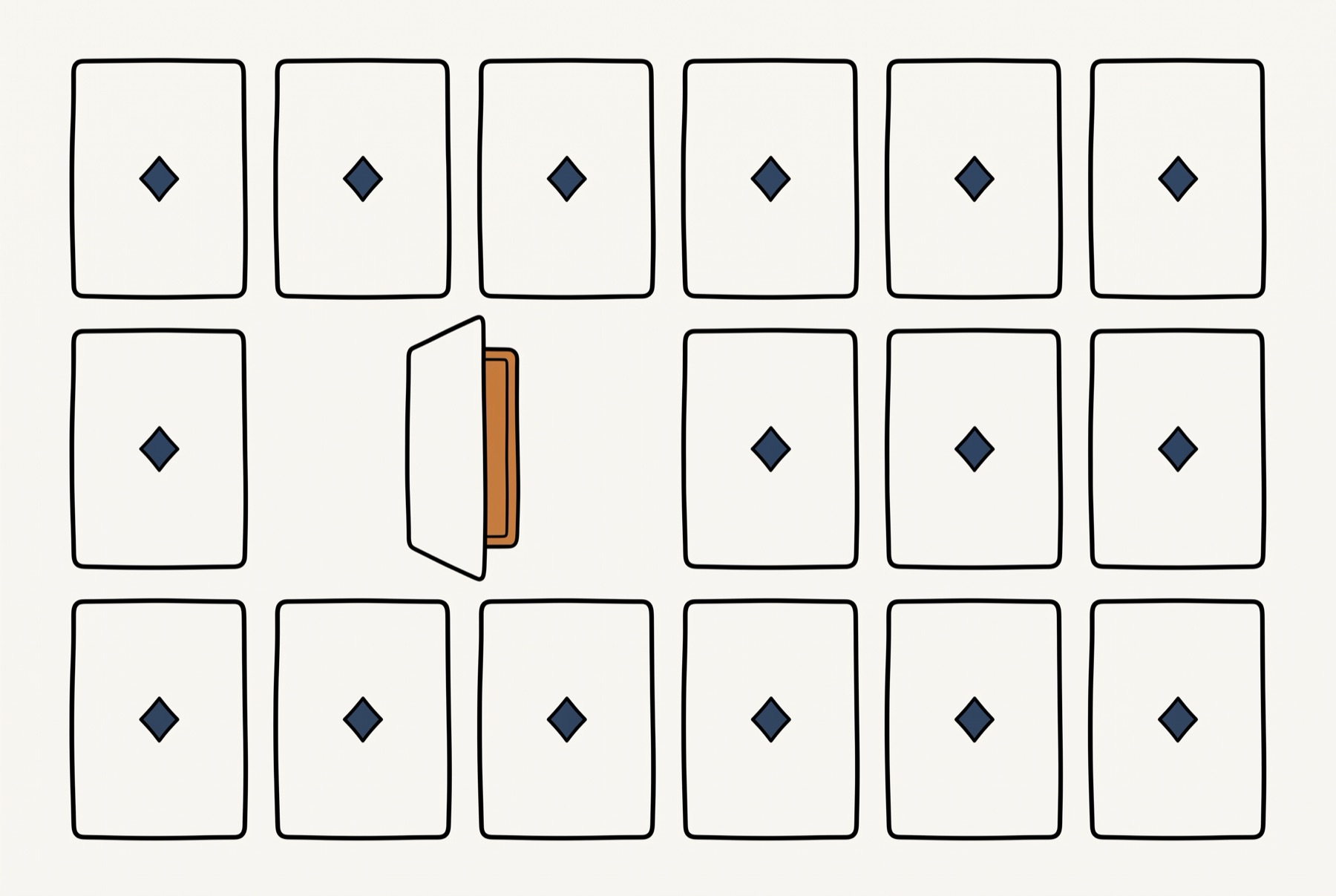
Write the prompt as a phrase, not a question. Most likely to reply at midnight, not who is most likely to reply at midnight. A phrase reads as the prompt it is. A question on a screen invites the room to answer it out loud, which is the thing this round exists to prevent.
Decide how the answers come out before you start. The two settings are "One at a time" and "All at once". Use one at a time for a small room, where each flip earns a reaction. Use all at once for a large one, where forty separate flips is a slideshow nobody asked for.
Decide whether cards carry a name. The form offers "Anonymous", which it describes as storing no name at all, and "Show names", which reveals each card with its writer. Anonymous is exact about the name: the card is bare to the room, and the answer still carries the id of the phone behind it. Anonymous is the default, and for a most-likely-to round the argument runs both ways.
For anonymity: Diehl and Stroebe told people their ideas would be judged, and they produced fewer of them when brainstorming alone. What they manipulated was being judged and what they counted was ideas, so the step from there to a named card on a wall is mine rather than theirs. Somebody who expects to be identified writes the safe answer.
Against it: Lelkes, Krosnick, Marx, Judd and Park ran three studies in which complete anonymity sometimes raised reports of socially undesirable attributes, and consistently reduced accuracy and increased satisficing. They were asking people about themselves, and naming a colleague is a different act. The argument for a name on the card is that accountability stops somebody lobbing a grenade for the laugh. Run a work round with names on. Run a classroom round with names off. Turn them off where the person writing reports to somebody who will read the card.
A never have I ever round is the same board with the attribution flipped, and it wants names off, because there the answer is about the person writing it.
Read the answers before the room does. The Control screen lists every card that is still face down, each with a "Drop" button. Dropping one "removes it for good", and "Nobody is told whose it was." The projected board never shows that list, so open Control on your phone. Sooner or later somebody writes the thing that should not go on a wall, and this is the screen where you see it first.
Then turn them over. "Put them back" turns every card face down again, so you can run the same reveal twice for one room. It deletes nothing, so a second group after lunch needs the activity launched again rather than a reset.
Let the laugh happen and then move. Lehmann-Willenbrock and Allen coded humour and laughter in 54 real team meetings. Patterns of it, a joke drawing a laugh drawing another joke, were positively related to team performance immediately and two years later. Humour or laughter alone was not. The relationship held only in teams with a low job insecurity climate, which is a reason to skip this on a bad-news day. The pattern needs a second beat, so wait for it. It also needs an exit, so reveal the next card before the room starts explaining the joke.
Use a fixed-option poll when you want a tally. Reveal shows every answer as its own card and does not merge duplicates. Twelve people naming the same person produces twelve identical cards, never a bar chart. A live poll will give you the count, at the price this page spends a whole section arguing against. The bars move while people vote, so the fifth voter is looking at the first four. That is a fair trade for a question about the work and a bad one for a question about who in the room.
When not to play most likely to
Skip it with three or four people. Authorship is obvious, the guess has nowhere to hide, and you have built a small tribunal. Ask something each person answers about themselves instead, and the icebreaker questions here are sorted by the room you are in.
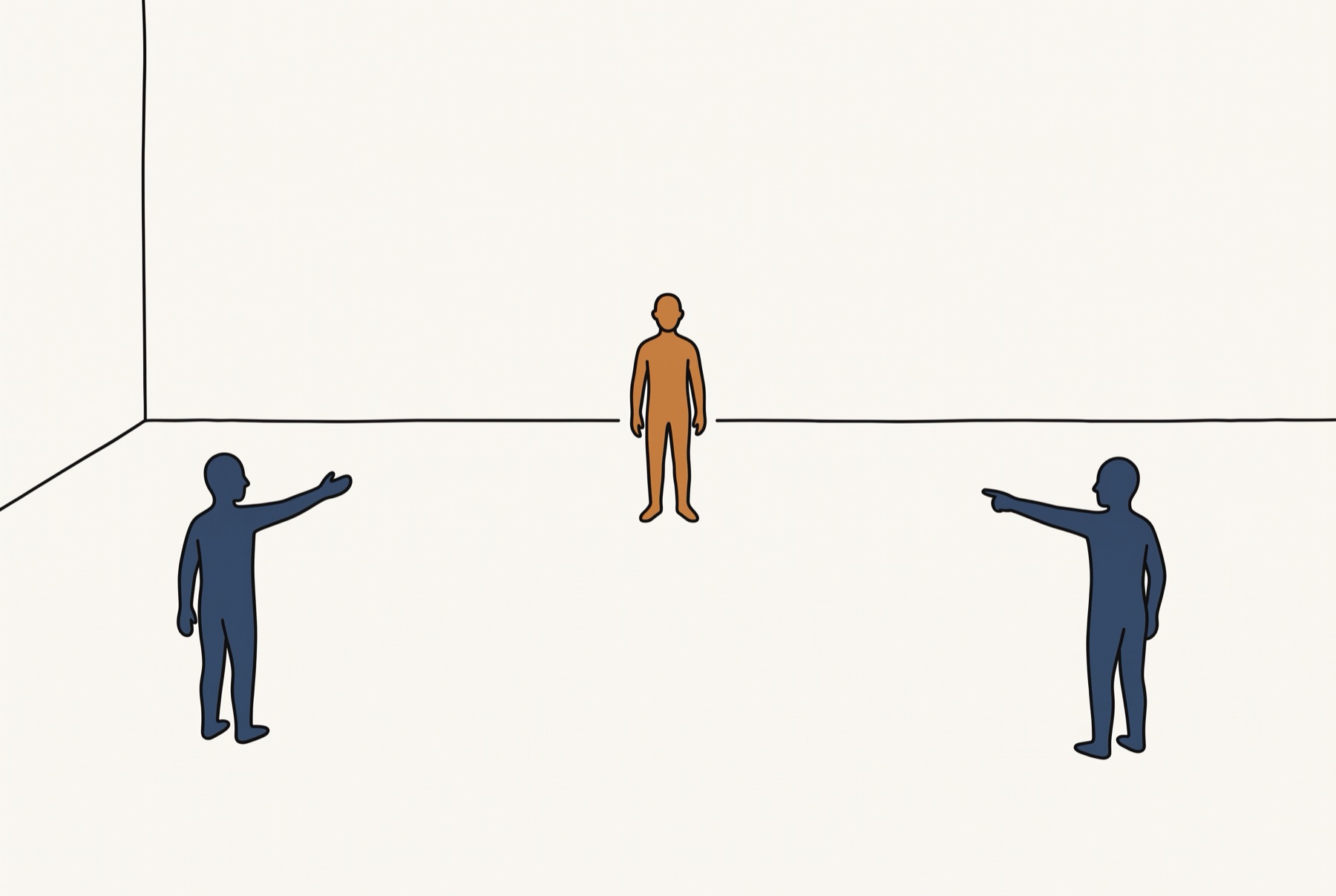
Skip it when the meeting is carrying bad news. A nomination round asks a room to point at people on the morning it is worried about who gets pointed at, and the joke arrives as a forecast.
Skip it when the group is a hierarchy meeting for the first time. Fay, Garrod and Carletta's ten-person groups were influenced most by the dominant speaker, and in a new hierarchy that is the most senior person. Get a round of something with a right answer in first.
Skip it in a class where one child is already isolated. The literature that measures peer rejection uses nominations like these to find that child. Do not run that counting in public.
And retire it before it goes stale. A nomination round with the same eight faces every Monday stops telling anybody anything and starts landing on the same handful of people. Three or four outings a year is plenty.
If a round lands flat, do not apologise for it. Read the most surprising answer out loud, say why it surprised you, and turn the next card. Asking the person who was named to explain the joke is how a flat round becomes a long one.
FAQ
Common questions
What are good most likely to questions for work?
Ones about habits rather than people. Most likely to reply at midnight, most likely to fix the printer, most likely to spot the typo on the slide. Avoid anything about a body, anything that counts what somebody drinks, and anything that asks who the room would leave out. Those name a person rather than a habit, and the room will remember them.
How do you play most likely to?
Ask a phrase beginning most likely to, have everyone answer with a name at the same time, and reveal the answers together rather than going round the table. The order matters more than the questions. Levy, Yardley and Zeckhauser split a set of audiences in half and put the same question to both halves. The half that raised hands and the half that clicked privately answered a long way apart.
How many most likely to questions should you ask?
Three to five in a work meeting. A round is one prompt, everyone answering, and the reveal, and it takes about two minutes. Five rounds is ten minutes, which is as much as a meeting will carry. At a party the game is allowed to be the event, so ten or twelve rounds is fine. Stop while the laughs are still landing rather than when they run out.
What most likely to questions should you avoid?
Anything about bodies, anything that counts what somebody drinks, and anything that asks who is unwanted. Lampard and colleagues found weight-related teasing reported by 27% of students at the average school in their sample. Where there was more of it, girls reported lower self-esteem and greater body fat dissatisfaction, and boys reported more depressive symptoms. There is no version of an appearance prompt worth the risk.
Is most likely to a good classroom activity?
Yes, if every possible answer is a compliment and no answer goes up until the whole class has finished. Save the teasing prompts for a class that already likes each other. The format is borrowed from sociometric research, which uses most liked and least liked nominations to identify rejected children. Positive prompts drop the least liked half of that arithmetic. The half that stays is the count of who never gets named, so run enough prompts to name every child at least once.
Can you play most likely to online or with a remote team?
It runs well online, because everyone types on their own phone at the same moment and nobody hears an answer before writing their own. Reveal collects every answer face down, shows a count while people write, and turns the cards over on your command, one at a time or all together. The work list above leans on an office, so a fully remote team wants the prompts about messages, calendars and documents.
What is the difference between most likely to and never have I ever?
Most likely to asks about somebody else. Never have I ever asks about yourself, which makes the first one riskier for the person named and the second riskier for the person answering. Both work as a silent round with a shared reveal. Run never have I ever with names off, and run most likely to with names on at work, which is a judgement about accountability rather than a finding.
Run this with your own team
Start free, no credit card. Your audience joins from their phones with a code — nothing to install.