YouGov asked 1,126 US adults in October 2025 whether a hot dog counts as a sandwich. It came back 53% no against 40% yes. The same poll asked whether they pour cereal or milk first, and 93% said cereal, against 4% for milk.
Both of those are this or that questions. Only one of them is worth putting in front of a room. A pair that splits people hands everybody something to defend. A dud tells the room, out loud, what it already knew.
Below are 255 pairs, grouped by the occasion you would use them in.
Start from one of these
Each one opens in your dashboard, ready to run. You can change every word of it.
This or that, one round
Five preference pairs from the article, answered from phones with the scoring switched off. The vote takes two minutes; asking people why they picked a side is the actual activity.
4 slides · 1 activity
The food fights
Two food arguments run as live polls: pineapple on pizza, then whether a hot dog is a sandwich, with a third position for people who say it is its own thing. National polling left both close, so the room's split is genuinely unknown.
5 slides · 2 activities
The order experiment
One close pair run as an A/B test: the two groups see the same options in opposite orders, assigned alternately so they come out the same size. Puts the question-order effect on the room's own screen.
4 slides · 1 activity
Write your own pairs
A word cloud that collects the small arguments the room actually has. Participants cannot write quiz questions themselves, so this is how the room's own pairs get into next week's round.
4 slides · 1 activity
What a forced choice does that a rating scale does not
A five point scale has a middle. A pair does not.
Take the middle out and the fence goes with it. Bradley, Peabody, Akers and Knutson ran a Rasch analysis on a scale carrying a "not sure" midpoint. Their conclusion was that a neutral middle category distorts the data to the point where meaningful measures cannot be built from it. On a five point scale you can answer without picking a side. In a pair you cannot, which is the point.

There is a second default worth avoiding. Saris, Revilla, Krosnick and Shaeffer tested agree or disagree scales against questions with item specific options across representative samples, and found the agree or disagree versions had much lower quality.
Comparing is the method people reach for when rating will not hold still. Kinnear, Jones and Davies pooled 101 comparative judgement sessions in Behavior Research Methods. The premise the method rests on sits in their introduction: asking people to assign absolute scores "may prove unreliable because participants each interpret the absolute scores in different ways". That is their starting assumption rather than a result they set out to test. Two things side by side are easy. One thing on a scale of one to five is a private guess about what four means.
Then there is the arithmetic. Nine people answering one pair from their phones is one moment. Nine people saying an answer out loud is nine turns, and eight of those turns are somebody waiting.
What makes one pair good and another dead
The split is what makes a pair work, and a poll can tell you the split before you ask.
YouGov's October 2025 poll is a useful test bench, because it put twelve of these arguments through a national sample at once. Pineapple on pizza landed at 48% for and 44% against. Brownies came out 45% edge against 39% centre. Those are live pairs. The poll ran and settled neither, which is what makes them worth asking.
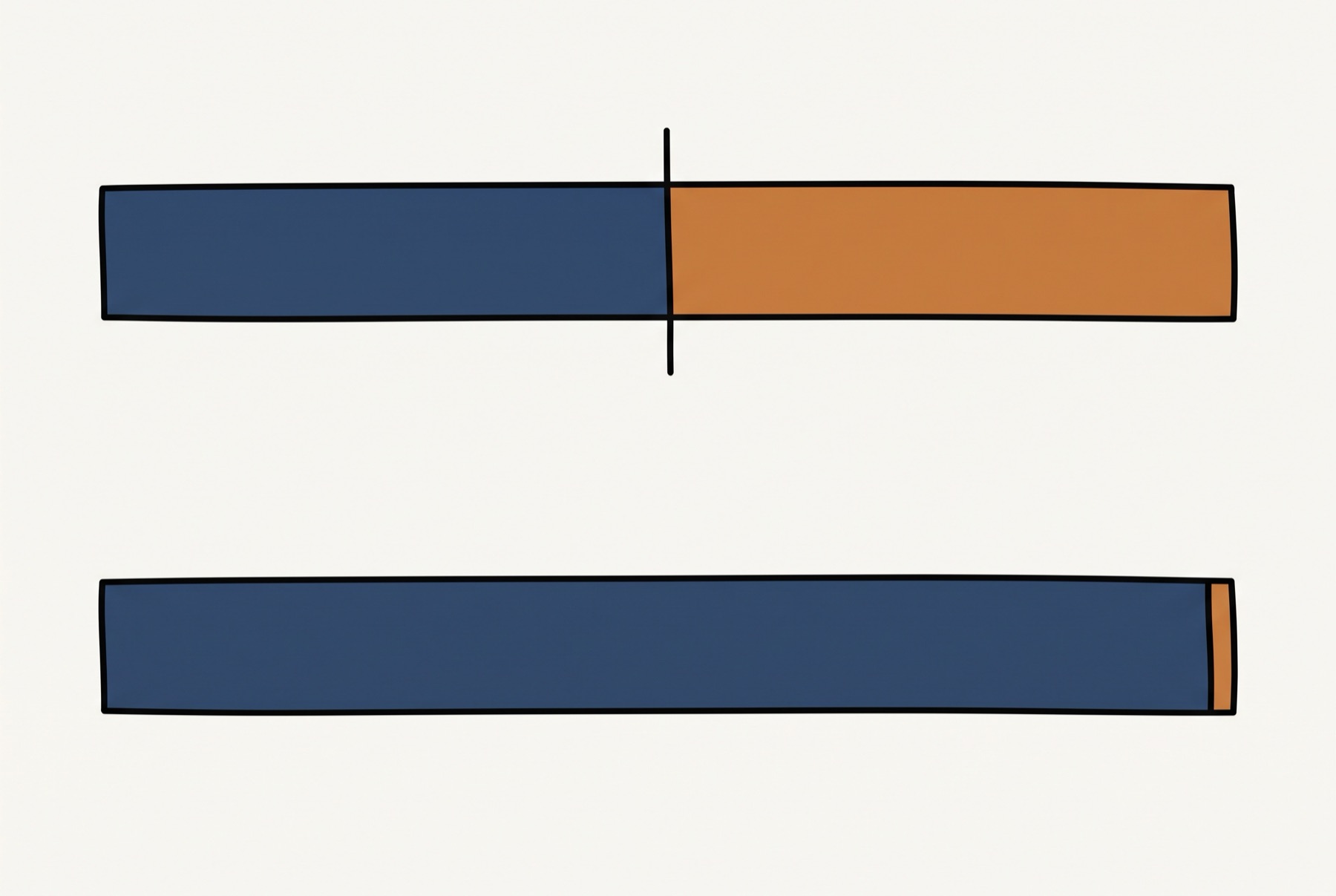
The duds are just as legible. Cereal goes in before milk for 93%. A hamburger is a sandwich for 73%. Leftover pizza gets reheated by 65%, and only about a fifth of those with a view on it say coriander tastes of soap. Ask any of those and you have run a formality.
Decka's own packs carry one of these. The pack called Small arguments, strong feelings ships with "Cereal or milk first?", which YouGov's number makes a formality rather than an argument. The hot dog and the pineapple in the same pack are the two the poll left unsettled. Swap the cereal for something the room will actually argue about.
Watch the third option too. YouGov found Americans prefer their toilet paper hung over rather than under by 57% to 14%, which is a landslide, and yet 24% said they had no preference. An explicit escape hatch collects the people who genuinely do not care. It also rebuilds the fence you removed, so offer it only when not caring is a real answer rather than an easy one. Decka's own packs use one, and the toilet paper question is the clearest case. It ships with "Over", "Under" and "I have never thought about this". Four of the twenty shipped questions carry a third option, and only two of those are an escape hatch: the toilet paper one, and "Cats or dogs?", which offers "Neither". The hot dog's third option is "Its own thing", which is a position rather than a shrug.
Three rules come out of all that. Both sides have to be defensible, so no pair where one option is obviously worse. Neither side can be the correct answer, because a pair with a right answer is a quiz question rather than an argument. And a national split is not your room's split. A poll of a thousand strangers rules out the duds. It tells you nothing about where eleven colleagues land, so do not ask it to.
This or that questions for work and meetings
Work pairs carry one extra constraint. Nobody should be able to read an answer as a performance review, so keep them about preference and habit, never about effort or commitment.
The pay and holiday pairs below trade one imaginary offer against another, which is why they are safe to ask. What somebody earns now is not a question for a room.
How you work
- Deep work in the morning or deep work in the afternoon?
- Inbox at zero or inbox at four thousand?
- Notes on paper or notes in an app?
- One big screen or two smaller ones?
- Headphones on or headphones off?
- Silence or music?
- Plan the week on Friday or on Monday?
- Hardest task first or warm up with an easy one?
- Batch your meetings or spread them out?
- Reply straight away or reply in one block later?
- A long document or a short call?
- Voice note or typed message?
- Deadline pressure or a long runway?
- Finish early or start late?
- Standing desk or sitting desk?
- Hot desk or the same desk every day?
- Tidy desk or tidy inbox?
- Calendar blocked out or calendar wide open?
- Draft in public or draft in private?
Meetings
- Agenda or whiteboard?
- Thirty minutes or fifteen?
- Camera always on or camera always off?
- Start on the hour or start five past?
- Round the room or whoever speaks first?
- Decide in the room or decide after?
- Recap in writing or recap out loud?
- Read the deck first or be walked through it?
- Present then discuss, or discuss as you go?
- Everyone in the room or everyone on their own screen?
- Standing meeting or sitting meeting?
- One person takes notes or everybody does?
- Cancel it or shorten it?
- A meeting that overruns, or one that ends early with nothing decided?
- Weekly team meeting or a written update?
The office
- Open plan or a door that closes?
- Office dog or office plant?
- Team lunch or team walk?
- Office kitchen or the place around the corner?
- Winter party or summer picnic?
- Air conditioning or windows open?
- Free snacks or free coffee?
- Offsite or an extra day off?
- Onboarding buddy or a written guide?
- Feedback in writing or feedback in person?
- Public praise or private praise?
- Your own mug or any mug?
- Birthday sung out loud or a card on the desk?
- Secret gift exchange or no gift exchange at all?
- Desk plant or desk photo?
Careers and the deal
- Never another meeting or never another email?
- Work from home forever or work from the office forever?
- A four day week at the same pay, or a pay rise and keep the five?
- A job you love with a long commute, or a job you like with none?
- Manage people or stay an expert?
- Small team or big company?
- Change teams every two years or stay ten?
- Learn on the job or learn on a course?
- Very good at one thing or quite good at five?
- Work with your best friend or work with your hero?
- A promotion with more meetings or a raise with the same job?
- Unlimited holiday nobody counts, or twenty five days you can point at?
- Retire early or never retire?
- Title or budget?
This or that questions for getting to know a new group
Talking about yourself is not the chore a cold room assumes it is. Tamir and Mitchell had people choose between answering questions about themselves and answering questions about somebody else, with money attached to the other option. Participants gave up an average of 0.63 cents per trial to talk about themselves instead. They open the same paper by citing conversation studies that put 30 to 40% of speech output into telling other people about their own experience.
A pair is the cheapest version of that trade. It asks for a real fact about you and gives you a one word way to say it, with no story attached and no turn to wait for. The open version, where somebody answers in a sentence rather than picking a side, is on its own page: get to know you questions.
- Morning person or night owl?
- Talk first or listen first?
- Big party or small dinner?
- Text or call?
- Plan the whole trip or turn up and see?
- Books or films?
- Cinema or sofa?
- One long holiday or three short ones?
- Cook or be cooked for?
- Wash up as you go or leave it to the end?
- Early to everything or late to everything?
- Save the best bite for last or eat it first?
- Sing in the car or sit in silence?
- Board games or card games?
- Team sport or solo sport?
- Run or swim?
- Shoes on indoors or shoes off?
- Dog person or cat person?
- Mountains or sea?
- City break or countryside?
- Museum or market?
- Podcast or playlist?
- Audiobook or paperback?
- Handwritten card or a long voice note?
- Give the speech or organise the party?
- Front row or back row?
- Sunrise or sunset?
- Summer or winter?
- Rain or heat?
- Bath or shower?
- Make the bed or leave it?
- Alarm on the first ring or three snoozes?
- Coffee before breakfast or after?
- New restaurant or the usual one?
- Order the same thing every time or something different?
- Pay by card or pay by cash?
- Print the ticket or show your phone?
- Learn a language or learn an instrument?
- Somewhere hot or somewhere with four seasons?
- Host or be hosted?
- Reply to the group chat or read and say nothing?
- Watch the film again or start a new one?
- Spoilers or no spoilers?
- Keep the receipt or bin it?
- Walk home or get the bus?
- Loud pub or quiet one?
- Birthday fuss or no fuss?
- Take the photo or watch it happen?
Food and drink this or that questions
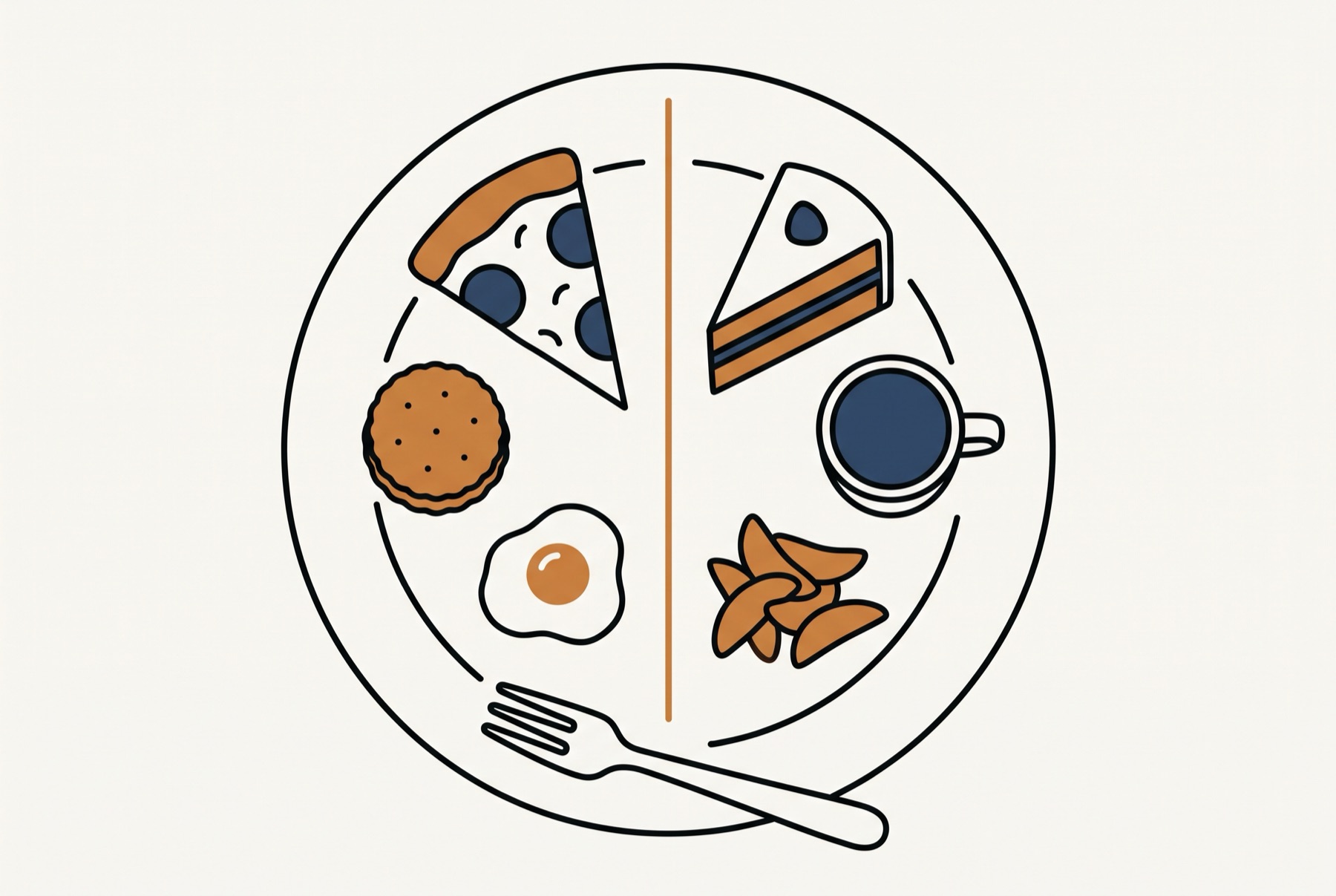
Food arguments run hot for a structural reason. Everybody in the room has eaten, so everybody is qualified, and the strength of feeling is out of all proportion to the stakes. YouGov put twelve of the pairs below to a national sample in October 2025. Three came back close, meaning inside fifteen points, and the other nine came back lopsided. Both are marked, and three against nine is the warning: a subject people argue about is not a subject they are split on. Read a lopsided pair out and you get agreement, which is not what you came for.
Settled arguments, or not
- Pineapple on pizza or no pineapple? (measured close)
- Is a hot dog a sandwich, or not a sandwich? (measured close)
- Brownie from the edge or the middle? (measured close)
- Sandwich cut diagonally or straight down? (measured lopsided)
- Is chilli a soup or a stew? (measured lopsided)
- Is coleslaw a salad or not? (measured lopsided)
- Rinse the rice or never rinse the rice? (measured lopsided)
- Is a hamburger a sandwich, or not? (measured lopsided)
- Cereal first or milk first? (measured lopsided)
- Leftover pizza cold or reheated? (measured lopsided)
- Ketchup on eggs or absolutely not? (measured lopsided)
- Does coriander taste of soap, or taste fine? (measured lopsided)
- Scone that rhymes with gone, or scone that rhymes with bone?
- Jam first or cream first?
- Biscuit dunked or biscuit dry?
Drinks
Ten pairs, three of them about alcohol. In a room where you do not know who does not drink, use the other seven.
- Coffee or tea?
- Filter or espresso?
- Milk in first or tea in first?
- Sparkling or still?
- Juice with bits or without?
- Hot chocolate or hot coffee?
- A round of shots or a proper glass of something?
- Cocktail or beer?
- One good bottle or three cheap ones?
- Water on the table or no water on the table?
The meal
- Sweet or salty?
- Chocolate or crisps?
- Pancakes or waffles?
- Cooked breakfast or a pastry?
- Fried egg or scrambled?
- Chips or roast potatoes?
- Rice or noodles?
- Burger or pizza?
- Curry or pasta?
- Sushi or steak?
- Well done or rare?
- Thin crust or deep pan?
- Garlic bread or dough balls?
- Crunchy peanut butter or smooth?
- Beans on the toast or beans on the side?
- Olives yes or olives no?
- Blue cheese or never blue cheese?
- Pickles on or pickles off?
- Hot sauce or no heat?
- Cheese course or dessert?
- Ice cream or cake?
- Cake or pie?
- Starter and no dessert, or dessert and no starter?
How you eat
- Takeaway or cook at home?
- Buffet or set menu?
- Share plates or your own plate?
- Split the bill or pay for what you had?
- Breakfast for dinner or dinner for breakfast?
- Reheat in a pan or in the microwave?
- Toast the sandwich or leave it cold?
- Eat at the table or eat on the sofa?
- Same lunch every day or a different one?
- Meal deal or leftovers?
Impossible choices
Hypotheticals do a different job from preferences. A preference tells the room something true about you. A hypothetical mostly shows it how you argue. Keep them short. A pair you have to explain before anybody can answer it has stopped being a pair. Most of these are would you rather questions, and the ones written for a room of colleagues have their own page: would you rather questions for work.
- Fly or be invisible?
- Always twenty minutes early or always ten minutes late?
- Know when you will die or know how?
- Only whisper or only shout?
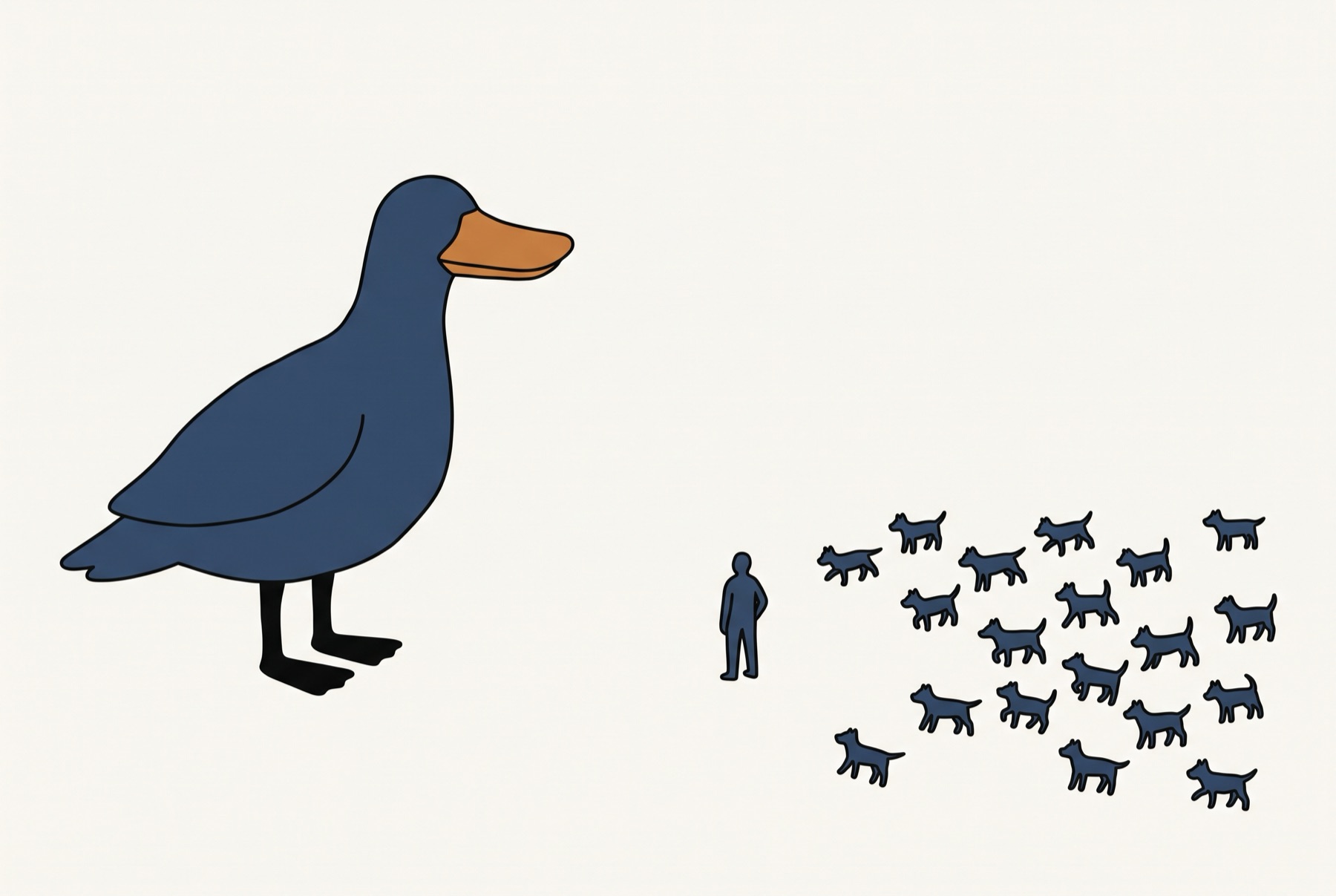
- Fight one horse sized duck or a hundred duck sized horses?
- Read minds or see one day ahead?
- Speak every language or talk to animals?
- Never lose your keys or never lose your phone?
- Live without music or live without films?
- No internet for a week or no hot water for a week?
- Teleport or time travel?
- Live in the past or the future?
- Be famous or be rich?
- Funniest person in the room or the smartest?
- Never be tired or never be hungry?
- Unlimited money or unlimited time?
- Delete all your photos or all your messages?
- Lose your sense of taste or your sense of smell?
- Every question answered or every wish granted?
- Undo one thing or see one thing coming?
- Restart your career or restart your education?
- A great singer or a great dancer?
- Live on a boat or live in a cabin?
- Never sit in traffic or never queue?
- Slightly too hot forever or slightly too cold forever?
- Wet socks all day or a stone in your shoe?
- A sneeze that never arrives or an itch you cannot reach?
- Fight a bear with a stick or a swarm of bees with a net?
- Stuck in a lift for a day with a stranger, or alone?
- Pause time or rewind ten seconds?
- Perfect memory for faces or perfect memory for names?
- Be feared or be forgotten?
- Win the argument or keep the friend?
- First to arrive or last to leave?
- Never work again or love the job you have?
- Know every secret or keep every promise?
- Only be able to type or only be able to speak?
- A rewind button or a skip button?
- Always know the truth or always be believed?
- Invisible for a day or somebody else for a day?
- A personal chef or a personal driver?
- Never wait on hold or never fill in a form?
- Fix anything or build anything?
- A phone that never runs out or a car that never needs fuel?
- Meet anyone from history or anyone alive today?
- Great at your hobby or great at your job?
- Live one life twice or two lives once?
Travel and weekend this or that questions
Travel pairs need no shared history and no in jokes, which is what makes them work on a group that has just been thrown together. They also carry a price tag. Hostels, long haul and all inclusive are questions about money as much as taste. In a room with a wide pay range, the safe ones are about aisles, packing and satnavs.
Getting there
- Aisle or window?
- Airport three hours early or the last possible minute?
- Carry on only or check a bag?
- Train or plane?
- Road trip or flight?
- Drive or be a passenger?
- Satnav or a paper map?
- Long haul once or short hops often?
- Travel overnight or lose the day?
Being there
- Hotel or rental?
- Pool or the sea?
- Tent or camper van?
- Hostel or hotel?
- All inclusive or find your own dinner?
- Same place every year or somewhere new?
- Beach day or city walk?
- Guided tour or wander?
- Wake early on holiday or sleep in?
- Snow holiday or sun holiday?
- Solo trip or group trip?
- Local food or something familiar?
- Ten words of the language or none?
- Souvenir or photos only?
- Send a postcard or send a photo?
- Pack light or pack for everything?
The weekend at home
- Weekend at home or weekend away?
- Saturday night out or Sunday morning walk?
- Long walk or long lunch?
- Chores on Friday or chores on Sunday?
- Sunday roast or Sunday takeaway?
- One big clean or a tidy every day?
- Garden or balcony?
- Radio on in the kitchen or silence?
- One long series or one film?
- Read in bed or read on the sofa?
- Bake or cook?
- City or village?
- Old house or new build?
- Neighbours you know or neighbours you do not?
Start from one of these
Each one opens in your dashboard, ready to run. You can change every word of it.
This or that, one round
Five preference pairs from the article, answered from phones with the scoring switched off. The vote takes two minutes; asking people why they picked a side is the actual activity.
4 slides · 1 activity
The food fights
Two food arguments run as live polls: pineapple on pizza, then whether a hot dog is a sandwich, with a third position for people who say it is its own thing. National polling left both close, so the room's split is genuinely unknown.
5 slides · 2 activities
The order experiment
One close pair run as an A/B test: the two groups see the same options in opposite orders, assigned alternately so they come out the same size. Puts the question-order effect on the room's own screen.
4 slides · 1 activity
Write your own pairs
A word cloud that collects the small arguments the room actually has. Participants cannot write quiz questions themselves, so this is how the room's own pairs get into next week's round.
4 slides · 1 activity
How to run a this or that round
Five pairs is a round. Every This or That pack in Decka ships with five questions and a per question timer of twenty seconds, or fifteen for the pack of small arguments, and that is deliberate. The round should end while people still want one more.
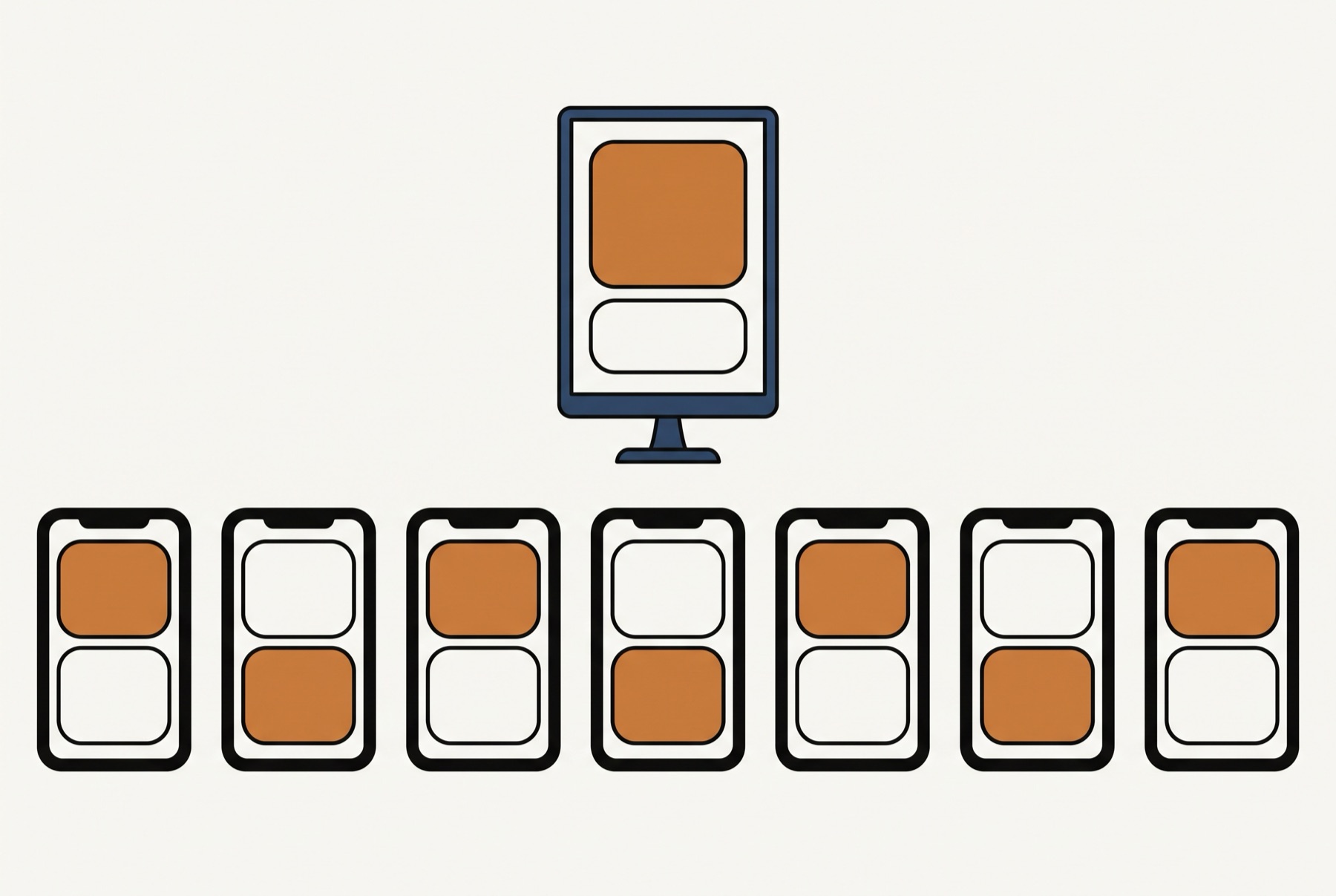
Put the pair in a deliberate order. O'Halloran and colleagues ran a split ballot experiment on a youth tobacco survey. All nine of their unadjusted order tests leaned the same way, three of them significantly: respondents picked an option more often when it appeared first. The This or That packs ship with answer shuffling off, because shuffling would reorder a pair somebody wrote as a pair. That leaves the order to you, so write the underdog first when you want a fair fight.
Ask why, immediately. Knight, Wise and Southard recorded student discussions of in class questions and found that prompts asking students to use reasoning produced significantly more discussions containing reasoning connected to evidence. The vote is not the activity. The vote is what gives two people a reason to explain themselves.
Put it before the agenda. Allen, Lehmann-Willenbrock and Landowski surveyed 252 working adults, and found the link between pre-meeting talk and perceived effectiveness was stronger for less extraverted respondents. The link held even when good meeting procedures were accounted for. They studied talk rather than a round of questions, so the round stands in for it.
Do not announce it as a team building exercise. YouGov reported in January 2022 that 60% of Britons put through one called the experience embarrassing or cringe-worthy. In Acas's January 2025 poll, 31% of British employees said they disliked team building, against 19% who disliked social activity with colleagues in general. More people object to the genre than to the socialising, so say what will happen instead: five questions, twenty seconds each, no right answers.
Let everybody answer at once, from their own phone. That is what makes a room of forty as fast as a room of six, and nobody hears an answer before they have given their own.
Expect to write the pairs yourself. Participants in Decka can answer quiz questions but cannot author them, so the room cannot add its own. If you want the room's own arguments in the deck, collect them with a poll or a word cloud first, then write next week's round out of what came back.
The mistake at the end is announcing a winner. A This or That activity is the quiz engine with the scoring switched off, so there is no score to announce and no podium to build. The phone says "Answer recorded" rather than correct or wrong. The split, with a count against every answer, waits on the activity's report under the heading "What the room said".
The stage below is that engine with the scoring left on. It runs a four option question with a right answer, flashes the correct bar at the reveal, and ends on a leaderboard. A This or That round keeps the countdown and the phones. A pair has two options, no right answer and no leaderboard.
On the big screen

Question 1 of 1
A supplier emails an unexpected invoice attachment. What do you do?
0 / 31 answered
On their phone
Question 1
A supplier emails an unexpected invoice attachment. What do you do?
Answer on your phone. Everyone sees the same question.
When a binary is the wrong tool
Two options is a good way to start a conversation and a bad way to finish one.
Do not use it to measure an attitude you plan to act on. A single pairwise comparison is not a measurement. Kinnear, Jones and Davies found that reaching decent reliability with comparative judgement meant collecting twenty or more comparisons per item, which is a research method rather than a warm-up. One binary tells you the room split. It does not tell you why, or how strongly, or whether the same room would split the same way tomorrow.
When the answer is supposed to change something, use the instrument built for it. An A/B test splits the room into two groups, shows each group a different version, then puts the two sets of responses side by side. It assigns people at random by default, so set the assignment to "Alternating" if you want the two groups the same size.
Do not treat it as a truth serum. Forced choice is sold as a way to strip out socially desirable answering. Bäckström and Björklund rebuilt two Likert personality inventories as simulated forced choice blocks, in Educational and Psychological Measurement. The forced choice version extracted the same personality information, social desirability included. If a question would embarrass somebody to answer honestly, two options will not fix it.
Do not sell it as a cure for too many options. The popular version of choice overload is shakier than it sounds. Lindkvist and Luke ran a preregistered experiment with 501 participants picking a charity from assortments of between two and eighty, and set size was not a significant predictor of whether anybody gave. Two options are worth using because they are fast and comparable, not because more would paralyse people.
Do not ask a question whose answer is a disclosure. A question about your own money, politics, faith, family or health stops being a preference and becomes a public statement with a name attached. A hypothetical trade between two offers is a different thing, because the answer is a preference about a job nobody has. The test is whether a person could answer honestly and have nobody learn something they did not choose to share.
Do not run it with three people. The whole case for phones is that nine turns take nine times as long as one, and three turns take almost no time at all. Ask the question out loud and let them argue.
And do not run it every week with the same nine faces. The format survives on the room not knowing the answer in advance, and a team twelve weeks in has answered sixty pairs in front of each other. By then the fix is an open question rather than a better pair, and the icebreaker questions bank has a set called This team, this room for exactly that.
FAQ
Common questions
What are this or that questions?
A this or that question offers two options and asks you to pick one, with no scale, no middle and no right answer. Coffee or tea, beach or mountains, camera on or camera off. They are used as icebreakers, as warm-ups before a meeting and as party games, because answering one needs no preparation and no explaining.
What are good this or that questions for work?
Keep them about preference and habit rather than effort. Deep work in the morning or the afternoon, agenda or whiteboard, headphones on or off, a four day week at the same pay or a pay rise and keep the five. Avoid anything that could be read as a comment on how hard somebody works.
How many this or that questions should you ask in a meeting?
Five is a round, and each pair needs about twenty seconds, so the voting itself is under two minutes. Asking two or three people why they picked what they picked is what takes the rest, and a round past ten minutes has stopped being a warm-up.
What makes a this or that question good?
The split. A pair only works if you cannot predict which side wins. YouGov's October 2025 poll makes the difference visible: pineapple on pizza came out close to even, which is a real argument. In the same poll, nearly everyone said they pour the cereal before the milk, which is not. Both sides have to be defensible, and neither can be the correct answer.
Is this or that the same as would you rather?
Would you rather is one kind of this or that. This or that covers any forced pair, including plain preferences and settled arguments, while would you rather is the hypothetical version, usually with two bad options or two impossible ones.
How do you run this or that with a large group?
Have everybody answer at the same time from their own phone rather than going round the room one at a time. Then ask two people who picked opposite sides to say why, or if the vote comes back one-sided, ask somebody on the short side. That keeps a full room the same length as a small one, and it stops the answer being set by whoever speaks first.
Are this or that questions good for kids and classrooms?
A this or that question has no wrong answer, which is what makes it safe to put to a class. In a classroom the useful move is the follow-up. Knight and colleagues, recording clicker discussions in a college biology class, found that prompting for reasoning produced significantly more discussion connected to evidence. The vote is the setup and the question after it is the lesson.
Run this with your own team
Start free, no credit card. Your audience joins from their phones with a code — nothing to install.