Six in ten Britons who have been put through a workplace team building exercise call the experience "embarrassing or cringe-worthy", in a YouGov survey reported in January 2022. Asked what they feel at the prospect of one, the most common answer, at 40%, is dread. And in a January 2025 Acas poll of 1,052 British employees, team building came out the single most disliked workplace social activity, at 31%, ahead of after-hours drinks.
Finding it cringe is the majority position among people who have sat through one. Both surveys asked about team building rather than the five minutes at the top of a meeting. That is the reputation your opening arrives carrying.
The cringe has two causes, and the question is usually innocent. The first is the label. The second is the format: one person at a time, out loud, with your name attached. Fix the label and fix the queue, and the opening stops being the part people brace for.
Start from one of these
Each one opens in your dashboard, ready to run. You can change every word of it.

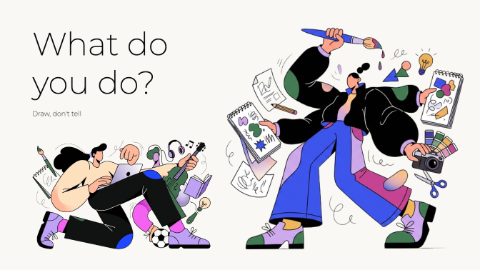
Draw your hidden talent
Everyone draws their hidden talent at once, then the room guesses who drew what. Sixty seconds, no queue, nobody performs.
3 slides · 1 activity
Draw your job description
An ice breaker that isn't cringe. Let people doodle their job descriptions as other guess who drew what. Then let them talk to the people they guessed wrong.
4 slides · 1 activity
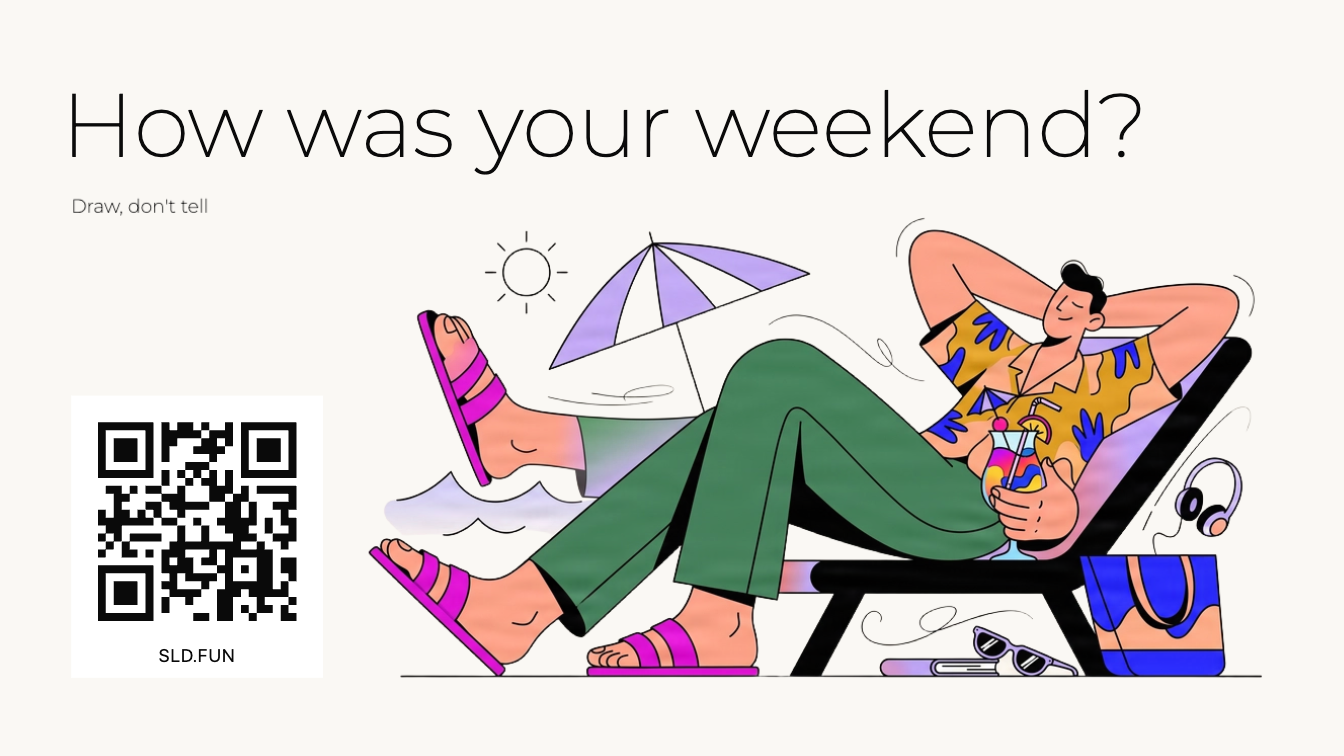
Draw your past weekend
Guess the doodler ice breaker activity. Works best for a team that already knows each other a little bit or has pockets of people who know each other, and can guide the guess a little.
4 slides · 1 activity
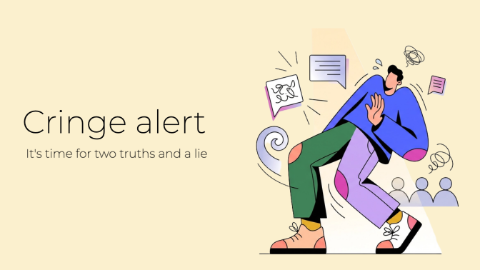
Two truths and a lie
If you insist on two truths and a lie, at least add a high score! Use the quiz activity to let the audience guess which one is the lie, and add questions for more people participating in truths and lies.
4 slides · 1 activity
Why calling it an ice breaker makes it worse
YouGov measured that dread at the prospect of a team building exercise, not during one. It is a reaction to an announcement. Say the words quick ice breaker and you have filed the next five minutes under a genre, before anyone has heard the question.
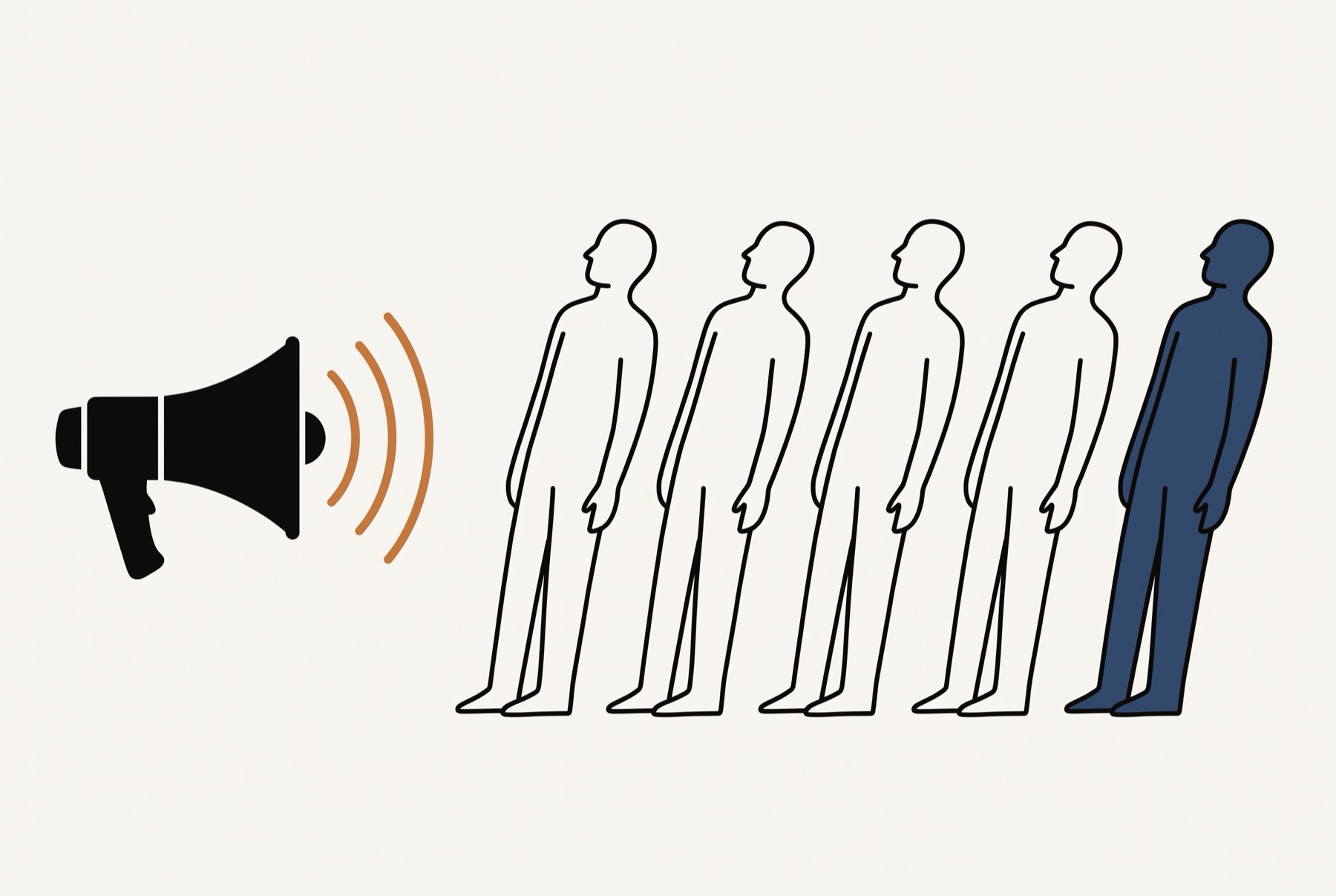
You have also announced two other things: that this is fun, and that management arranged it. That combination is the one that stops working. Tews, Jolly and Stafford studied 491 employees across 141 stores. Fun activities went with lower staff turnover only where the fun read as less managed. Where it read as managed, they did nothing at all.
So do not use the word. Describe what is about to happen instead: everyone draws for sixty seconds, then we guess whose drawing is whose. The people who said dread were rating a genre, and the label is what tells a room which genre this is.
Then hand the room a say. Patall, Cooper and Robinson's meta-analysis of 41 experiments found that choosing an activity, rather than being assigned it, raised intrinsic motivation, effort and task performance. Offer two prompts and let the room pick. The prompt is fixed when you create the activity, so both have to exist before the room votes. It costs a sentence and changes whose activity this is.
Why ice breakers feel so awkward
The standard opener is a queue: one person speaks, everyone else waits, and every answer arrives with a name on it.
Count what the queue costs. Fourteen people at twenty-five seconds each is nearly six minutes, and the wait costs more than time. Forrin and colleagues, asking where the next-in-line effect comes from, start from studies where people recalled what they heard just before their own turn worse than the rest. They put that down to anticipation pulling attention away from what is being said. A round-robin is not a group activity. It is fourteen solo performances in front of an audience waiting for its own turn.
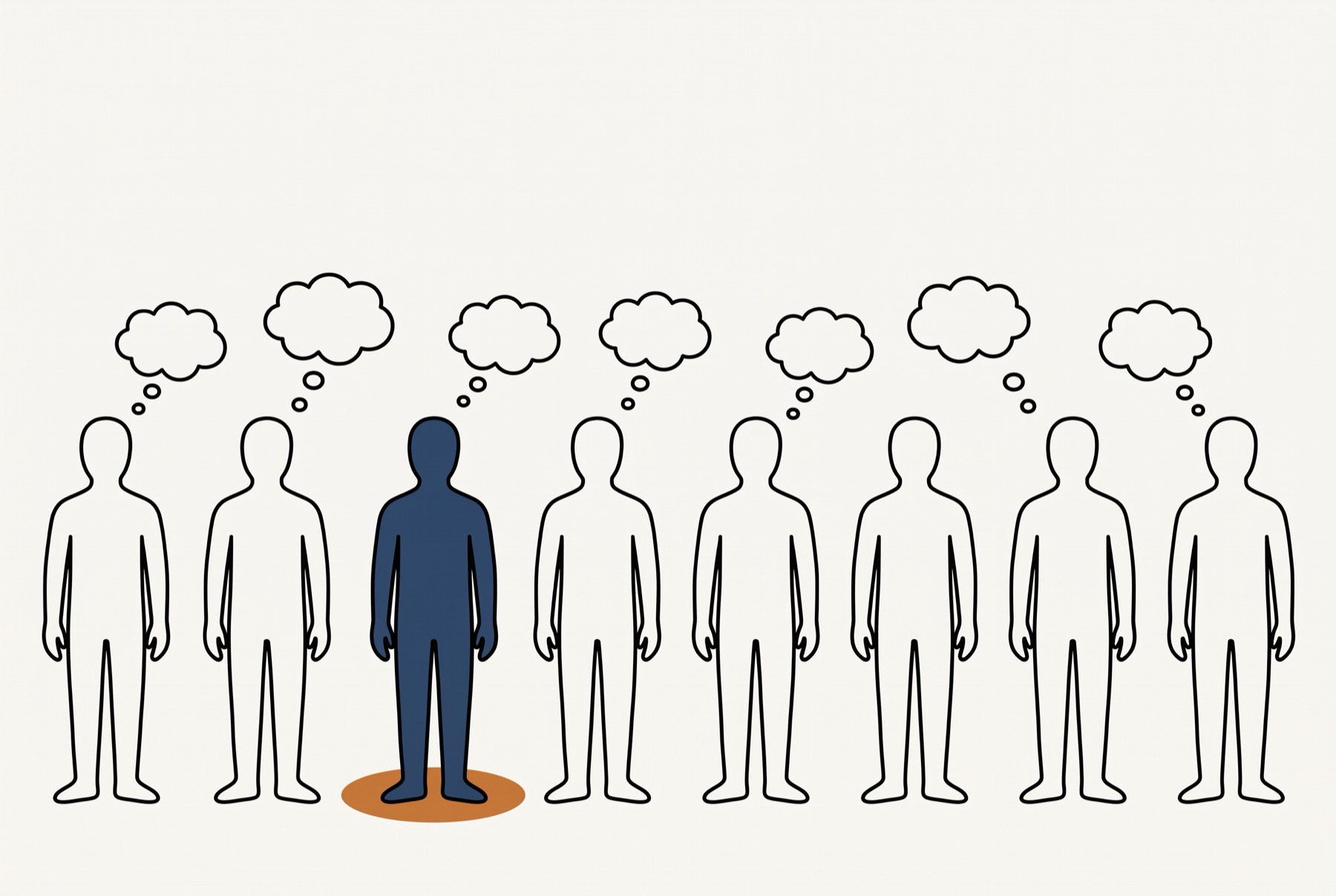
Being the performer is worse than the room realises. Gilovich, Medvec and Savitsky sent people into a room wearing an embarrassing T-shirt, then asked how many observers could say who was on it. The wearers guessed exactly twice as many as actually could, a 23-point overestimate. The person on the spot is running a private worst case, in front of a room taking in far less of it than they assume.
Attaching names finishes the job. Diehl and Stroebe told brainstormers that judges would rate their contributions, and the number of ideas produced dropped significantly, however the apprehension was created.
Sequential wastes the room. Spotlit taxes the speaker. Attributed shrinks the answers. None of the three is the question. What you would bring to a desert island is harmless on its own, and so is almost everything on a decent list of get to know you questions. Delivered through a queue, a spotlight and a name tag, the harmless question plays as an interrogation with catering.
Can you just skip it and start the meeting?
Skipping has a measured cost of its own. Allen, Lehmann-Willenbrock and Landowski surveyed 252 working adults and found small talk before a meeting predicted how effective people rated it, over and above good meeting procedures. The effect was strongest for the least extraverted people in the room. The unglamorous chat while people trickle in is already doing the job staged openers claim for quiet people.
A warm-up also changes the work that follows it. Zheng and colleagues had pairs play an investment game that rewarded mutual trust. Among pairs given no warm-up, 35% never once fully cooperated. Among pairs who had simply chatted first, none.
The opening is load-bearing. What has to change is what it asks of people.
What works instead of ice breakers
Aim at something real first. Edmondson defines psychological safety as a shared belief that the team is safe for interpersonal risk taking. In her study of 51 work teams, safety reached performance through learning behaviour: asking, admitting, flagging problems early. That is what an opening is for. Not fun. Whether the next risky sentence in this meeting feels sayable.
The mechanism is Aron's. His team built four ingredients into the famous closeness procedure: escalating reciprocal disclosure, matching on attitudes, expected mutual liking, and naming closeness as the explicit goal. Tested element by element, only the task itself made a significant difference. Telling people to get close did nothing. The task is not weak medicine: pairs given the escalating questions beat matched small talk 4.06 to 3.25 on a closeness composite, a gap of .88 standard deviations.
That one result is the whole design brief. You cannot instruct a room to connect. You hand it a task whose by-product is connection, and you stay quiet about the by-product.
Put the evidence together and you get three constraints, enough to pick one activity instead of browsing two hundred. Everyone acts at the same moment. No name is attached to anything while it is being made. And the task is a real task, not an instruction to bond.
The fourth is ours rather than the literature's. The round needs a right answer, because otherwise it ends when the facilitator decides it has ended, and that is the moment an opener reads as an exercise.
Hold any opener up against those four before you run it. The first decides whether a game survives a big room, since anything that runs one person at a time gets worse as the room grows. Icebreaker games files them by the size of room each one survives.
Why a drawing game beats a round of questions
Drawing and guessing satisfies all four constraints at once. Everyone draws the same prompt in the same sixty seconds. The drawings go up unsigned. The prompt is a real question about the person, not an instruction to bond. And guessing who drew which has a right answer, so the room has a job.
The drawing itself is not filler. In Wammes, Meade and Fernandes' experiments, drawing a word beat writing it for later recall at d = 0.67, and beat viewing a ready-made picture at 0.42. Four seconds per item was enough. The act of drawing is doing the work.
You cannot draw, and it does not matter. Fernandes, Wammes and Meade found the benefit unrelated to artistic ability, and it replicated in a lecture hall with 10 to 30 people drawing at once. A wobbly five-legged dog is better to guess about than a good one.
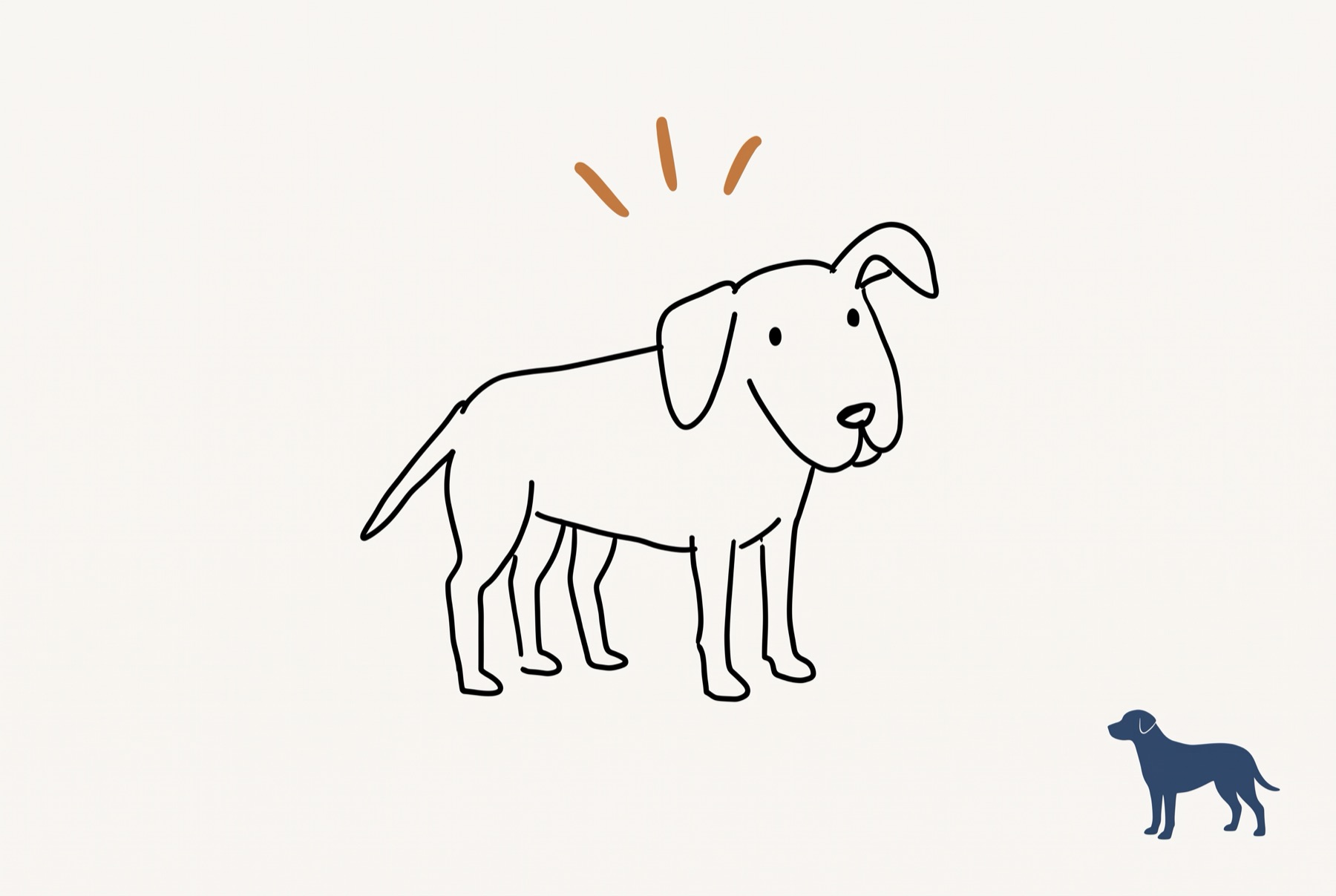
The prompt has to be specific, though. Boggs, Cohen and Marchand had one group doodle freely while a recorded message played, and their recall scored significantly worse than structured shading and worse than note-taking. That is a memory test rather than a meeting, so read it as a pointer. Give the room something definite to draw, never a blank page.
The guessing is what turns parallel sketching into a group. A guess is a tiny theory about a colleague, tested in public, with none of the risk of a claim about yourself.
The laughing matters, and the shape of it matters more than the volume. Lehmann-Willenbrock and Allen coded 54 videotaped team meetings, and humour patterns, a joke that draws laughter that draws another joke, predicted team performance immediately and two years later. Isolated jokes predicted nothing. A reveal round is built to produce the pattern: one wrong guess draws a laugh, which draws the next wrong guess.
One rule is not negotiable: everyone plays. Galantucci and Garrod found onlookers who saw a pair's drawings but could not respond understood them far less well than the people in the game. Watching is not playing.
Guess the Doodler is this format, ready to run. Participants scan a QR code or open a short link and draw on their own phones; nothing installs and nobody makes an account. Drawings stay unattributed until the reveal, and a correct guess scores a flat 100 points, with no bonus for speed.
Your phone — draw here
Waiting for host to start...
On the big screen
Guess the Doodler
Draw your area of responsibility
You get 30 seconds on the phone. Four teammates are drawing the same prompt.
See it in action
On a desktop you can play this round yourself — drawing included.
On the big screen
Guess the Doodler
Draw your hidden talent
What to draw when the team already knows each other
For a team with years of shared history, names are not the gap. The map is. Atlassian surveyed 12,000 knowledge workers, and 1 in 2 said teams at their company unknowingly work on the same things.
Groups are reliably bad at surfacing what they collectively know, even when paid to. Lightle, Kagel and Arkes' groups uncovered only 35% of hidden profiles when 75% was achievable on recall alone.
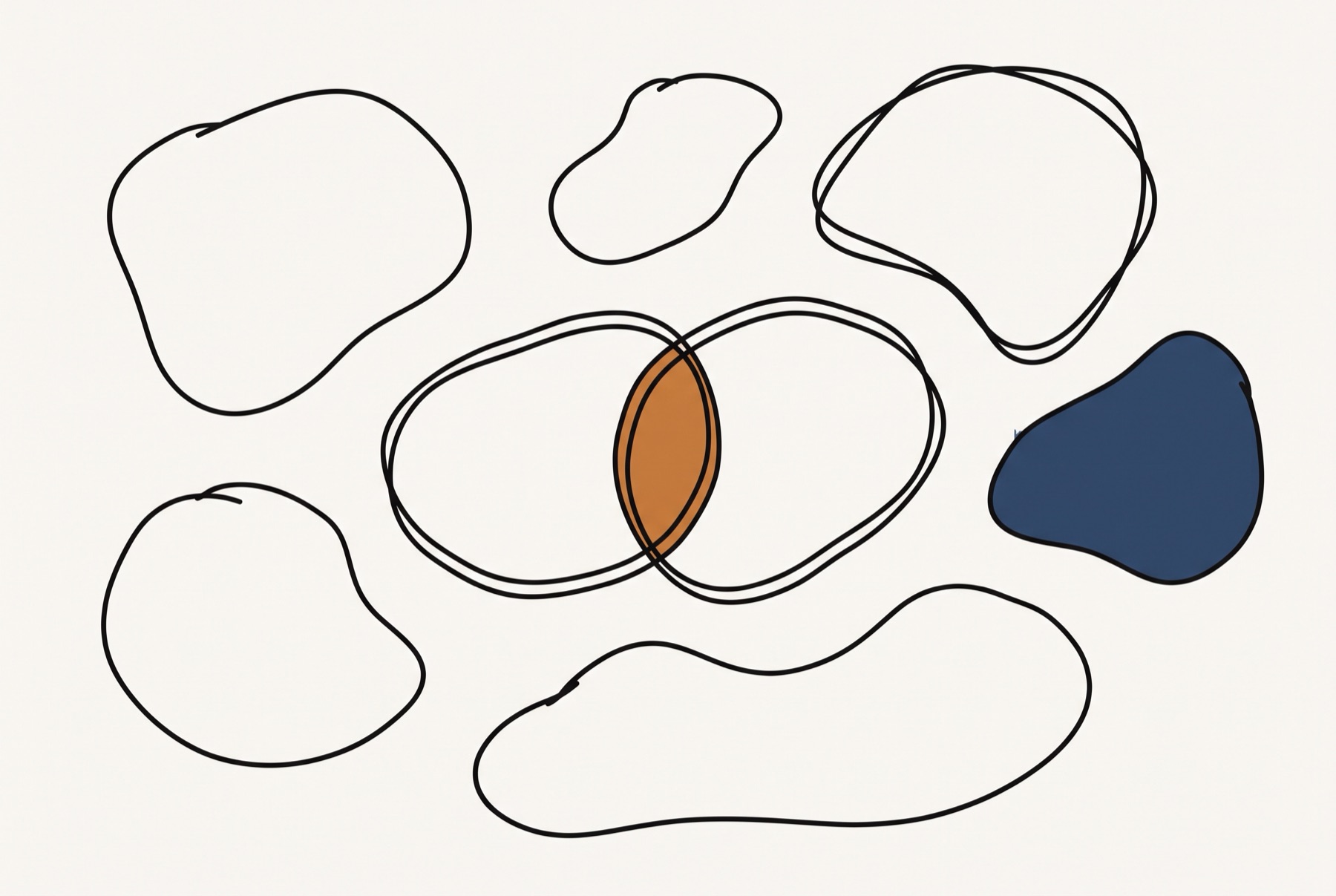
So make the prompt the work. Give the room "Draw your area of responsibility". Sixty seconds, phones out, no signatures. The guessing round that follows is a live test of the team's map of itself, and the wrong guesses are the useful part. When three people file the billing pipeline under the wrong engineer, that is a hole in the map, found in one round and without anyone having to admit to it. Say the surprising misattribution out loud while the drawing is still up.
The sillier variant, "Draw your job title", runs well in rooms that already laugh easily. Responsibility asks the question the org chart does not answer.
What to draw when nobody knows each other
Cable, Gino and Staats rebuilt the first day at Wipro around the new hires themselves rather than the company. Across 605 people, that made them more than 32% less likely to quit within six months than standard onboarding. A first-day session about the organisation's identity also lost to it. The content that binds a newcomer is the person, not the company.
So the prompt for a room of strangers is "Draw your hidden talent". It asks for what the Wipro result points at: something true about the person rather than about the company. That prompt is a listicle staple, and what changes it is that nobody has to say it out loud. The drawing does the disclosing.
Most guesses will be wrong, because the room has nothing to go on yet. That is fine. Having guessed is what makes a person listen to the answer.
For a genuinely cold room, a day-one hiring cohort or two departments meeting after a merger, the gentler prompt is "Draw your past weekend". Build both activities, offer them out loud, and open the one the room picks.
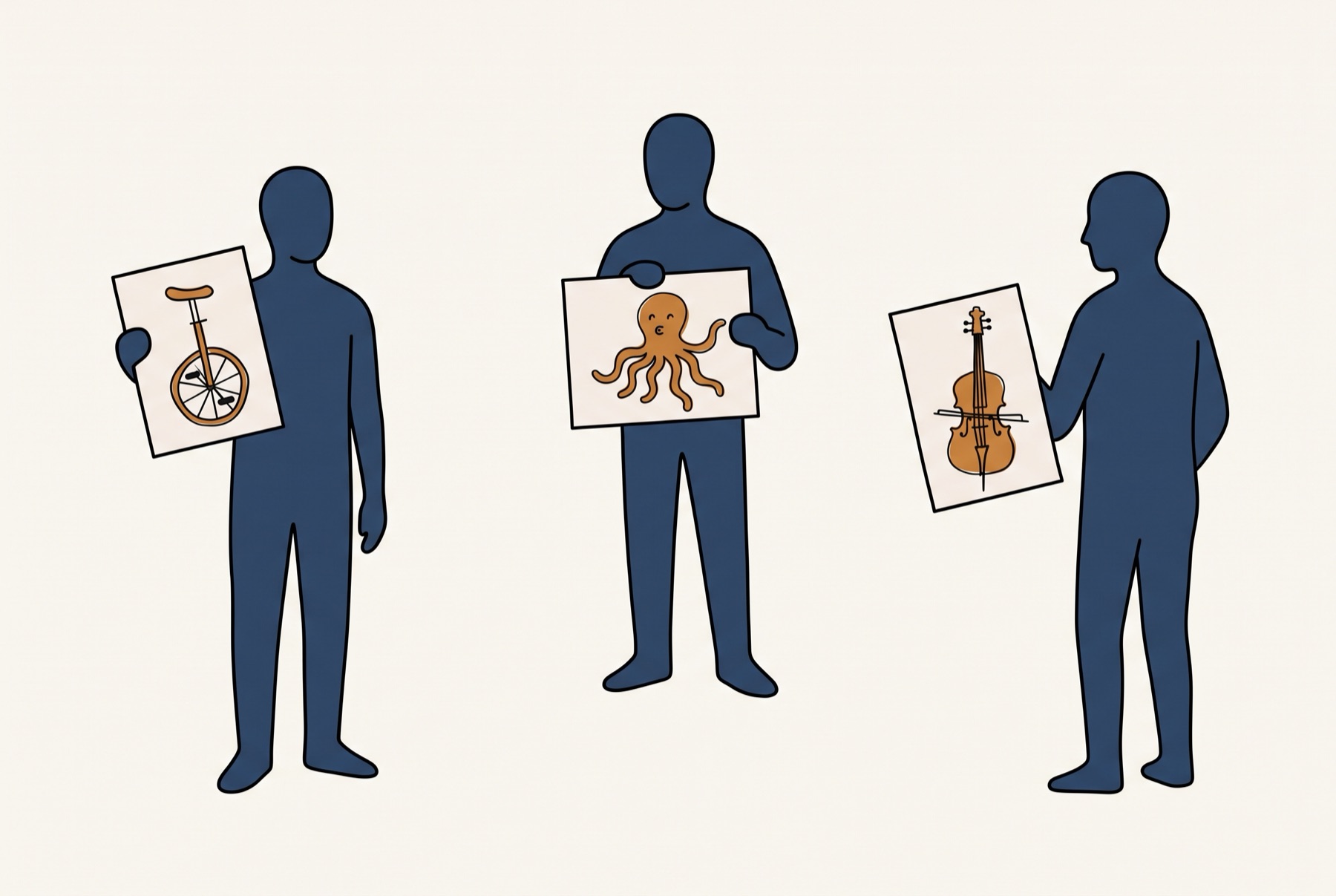
Kardas, Kumar and Epley found people overestimate how awkward getting acquainted will be, and overestimate it most for the deepest prompts. The dread is real. The event is smaller than the dread.
Start from one of these
Each one opens in your dashboard, ready to run. You can change every word of it.
Draw your hidden talent
Everyone draws their hidden talent at once, then the room guesses who drew what. Sixty seconds, no queue, nobody performs.
3 slides · 1 activity
Draw your job description
An ice breaker that isn't cringe. Let people doodle their job descriptions as other guess who drew what. Then let them talk to the people they guessed wrong.
4 slides · 1 activity
Draw your past weekend
Guess the doodler ice breaker activity. Works best for a team that already knows each other a little bit or has pockets of people who know each other, and can guide the guess a little.
4 slides · 1 activity
Two truths and a lie
If you insist on two truths and a lie, at least add a high score! Use the quiz activity to let the audience guess which one is the lie, and add questions for more people participating in truths and lies.
4 slides · 1 activity
Should you play Two Truths and a Lie?
Not to open a meeting, and the best argument against it comes from someone who recommends it.
Gelman teaches the game and published a paper on it. In his own applied-regression class of 49, the students picked the lie correctly 23 times, which he describes as not much better than the one-in-three you get by guessing at random. In the same paper he writes that there is no direct empirical evidence of the activity's effectiveness on student learning. That is a supporter's own assessment, in a peer-reviewed paper.
Run as a silent quiz, with statements you collected in advance on screen and everyone voting at once from phones, the game fixes two of the three. Nobody performs and nobody waits. The name stays attached, and the content is still a lie, told to people forming their first impression of you.
Dropping it from a first meeting costs nothing. The closeness the game gets credit for comes from mutual disclosure, and Aron's pairs reached it on questions with no deception in them. A drawing keeps the parts that were doing the work. There is still a secret, still a vote, still a scoreboard, still a reveal. What goes is the lie, and with it the argument about who told it.
The game does have a defence, and it is narrower than its fans make it. It holds up with a team that already knows each other and wants an argument. We wrote that case out properly, including what makes a lie hold and what actually gives a liar away, in two truths and a lie. For a room that has just met, the verdict on this page stands.
How to run the drawing round
Three decisions are specific to this format. The rest are the same for any opener: where it sits in the agenda, what to do about the loudest voice, how to recover a flat round. Those are written out at icebreaker games.
The first is the clock. Drawing time in Guess the Doodler starts at 60 seconds, and the presets run 30, 60, 90 and 120. Sixty is the right default. Thirty is not long enough to make an area of responsibility recognisable, and anything above sixty is buying craft, which this format does not need.
Wammes' benefit survived a four-second drawing, so the extra time is not buying memory either.
The second is the reveal, and it is a queue. It costs the room less than the round-robin does, because everybody guesses in every round but their own, and nobody is waiting for a turn to perform. It still costs time. Every submitted drawing gets a round. The button reads Next drawing until the last one, then Final results, and Exit closes the session outright rather than skipping to the scoreboard. Forty drawings is forty rounds. Either give the round a slot of its own in the agenda, or have one table draw while the whole room guesses. That second option gives up the first constraint, because only the table acts at the same moment. The names on offer come from the people who drew, so everybody else still votes and still scores.
The third is how people join. Drawing on a phone is participation that never asks for a face. That is the answer for a conference room with six remote joiners: everyone gets the identical game rather than a degraded feed. Somebody dialling in from a car gets nothing, so do not run a drawing game at drivers. Give that meeting a few unstructured minutes before the agenda instead.
FAQ
Common questions
What are the disadvantages of icebreakers?
The standard format is sequential public performance: one person at a time, out loud, with their name attached. Waiting for your turn costs you what you heard just before it, which is the next-in-line effect, and Diehl and Stroebe found anticipated evaluation cuts how much people produce. The format also arrives with a reputation: in Acas' January 2025 poll of British employees, team building was the single most disliked workplace social activity, ahead of after-hours drinks.
How do I make icebreakers less awkward for introverts?
The problem is being watched alone, which is a property of the format rather than of the person. Let everyone answer in the same sixty seconds, keep answers anonymous until a reveal, and never make one quiet person the room's focus. In Allen and colleagues' survey of 252 working adults, the link between talk before a meeting and a meeting rated effective was strongest for the least extraverted people.
Are icebreakers good for meetings?
The opening is worth keeping and the usual format is not. Allen and colleagues found the talk before a meeting starts predicted how effective people judged it to be, and Zheng's warm-ups raised cooperation in the game that followed. Keep the opening, drop the performance.
Run this with your own team
Start free, no credit card. Your audience joins from their phones with a code — nothing to install.