Play this game and the room will find your lie a little more often than chance. Andrew Gelman teaches the game in a statistics class at Columbia and published the data from one run of it. Students played in groups of four and conferred before each guess, so every answer was a committee decision. They got 23 of 49 right, which Gelman calls not much better than the one in three you would get by guessing at random.
So the lie survives more often than not, and the craft sits in the writing rather than the acting.
Start from one of these
Each one opens in your dashboard, ready to run. You can change every word of it.
Two truths and a lie, about us
The presenter-authored round: four sets of three statements about the company, two of them true, voted on from phones with no queue and no round-robin. Swap the statements for facts about your own company and mark the false one — the article's set is shapes rather than facts, and nobody in the room has to hand over anything personal.
4 slides · 1 activity
Write your own three
Everybody types their own two truths and a lie on their phone, nothing appears until the presenter opens the box, and each set flips up with its author's name on it. No statements collected the week before, no queue, and the room argues its way through one person at a time.
4 slides · 1 activity
What gives a liar away
Five minutes to run before the game itself. The room types the tell it watches for and the cloud fills up with eyes, then everybody commits to one of four cues — and only one of the four survived a meta-analysis of 158 of them.
5 slides · 2 activities
The version with no lie in it
Guess the Doodler keeps the secret, the vote, the scoreboard and the reveal, and drops the deception. Everyone draws the same prompt at once, the drawings go up unsigned, and the room guesses who made which — which is the half of the original game that was doing the work.
4 slides · 1 activity
What makes a good lie in two truths and a lie
Write the lie so it sits near a real base rate. Papadatou-Pastou and colleagues pooled the handedness literature and put the best estimate for left-handers at 10.6% of people. Roughly one in ten is the target zone. Common enough that the room cannot rule it out, rare enough that it cannot assume it either.
Now take the classic: I have a twin. The United States twin birth rate was 30.7 per 1,000 births in 2023, about one birth in thirty three. A statement that rare is the most memorable thing you said, which makes it a bad place to hide a lie.
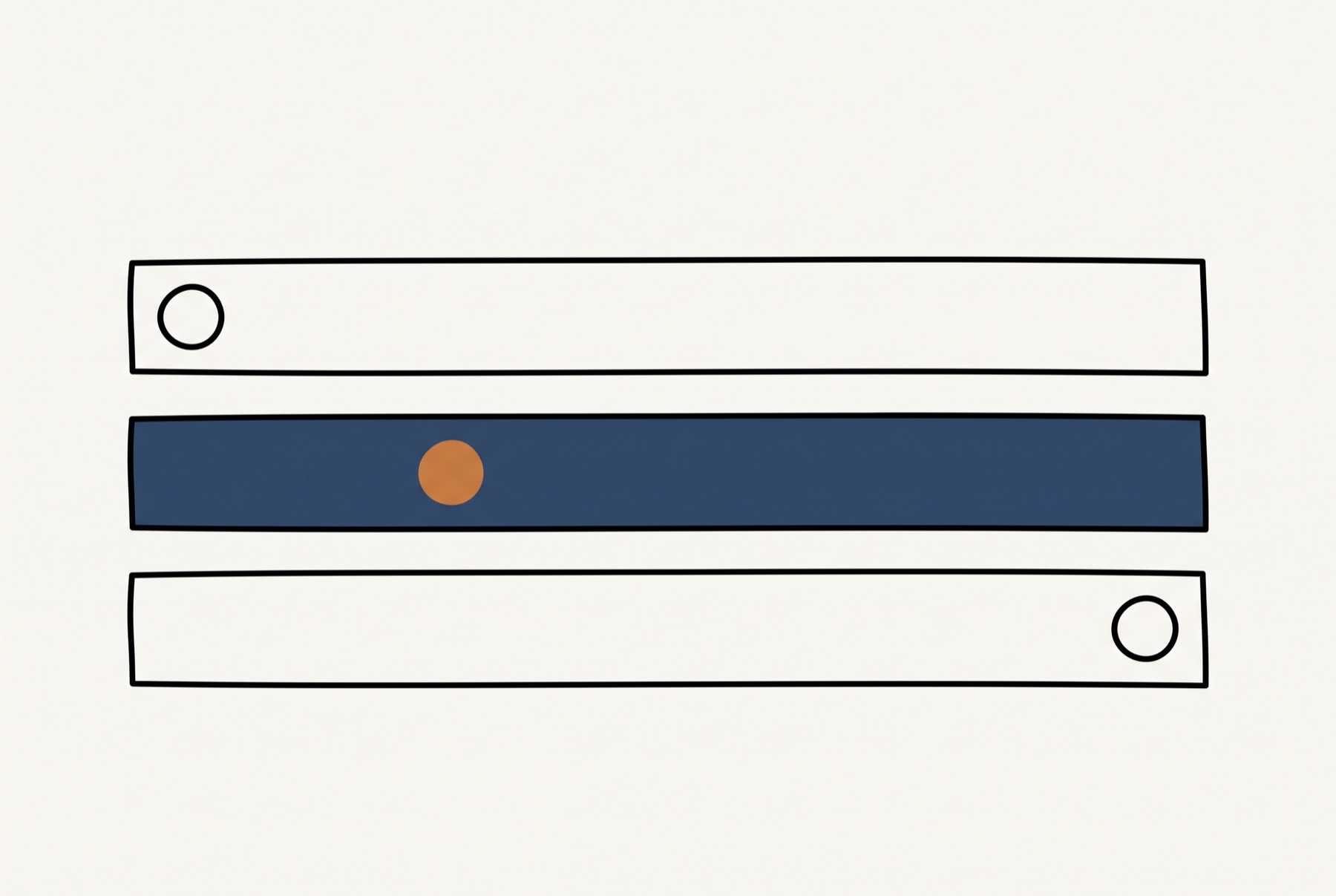
Three rules follow from that.
Make the lie ordinary and the truths strange. The temptation runs the other way: put the skydiving in the lie and prop two flat truths either side of it. Invert it. Your truths should be the ones people struggle to believe, and your lie should be something nobody would bother inventing.
Keep all three the same length. Padding shows up in a word count, so fix it before you open your mouth.
Use a detail nobody can check. A road name, a year, the colour of a car. A checkable detail invites somebody to check it, and one colleague who was also at that festival ends your round early. Skip anything you could be asked to prove on the spot. Claim you can touch your nose with your tongue and the room will just ask you to do it.
What actually gives a liar away
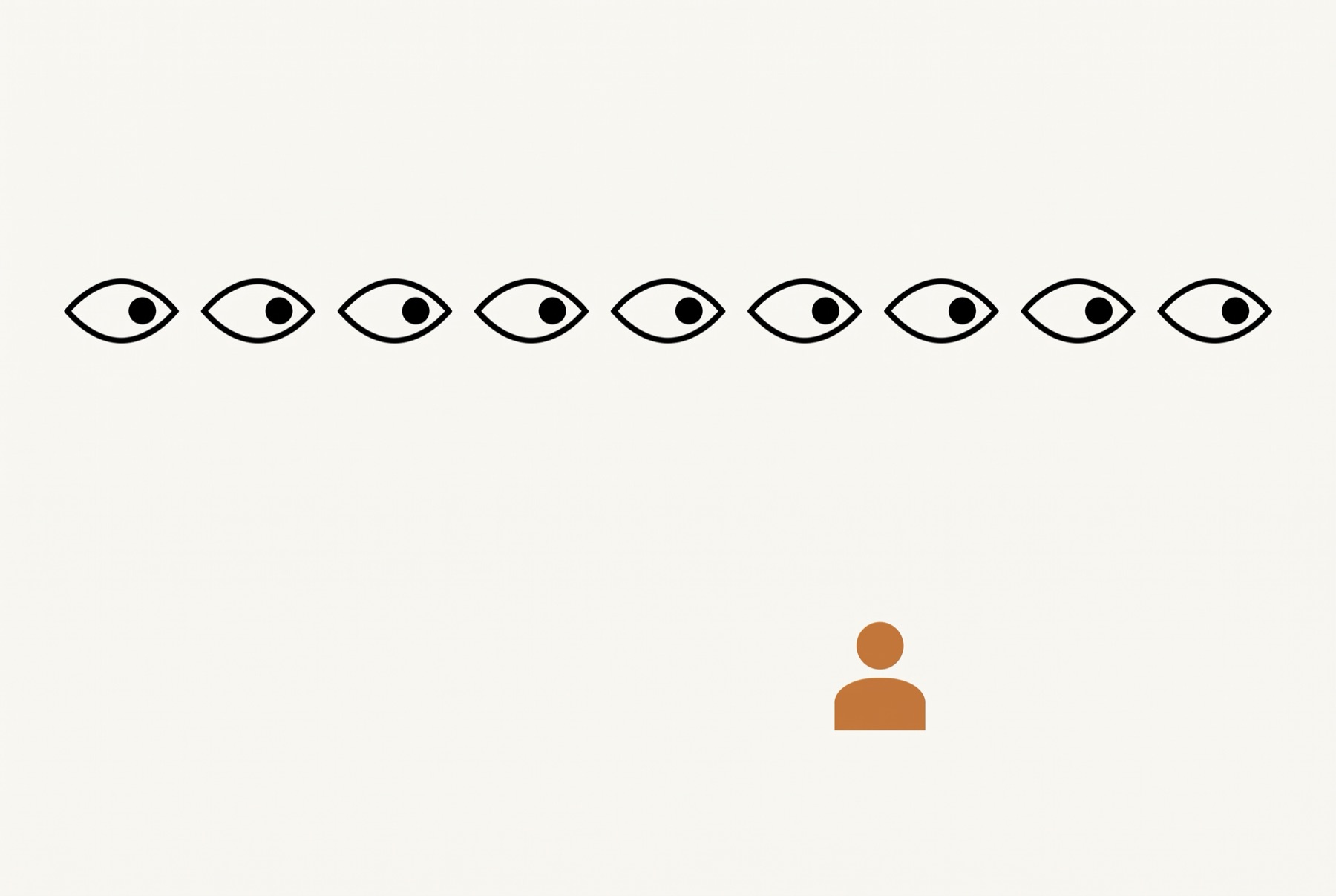
The room will watch your eyes, and your eyes will tell it nothing. DePaulo and colleagues pooled 1,338 estimates of 158 behavioural cues to deception across the experimental literature. Eye contact came out at almost exactly zero across 32 independent estimates. The authors write that none of their measures of looking behaviour supported the widespread belief that liars do not look their targets in the eye.
That belief is close to universal anyway. The Global Deception Research Team ran two worldwide studies of beliefs about liars, across 75 countries and 43 languages. Both produced the same dominant pan-cultural stereotype: that liars avert gaze. Bogaard and colleagues put a cue questionnaire to 95 police officers and 104 students, and both groups named the stereotypical, non-diagnostic cues, with gaze aversion among them.
What does separate liars from truth tellers is harder to perform. In the same meta-analysis, liars were more tense, made a more negative impression, and told less compelling tales. They also produced fewer of the ordinary imperfections a true account carries. Spontaneous corrections came out at d = -0.29 and admitted lack of memory at -0.42, both pointing towards the truth tellers.
So put a flaw in the lie. Correct yourself halfway through. Say you think it was 2015, pause, then say it might have been 2016. Tidiness is the tell, because tidy is what people produce when they are being careful. If the statements go on a screen rather than out loud, the flaw has to be in the wording. Write the hedge in and take the words back out somewhere else, or the lie becomes the longest of the three.
One more finding from that paper is worth carrying to the front of the room. Cues to deception were more pronounced when people were motivated to succeed, and strongest when the motivation was identity relevant rather than money. A round of this game in front of people you work with is about as identity relevant as a Tuesday gets. Whether that makes you easier to catch is a different question, and the next section has the answer: rooms barely beat chance at this.
How often does a room actually guess the lie?
Gelman's 23 of 49 is the answer, and the certainty scores collected beside it are the more useful half. Each group agreed a score from zero to ten and wrote it down with its guess. In that class the scores did not track accuracy. The fitted slope was -0.08 with a standard error of 0.15, and Gelman writes that the students' stated certainty scores do not form a useful predictor of their actual knowledge.
Gelman limits the finding to that class, and so should you. One class, and a slope smaller than its own standard error. Take it as a caution rather than a law. A confident room is not thereby a correct room, and nothing here says the argument before the vote adds any accuracy to it.
You will also see a different number quoted beside this game, and it does not belong here. Bond and DePaulo pooled 292 samples and put lie-truth classification at 53.46%, just above chance, and that is the 54% you will see repeated. It comes from judging one message as true or false, where chance is one half. This game asks for one pick out of three, where chance is one third. Two different tasks, and the first is not a baseline for the second.
Two truths and a lie ideas, sorted by how much they reveal
The right list depends on the room, and the axis that matters is how much a statement gives away. A department that merged last month needs statements that cost nothing. A team three years in needs statements that would be news. Pick a tier, then write all three inside it, so your lie does not stand out by being the only safe one in the set. Four tiers follow, then a set pitched at a classroom, and a set the presenter writes about the company for a room where asking anybody to expose themselves is wrong.
Statements that reveal almost nothing
For a room where a personal fact has to cost nothing: a merged department, staff and contractors mixed together, anybody who would rather not hand over a biography. The last section says why a room that has never met should play something else.
- I never learned to ride a bike.
- I cannot whistle.
- I have broken the same bone twice.
- I have never drunk a cup of coffee.
- I went a full year once without owning a television.
- I have read the same book more than five times.
- I can fall asleep in under two minutes anywhere.
- I have never been stung by a bee.
- I have eaten the same breakfast every day for ten years.
- I am left-handed for everything except writing.
- I have never owned an umbrella.
- I carry a key on my keyring and have no idea what it opens.
- I have never finished a jigsaw.
- I once queued four hours for something I did not want.
- I cannot swim more than one length.
- I have a scar I cannot explain.
- I have never watched a full episode of the show everyone quotes at me.
- I own a coat I have worn exactly once.
- I have kept the same phone number since I was a teenager.
- I have never phoned anyone to order food.
- I put something on my chips that would alarm most people.
- I own no white socks.
Statements that reveal a preference or a small history
For a team that has met, but only in meetings. These say something true about you and cost nothing to say.
- I have watched the same film more than twenty times.
- I learned an instrument for six years and cannot play a note now.
- I can cook exactly one dish without looking anything up.
- I have been to a concert on my own.
- I read the last chapter of a book first.
- I once drove four hours to look at a building.
- I once memorised a phone number I have never dialled.
- I have a favourite motorway service station.
- I have never finished a video game.
- I own more of one kitchen item than any household needs.
- I taught myself to cut my own hair and never stopped.
- I have kept a plant alive for eleven years.
- I do the crossword daily and finish it about twice a year.
- I once came home from holiday a day early on purpose.
- I have a photograph of myself with someone famous and no memory of taking it.
- I have run the same route for five years without varying it.
- I am the only person in my family who can drive.
- I collect something and have never mentioned it to anyone.
- I wrote a letter of complaint that worked.
- I supported a team for a decade because of one match.
- I have a playlist I made in one afternoon and never changed.
- I keep every ticket stub in a drawer.
Statements that reveal a real biographical fact
For a team that already knows each other and has chosen to be in the room. These are the ones that produce an argument.
- I was born in a country I have never been back to.
- I have lived in more than six cities.
- I once turned down a job I had already accepted.
- I once had a job that no longer exists.
- I appeared on television as a child.
- I dropped out of a degree in something unrelated to this job.
- I trained two years for a career I never started.
- I have been an extra in a film.
- I once spent a night in an airport I was not flying from.
- I hold a professional qualification nobody here knows about.
- I speak a third language badly.
- I was in a band that released one recording.
- I have run a marathon.
- I won a competition I did not enter.
- I lived on a boat for a summer.
- I have been to more than thirty countries.
- I got this job through someone I met on a train.
- I was the first person in my family to go to university.
- I once worked a full shift in a job I had not been hired for.
- I broke a record that has since been broken.
- I have a photograph published under somebody else's name.
- I met my oldest friend on the first day of a job we both hated.
Statements that reveal how you work
For a team three years in, where everyone knows the names and nobody knows what anyone actually does. Run these when the room can laugh at itself.
- I have never read the document everyone assumes I wrote.
- I keep a folder of things I built that nobody ever used.
- I once shipped on a Friday and it was fine.
- I have agreed in a meeting to something I did not understand.
- I keep notes on every one to one I have ever had.
- I have never used the feature I argued hardest for.
- I found the bug that cost us the most money.
- I use one keyboard shortcut more than a hundred times a day.
- I rewrote a page of ours because the wording annoyed me.
- I read every release note we publish.
- I have never opened the analytics dashboard.
- I once interviewed here and did not get the job.
- I wrote the first version of something we still run.
- I update a document every week that nobody else has seen.
- I taught myself the thing I was hired for after I was hired.
- I have never met three people on my own team in person.
- I hold an opinion about our pricing I have never said out loud.
- I keep a list of everything we have decided twice.
- I have read the whole style guide.
- I have a shortcut for the thing you all do the long way.
Statements for a classroom
These work for students, and they keep the disclosure low enough for a room of sixteen year olds.
- I have never missed a deadline.
- I read the whole set text.
- I got full marks once on something I had not revised for.
- I have changed my mind about my subject twice.
- I chose one of my subjects because of the timetable.
- I have never handed in a piece of work early.
- I once wrote an essay in an evening and got the best mark of the year.
- I have a notebook I have never written in.
- I learned more from a subject I dropped than from one I kept.
- I have kept every exercise book I have ever filled.
- I have written a whole essay standing up.
- I own a textbook I have not opened.
A presenter-authored round, where nobody has to write anything
Three statements about the organisation rather than about a person. Run this at an all-hands, in onboarding, or at any point where asking people to expose themselves is the wrong move. These are shapes rather than facts, so check two of them are true of your company before you use them.
- Our first customer is still a customer.
- The company was named after a street.
- The first version was built in eleven days.
- Our longest-serving colleague joined in the first month.
- The founders answered the support inbox for the first year.
- We have shipped on Christmas Day.
- Our busiest day of the week is Tuesday.
- The most requested feature took four years to build.
- Our first office was above a shop.
- The product had a different name for its first six months.
- Our most-read help article covers a feature we removed.
- One of our best-known features started as somebody's side project.
- The logo has changed three times.
- We turned down our first offer to be acquired.
- One of our founders has never worked anywhere else.
- The oldest line of code still running was written in a hotel.
Statements to leave out
Every one of these leaves something in the room that the reveal does not take back.
- Anything about money, salary or debt.
- Anything about illness, treatment or a family member's health.
- Anything about immigration status, religion or who you live with.
- Anything that asks you to lie about a protected characteristic.
- Anything involving another named person who did not agree to be in it.
- Anything about drink, drugs, or why you left your last job.
- Anything you would mind being repeated back to you in six months.
How to write your own three statements
Six checks, and the last one overrides the other five.
- Same tier. All three statements from the same disclosure level, so the lie is not the only comfortable one.
- Same length. Count the words. Trim the longest.
- One flaw in the lie. A correction, a hedged date, an admitted gap in memory.
- No checkable detail. Nothing a colleague could look up while you talk.
- A lie near one in ten. Plausible enough to be dull, rare enough to be worth a vote.
- Nothing you would mind hearing again. The round ends, the sentence does not.
Then there is where you put the lie. Attali and Bar-Hillel studied where people hide correct answers in multiple-choice questions, and both the writers and the answerers went to the middle. In single four-option questions written by their participants, nearly 70% of correct answers landed in the two central positions, against 50% expected by chance.
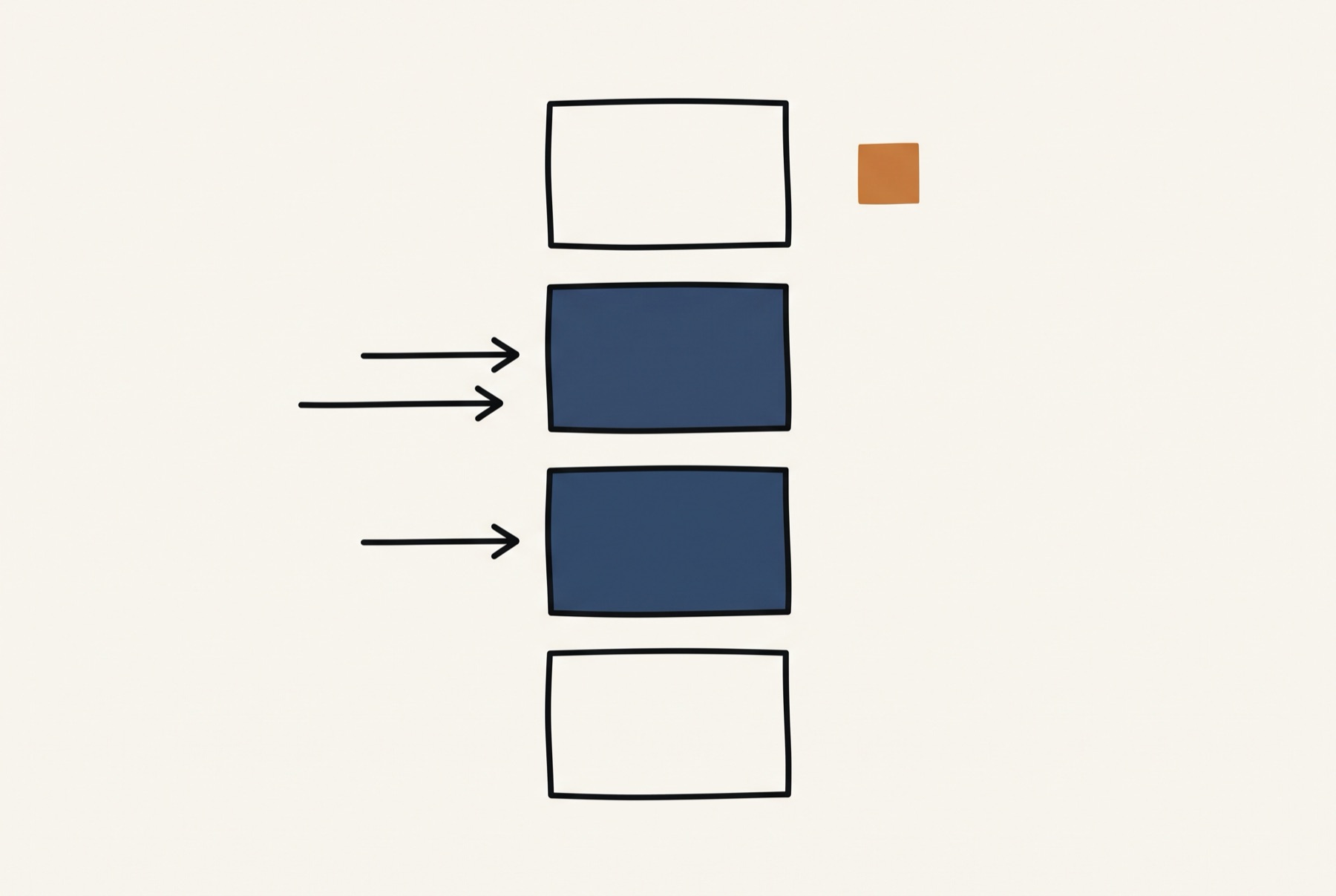
Their questions had four options and this game has three, so treat that as a warning rather than a rule. Put your lie first or last when the three are read out in the order you wrote them, and when you are guessing, distrust the pull towards the middle. On a screen that shuffles the answers, neither half applies.
On the big screen

Question 1 of 1
A supplier emails an unexpected invoice attachment. What do you do?
0 / 31 answered
On their phone
Question 1
A supplier emails an unexpected invoice attachment. What do you do?
Answer on your phone. Everyone sees the same question.
How to run it without the round-robin
The classic format is what makes this game long. Fourteen people at ninety seconds each is twenty-one minutes, and for twenty of those minutes any given person is waiting for a turn rather than taking one.
Put the statements on a screen instead and have everybody vote at once, in silence, from their phones. Nobody waits for a turn, and no single voice decides what the room thinks before the room has decided. That second part matters more as the room grows. Fay, Garrod and Carletta compared discussions in groups of five and groups of ten, and found the ten-person ones running as monologues, with members influenced most by the dominant speaker. They tested spoken discussion, not voting. The case for the phones is mechanical rather than measured: a room answering at once gives a dominant speaker nothing to work on.
Live Quiz runs that shape, with one honest limit. Quiz questions are presenter-authored, so participants cannot type their own three statements into Decka. The version that works today puts the writing on you. Collect the statements before the meeting, enter each person's three as one question with three answers, and mark the false one as correct. Put the person's name in the question text, or the room has no idea whose lie it is looking for.
Four settings decide how the round feels.
Mode. Pick Group-paced and the room sees one question at a time and moves together, which is what you want when the fun is in the arguing. Self-paced lets everyone run ahead at their own speed, and it takes away the shared reveal, which is most of what this game is.
Scoring. Leave it on Right answers, because there is one. No right answer drops the group-paced leaderboard entirely and reports turnout instead, which is the setting for a this-or-that round rather than this game.
Timing. A correct answer is worth more the sooner it arrives, down to a floor, so a short limit turns a guessing game into a race. There is no switch for that: keeping the leaderboard means keeping the speed bonus, and the time limit is the only lever. A new question arrives on thirty seconds, which is a trivia question's worth of reading rather than three statements. Move it to a minute, and press Skip to Reveal once the count on the question screen says everybody has answered. The presets run from fifteen seconds to five minutes.
Shuffle answer order for participants. Leave this on and the order people vote on is not the order you typed, which takes the middle-position problem away from the phones.
A quiz holds twenty questions and will not take one more. One question per person makes that the largest team a single round covers, so a bigger room means two quizzes, or statements from a few volunteers and a vote from everybody else.
Variants that beat the original
Two truths and a lie about the company. Three statements about the organisation, two of them true. Nobody has to expose anything, the presenter writes the whole thing, and it works in onboarding, at an all-hands, or in front of a room of customers. This is the variant Decka runs best today.
Two truths and a lie about the material. Gelman's class plays it with personal statements and then studies its own guesses. The round produces the data, and the data is the lesson. The subject-matter version is a step further: three statements about last week's topic, two true, run as a recap. The wrong answers tell you what to reteach.
Three truths and a lie. Four statements drops random guessing from one in three to one in four. It takes longer to write and longer to read out, so save it for a room that has played the three-statement version to death.
One set per team. Each team agrees three statements about itself and the other teams vote. It takes the individual spotlight out of it, and it works in a room too large for anybody to have met everybody.
The version with no lie in it. Sometimes what you want is a room that knows each other better. Guess the Doodler keeps the secret, the vote, the scoreboard and the reveal, and drops the deception. Everyone draws the same prompt at once, the drawings go up unsigned, and the room guesses who made which.
Start from one of these
Each one opens in your dashboard, ready to run. You can change every word of it.
Two truths and a lie, about us
The presenter-authored round: four sets of three statements about the company, two of them true, voted on from phones with no queue and no round-robin. Swap the statements for facts about your own company and mark the false one — the article's set is shapes rather than facts, and nobody in the room has to hand over anything personal.
4 slides · 1 activity
Write your own three
Everybody types their own two truths and a lie on their phone, nothing appears until the presenter opens the box, and each set flips up with its author's name on it. No statements collected the week before, no queue, and the room argues its way through one person at a time.
4 slides · 1 activity
What gives a liar away
Five minutes to run before the game itself. The room types the tell it watches for and the cloud fills up with eyes, then everybody commits to one of four cues — and only one of the four survived a meta-analysis of 158 of them.
5 slides · 2 activities
The version with no lie in it
Guess the Doodler keeps the secret, the vote, the scoreboard and the reveal, and drops the deception. Everyone draws the same prompt at once, the drawings go up unsigned, and the room guesses who made which — which is the half of the original game that was doing the work.
4 slides · 1 activity
When to skip it, and what to run instead
Do not run it with strangers, and do not run it on somebody's first day. The game asks a person to lie convincingly to a room forming its first impression of them. It asks them to do that before they know what the room finds funny.
The closeness the game seems to promise comes from the truthful half of it. Aron's team compared pairs given escalating personal questions against pairs given matched small talk, and the question sets beat small talk 4.06 to 3.25 on a closeness composite. Nothing in that result needs a lie in it, and our icebreaker questions bank is a lighter version of the same idea, sorted by who is in the room.
The format also selects for bragging, because impressive facts are the easy ones to write. Scopelliti, Loewenstein and Vosgerau found that self-promoters overestimate how proud and happy listeners will feel, and underestimate how annoyed they will be. So the statement the format pushes you towards is the one you are worst at judging.
Schweitzer, Hershey and Bradlow found that trust damaged by untrustworthy behaviour plus deception never fully recovered, even after a promise, an apology and a consistent run of trustworthy actions. That was unexpected deception between strangers with money at stake. A party game where everybody knows one statement is false is a different thing, so read it as a reason for care and not as a result about this game.
The category also arrives with a reputation. When Acas asked 1,052 British employees in January 2025 which workplace social activities they disliked, team building topped the list. Acas was measuring the genre rather than this game, and our longer argument about the genre is in ice breakers that aren't cringe. It reaches the harder verdict: for opening a meeting, drop this game and hand the room a drawing instead.
For a genuinely new group, the evidence points elsewhere. Cable, Gino and Staats rebuilt the first day at Wipro around the newcomers themselves. In a 605-person field experiment with three onboarding arms, newcomers who got it were more than 32% less likely to quit within six months than those on standard onboarding. That is a first day built around who the newcomer already is, which is the opposite of asking them to invent something.
So run this game with a team that already knows each other and wants an argument, or run the presenter-authored version where the statements are about the company or the course. For a room that has not met, take an opener from icebreaker games instead, which sorts them by group size and by how long they take. Skip it when the room is cold, when somebody is the only newcomer, or when the meeting is carrying bad news.
What to do when a round lands flat
Some rounds die. The reveal comes up, nobody reacts, and the silence feels like a verdict on you. Kardas, Kumar and Epley found that conversations between strangers felt less awkward than the participants had expected, and that the overestimate was largest for the deepest prompts. They studied conversations rather than the pause after a reveal, so take it as a reason to doubt your own reading of the room.
Four things to have ready.
When the reveal says about a third answered correctly, say so and move on. A third is chance, so the room had nothing to separate the three. That is either good writing or three statements nobody could care about. Say which you think it was, then go to the next question.
When one person is doing all the talking, take the vote before the discussion. The room votes in silence, then argues about the result. That order costs nothing and changes who gets heard.
When somebody's lie is guessed instantly, ask about a truth instead. The lie is spent as soon as the room has it, and the two truths are still unexplained. Ask about the trip, the qualification, the band.
When the reveal lands on silence, go to the next person rather than filling it. The statements are already written and queued, so the round carries itself without a bridge from you.
FAQ
Common questions
What is a good lie for two truths and a lie?
A boring one. The best lie is something roughly one person in ten could say truthfully, with no detail anyone in the room could check, and with a small imperfection in it. DePaulo and colleagues found that spontaneous corrections and admitted gaps in memory point towards truth tellers rather than liars. A lie told with a hedge about the date is doing the right thing.
What are some good two truths and a lie ideas for work?
Pick statements at one level of disclosure and stay there. For a team that has only met in meetings, use small histories: a film watched twenty times, an instrument abandoned after six years, a favourite service station. For a team three years in, use work facts: a document nobody has read, a feature you argued for and never used, an interview here that did not go your way.
How do you win two truths and a lie?
As the guesser, distrust your instincts about eye contact. DePaulo and colleagues found eye contact had essentially no relationship to lying across 32 independent estimates. Look instead for the statement that is too tidy, too well ordered, and free of the corrections and gaps that real memories carry.
Is two truths and a lie a good icebreaker?
For a team that already knows each other, yes. For strangers, no. It asks a new colleague to lie convincingly to people forming a first impression of them. It also rewards impressive personal facts, which Scopelliti and colleagues found land worse than the teller expects. Run a version where the statements are about the company instead.
How long does two truths and a lie take?
Set the limit at a minute a set, and move on as soon as everybody has answered rather than waiting the clock out. Ten people is about five minutes of voting at half a minute a set, and about as long again if you let the room argue about the reveals. Run it one person at a time out loud and the same round takes fifteen minutes, because everyone waits through nine turns to take one.
How many people can play two truths and a lie?
As many as the quiz holds, if everybody gets their own three statements: a quiz in Decka holds twenty questions and each person needs one. Voting is not the constraint, since the format has no queue and everyone answers at once. What does cap the voters is your plan's limit on one live activity, so check the pricing page before a big room. Past that many tellers, take statements from a handful of volunteers and let everybody else vote.
What is a good two truths and a lie for students?
Keep the disclosure low and the stakes lower. Statements about study habits work well: a set text finished, a textbook never opened, an essay written standing up. The stronger classroom version is three statements about last week's topic with two of them true, which turns the game into a recap and shows you what to reteach.
Run this with your own team
Start free, no credit card. Your audience joins from their phones with a code — nothing to install.