Charades ideas, sorted by how hard they are to act
388 words to act out, sorted by how hard they are, and how to run the round
· Updated
A charades round is decided by the word more than by the actor. Twenty performers in van Nispen, van de Sandt-Koenderman and Krahmer's study mimed the same sixty objects, and judges named the scissors 92% of the time and the asparagus never. Actions with nothing in the hands rate 5.85 out of 7 for how obviously their gesture points at their meaning. Objects you cannot pick up rate 3.92. Those ratings are Ortega and Özyürek's. They asked twenty Dutch adults to invent a silent gesture for each of 272 words. Eighteen more people then rated an actor's version of the 109 gestures at least half the group had produced the same way. Verbs won. Nouns you cannot hold lost.
Charades lists sort by theme, by age, or into difficulty tiers with nothing stated behind them. The only meaning of difficulty that matters is how hard the word is to act.
This page carries 388 words, grouped by category and by difficulty, where difficulty means difficulty to act rather than difficulty to know. Elephant is easy because it comes with a trunk. Jealousy is hard because there is nothing to point at. The rest of the page is the part that decides whether the round works. How long a round should run. How to size the teams. What to do when nobody can act the word, and the house rules that end the argument before it starts.
Start from one of these
Each one opens in your dashboard, ready to run. You can change every word of it.
Charades, first round
Easy bank words on a sixty-second clock, with the word on the performer's phone and the room guessing out loud. Built to hand a first-time group a fast win.
4 slides · 1 activity
Office charades
Charades run on eighteen office references typed into the word list, with guesses typed from phones so the loudest voice stops deciding. Ninety seconds a round.
4 slides · 1 activity
Charades, idioms only
Twenty-four idioms on a two-minute clock, for a room that has already won a few rounds. The performer signals the word count first, then acts the words in order.
4 slides · 1 activity
What makes a word actable
A six-question quiz on what makes a word actable, scored on speed. Run it before the acting starts to settle why the hard words are hard.
4 slides · 1 activity
What makes a charades word easy or hard to act
Three properties decide whether a word survives contact with a room, and none of them is how common the word is.
Your body can do the thing. Actions with nothing else in them came top of Ortega and Özyürek's ratings at 5.85. Actions involving an object came next at 5.24, and objects you cannot pick up came last at 3.92. A verb hands the actor a body to borrow. A building hands them nothing, so they end up drawing it in the air, which is a different game.
There is one obvious way to show it. van Nispen, van de Sandt-Koenderman and Krahmer filmed twenty people miming the sixty objects of a clinical naming test. A second group watched the clips and said what they saw. Objects with a default mime, one technique nearly everyone reached for, were understood better than objects where each person invented their own. Miming how you hold a thing beat miming its outline, and tools beat animals.
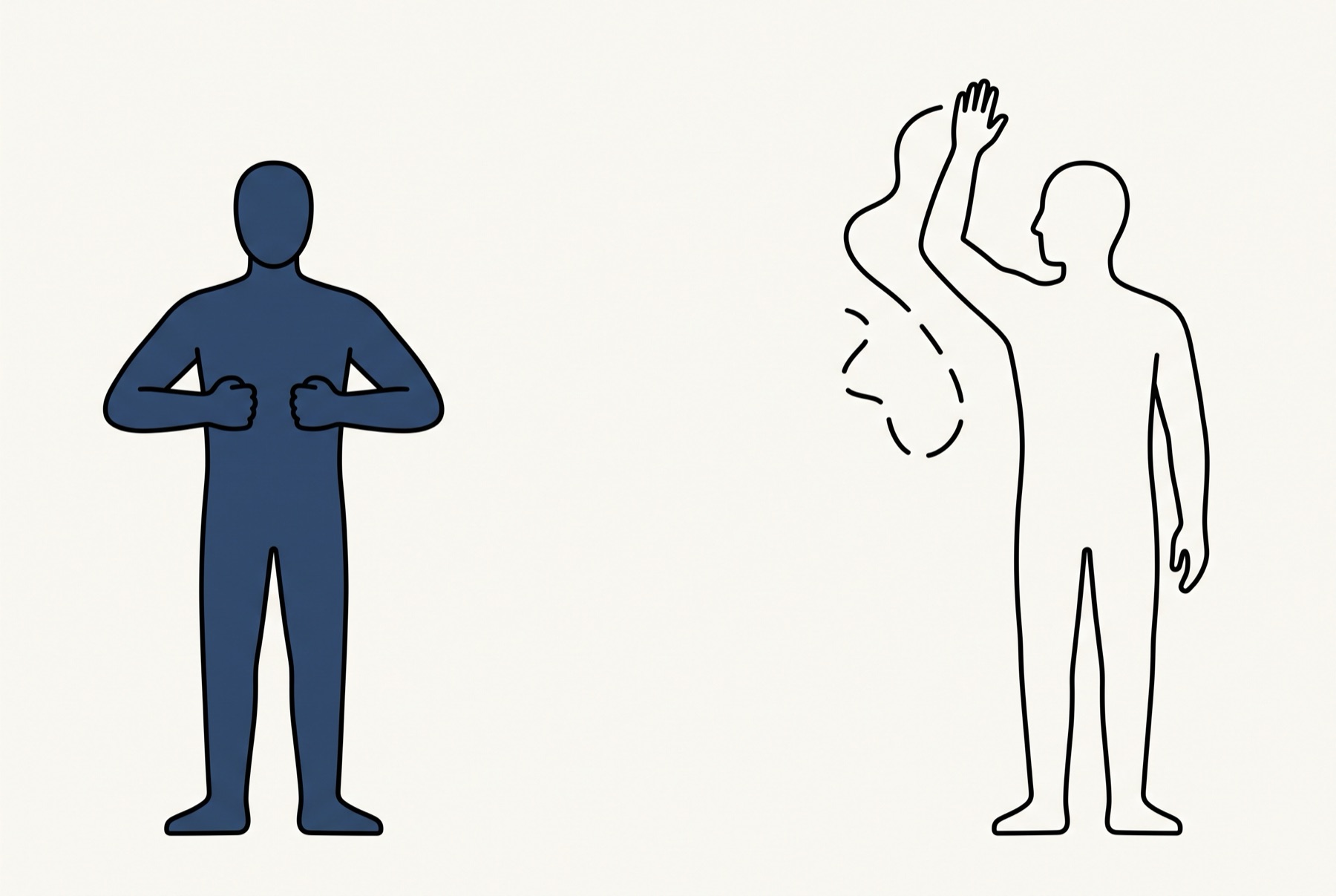
The gesture has to depict, not decorate. Dargue, Sweller and Jones pooled 83 independent samples covering 3,883 people. Gestures that pictured something helped comprehension. Beat gestures, the kind that keep time with the hands and picture nothing, had an effect that was not different from zero. Every sample in it paired gesture with speech, which charades takes away, so treat it as a rule about hands rather than a result about the game.
Put the three together and you can grade a word before you use it. Can somebody perform it with their body, is there one way nearly everyone would show it, and does the gesture picture the thing rather than fill the time. Three yeses is an easy word. One yes is a hard one. Zero is a word to cut.
That is why the bank behind our free charades generator is sorted the way it is. The line under its difficulty control reads "How hard it is to act out, not how rare the word is", and the difficulty tiers below are sorted the same way.
Easy charades ideas
Easy means the gesture is close to automatic. Somebody starts it and the answer arrives before they have finished. Use these to open, and use them when nobody has played before and needs one fast win to believe the game is possible.
Easy actions
- Sneezing
- Running
- Clapping
- Yawning
- Swimming
- Brushing your teeth
- Waving goodbye
- Eating soup
- Tying your shoes
- Reading a book
- Taking a photo
- Dancing
- Drinking through a straw
- Blowing out a candle
- Knocking on a door
- Washing your hands
- Putting on a coat
- Climbing a ladder
- Juggling
Easy animals
- Elephant
- Monkey
- Snake
- Rabbit
- Cat
- Duck
- Kangaroo
- Frog
- Horse
- Bird
- Dog
- Fish
- Cow
- Bee
- Penguin
- Chicken
- Pig
- Spider
Easy jobs
- Chef
- Doctor
- Teacher
- Firefighter
- Hairdresser
- Painter
- Postal worker
- Farmer
- Cleaner
- Driver
- Waiter
- Builder
- Dentist
- Gardener
- Singer
Easy objects
- Umbrella
- Razor
- Rolling pin
- Key
- Clock
- Mirror
- Scissors
- Kettle
- Pillow
- Broom
- Sunglasses
- Guitar
- Telephone
- Hammer
- Torch
Easy food and drink
- Pizza
- Banana
- Ice cream
- Spaghetti
- Popcorn
- Egg
- Apple
- Watermelon
- Sandwich
- Cake
- Corn on the cob
- Tea
- Lollipop
- Chewing gum
- A drink that is far too hot
Easy sports
- Football
- Basketball
- Tennis
- Boxing
- Golf
- Skiing
- Cycling
- Bowling
- Skipping
- Diving
- Yoga
- Darts
- A goal celebration
- Weightlifting
Charades ideas for adults
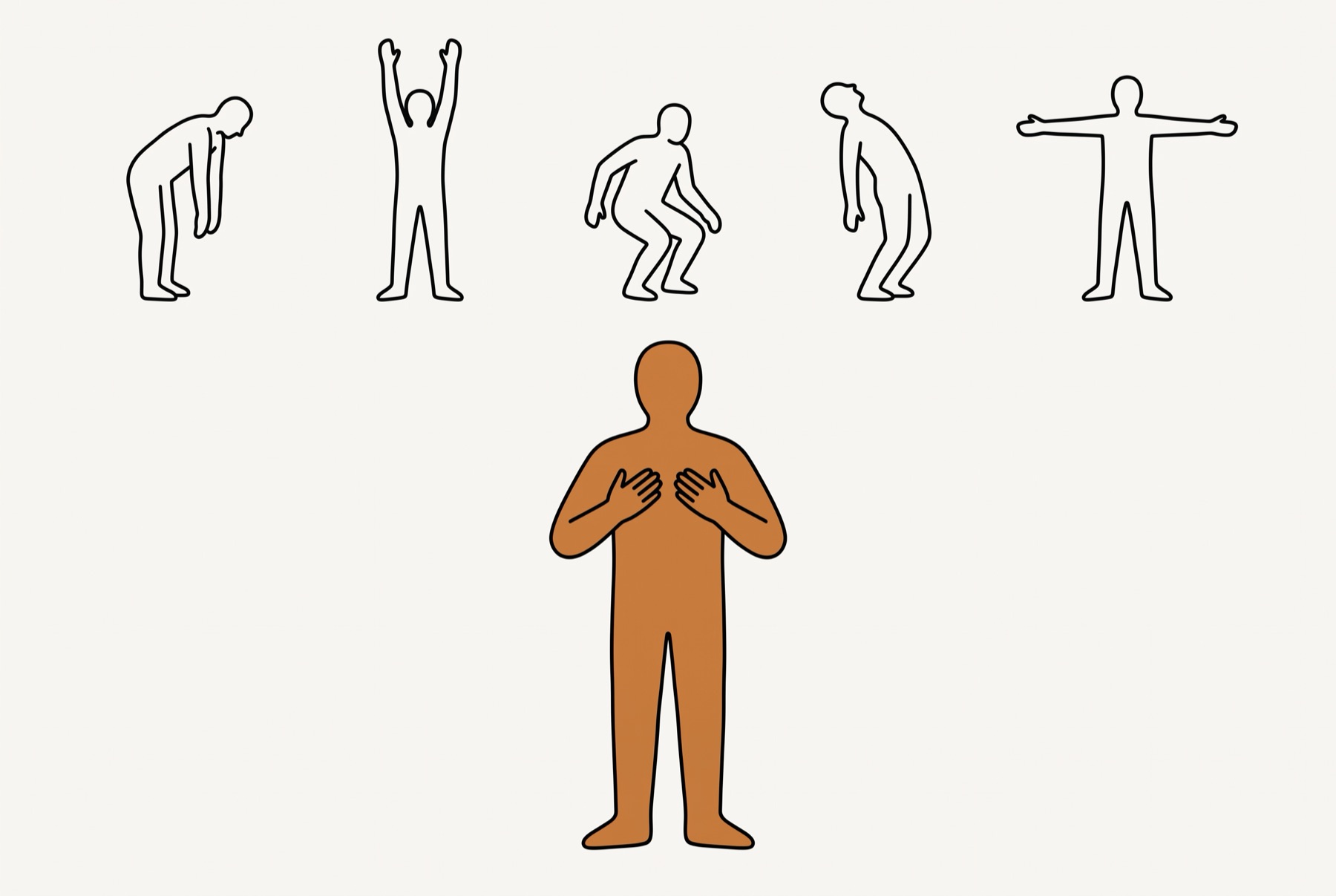
The word is still visible in the adult tier, but it takes two or three gestures in sequence rather than one, and somebody has to commit to it in front of colleagues. These land at a party, at an offsite, and at the end of a long meeting. The generator calls this tier Medium.
Everyday actions
- Parallel parking
- Threading a needle
- Untangling headphones
- Folding a fitted sheet
- Wrapping a present
- Shovelling snow
- Changing a tyre
- Conducting an orchestra
- Putting up a shelf
- Fishing
- Assembling flat-pack furniture
- Hailing a taxi
- Carrying too many bags
- Opening a jar that will not open
- Taking a selfie
- Defrosting a windscreen
- Queueing
- Reversing with a trailer
Animals
- Mouse
- Octopus
- Giraffe
- Crab
- Owl
- Sloth
- Woodpecker
- Flamingo
- Hedgehog
- Starfish
- Camel
- Seal
- Swan
- Pelican
- Ostrich
- Peacock
- Tortoise
Jobs
- Photographer
- Librarian
- Electrician
- Vet
- Lifeguard
- Tailor
- Mechanic
- Florist
- Pilot
- Referee
- Barista
- Plumber
- Air steward
- Window cleaner
- Removal person
Objects
- Stapler
- Corkscrew
- Washing machine
- Vacuum cleaner
- Hammock
- Wheelbarrow
- Telescope
- Typewriter
- Revolving door
- Shopping trolley
- Hole punch
- Bicycle pump
- Deckchair
- Ironing board
- Tent
Food and drink
- Pomegranate
- Artichoke
- Candy floss
- Sushi
- Toast
- Pancake
- Coconut
- Olive
- Pretzel
- Smoothie
- Oyster
- Spaghetti you cannot cut
- A sandwich with too much in it
- Corn you cannot get off the cob
- A biscuit that breaks in the tea
Sports and hobbies
- Archery
- Rowing
- Surfing
- Gymnastics
- Ice skating
- Table tennis
- Rock climbing
- Hurdles
- Pole vault
- Knitting
- Birdwatching
- Trampolining
- Skateboarding
- Paddleboarding
- Fencing
Office charades ideas
These work with colleagues who share an office, because the reference is already in the room. A team that has never shared one has no badge, no lift and no biscuit tin.
- Joining a call late
- Muting yourself
- Unmuting yourself too late
- A printer jam
- A laptop battery dying
- Sharing the wrong window
- A badge that will not scan
- A swivel chair
- A whiteboard
- A fire drill
- A lanyard
- A standing desk
- Hot desking
- The coffee machine
- The last biscuit in the tin
- A lift that stops at every floor
- A birthday card being passed round
- An office plant nobody waters
Why this list has no film titles
Films are missing from every list above, and that is on purpose. A title is guessed word by word, so what it tests is who has heard of the film rather than who can mime. Titles date, too, which turns a page meant to last into a list that reads as stale. If your group genuinely shares a set of films, that beats anything published, and Decka's Charades activity runs a list you type in yourself instead of the bank.
Hard charades ideas
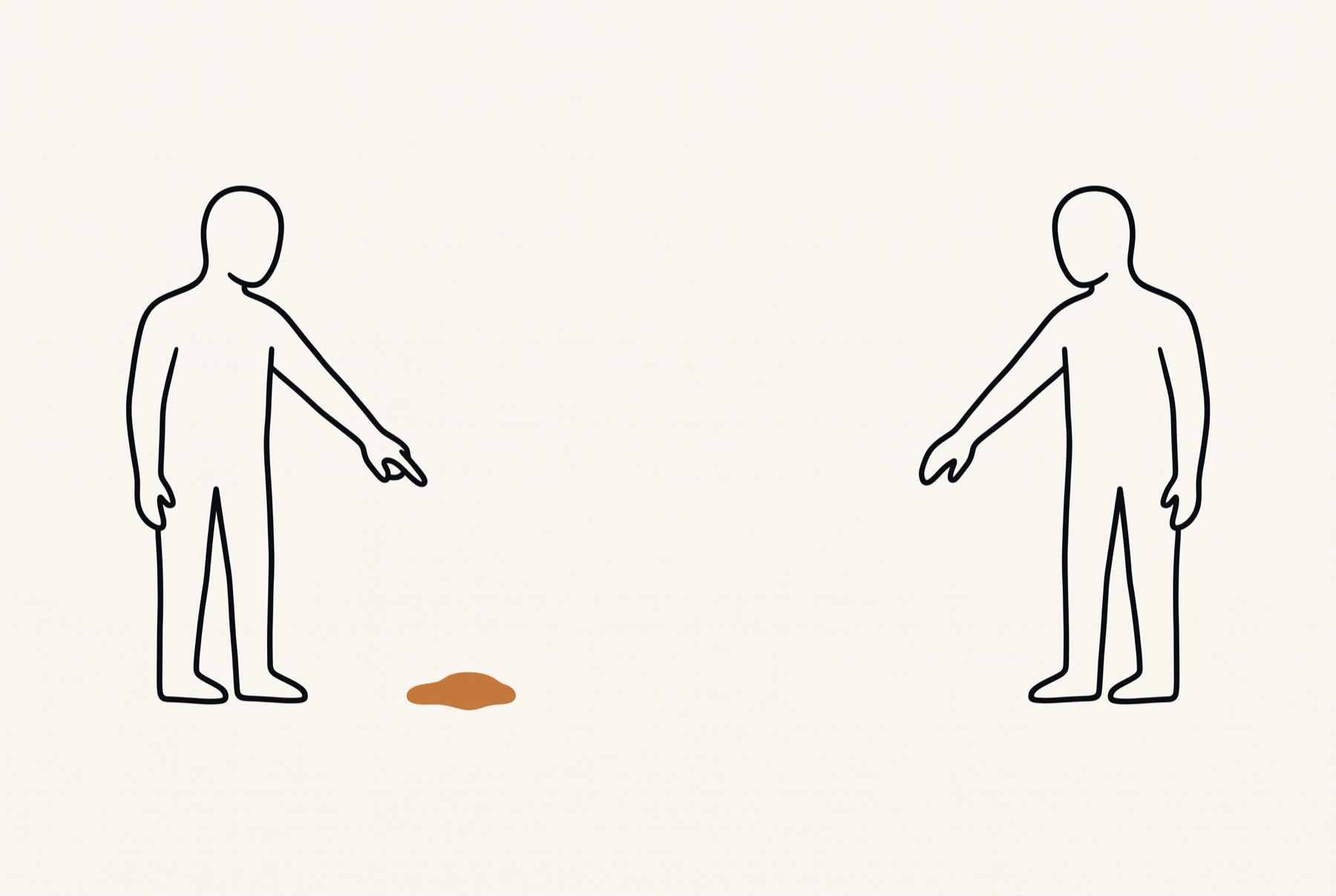
A hard word has no body to borrow. The actor has to build the meaning out of two or three ideas in a row, and the room has to hold the first one while the second arrives. Save these for a group that has already won a few rounds, and keep the full ninety seconds rather than the sixty an easy word can survive.
Abstract actions and states
- Procrastinating
- Apologising
- Eavesdropping
- Negotiating
- Regretting a text
- Pretending to listen
- Gloating
- Reluctantly agreeing
- Losing your train of thought
- Stalling for time
- Being politely bored
- Changing your mind
- Deciding not to say something
- Being suspicious
- Pretending you remember someone's name
- Realising you left the oven on
Hard animals
- Chameleon
- Praying mantis
- Platypus
- Jellyfish
- Anteater
- Bat
- Stick insect
- Meerkat
- Narwhal
- Hermit crab
- Armadillo
- Pufferfish
- Moth
Hard jobs
A mime can land on the work and still miss the title. Nothing a body does separates an actuary from an accountant once the spreadsheet is in the air, which is why both are here.
- Auctioneer
- Air traffic controller
- Beekeeper
- Sommelier
- Accountant
- Cartographer
- Stunt double
- Architect
- Proofreader
- Meteorologist
- Archaeologist
- Translator
- Quantity surveyor
- Sound engineer
- Actuary
Hard objects
- Spirit level
- Metronome
- Sundial
- Bellows
- Abacus
- Tripod
- Pulley
- Compass
- Hourglass
- Loom
- Weather vane
- Bear trap
- Barometer
- Tuning fork
- Plumb line
Hard food and drink
- Soufflé
- Fondue
- Leftovers
- Burnt toast
- A stale biscuit
- Food you are too polite to refuse
- An ice cube
- A diet
- Something you dropped
- The last slice
- A mystery casserole
- Seconds you did not need
- A meal that arrived cold
- The wrong order
- A drink you spilled on yourself
Hard sports and hobbies
- Curling
- Synchronised swimming
- Sumo wrestling
- Bouldering
- Javelin
- Hang gliding
- Chess
- Marathon training
- Scuba diving
- Orienteering
- Origami
- Dressage
- Geocaching
- Competitive eating
- Ballroom dancing
Charades phrases and idioms
An idiom is the hardest tier there is, because the actor has to signal that the phrase is a phrase before acting any part of it. The convention is fingers held up for the number of words, then the words in order. Give these two minutes, and only to a room that is already warm.
- Raining cats and dogs
- Spill the beans
- Break the ice
- Hit the nail on the head
- Cold feet
- Butterflies in your stomach
- A piece of cake
- Bite the bullet
- Under the weather
- Let the cat out of the bag
- Hold your horses
- On cloud nine
- A needle in a haystack
- Burning the midnight oil
- Jumping the gun
- Pulling someone's leg
- Sitting on the fence
- Walking on eggshells
- Throwing in the towel
- Over the moon
- Saved by the bell
- Barking up the wrong tree
- The elephant in the room
- A storm in a teacup
Words that look easy and are not
Every one of these reads as simple and dies on its feet. Being a common word is not the same as being an actable one, which is what the second test above measures. Plenty of abstract words do have a conventional gesture, and those are the ones to keep. Hands crossed over the heart mean love in almost any room, crossed fingers mean luck, and a finger to the lips means quiet. The words below have no shorthand of their own. Each actor invents one, or borrows a gesture that lands on a different word, and the room never converges.
- Cousin
- Music
- Internet
- Tuesday
- Plastic
- Science
- Weather
- Neighbour
- History
- Honest
- Blue
- Language
- Later
- Almost
- Government
- Tomorrow
How to run a round of charades
Most of what wrecks a round is decided before anybody acts, by a facilitator making four choices by accident.
How long a round should be. Ninety seconds is the default in Charades on Decka, and the range runs from thirty seconds to five minutes. Ninety is long enough for a two-part word and short enough that the room stays loud. Drop to sixty for easy words with a group that is already warm. Go to two minutes for idioms, and only for idioms.
Who acts next. Volunteers, in the order the hands go up. Never hand a round to a named person who has not offered, however much you want to draw a quiet one in. The spotlight is the cost of this game, and a kind motive does not change who pays it. Decka has two settings for it. Take turns gives the next word to whoever has performed fewest times, so nobody goes twice before everybody has gone once. You act lets you name the performer for each round, and its label oversells what it does: it is presenter-picks, which is the thing this section is telling you not to do. Either way the performer is somebody who joined from a phone, so when the hands stop going up, perform the next round yourself off the app rather than naming a name.
How big the teams are. Small. Latané, Williams and Harkins had people clap and shout as loudly as they could, alone and in groups. Two-person groups produced 71% of the sum of what those same people managed alone, four-person groups 51%, and six-person groups 40%. That was physical effort rather than guessing, so read it as a warning rather than a measurement of your game. The warning is enough. Six a team is the ceiling worth risking, and two teams of five beat one team of ten.
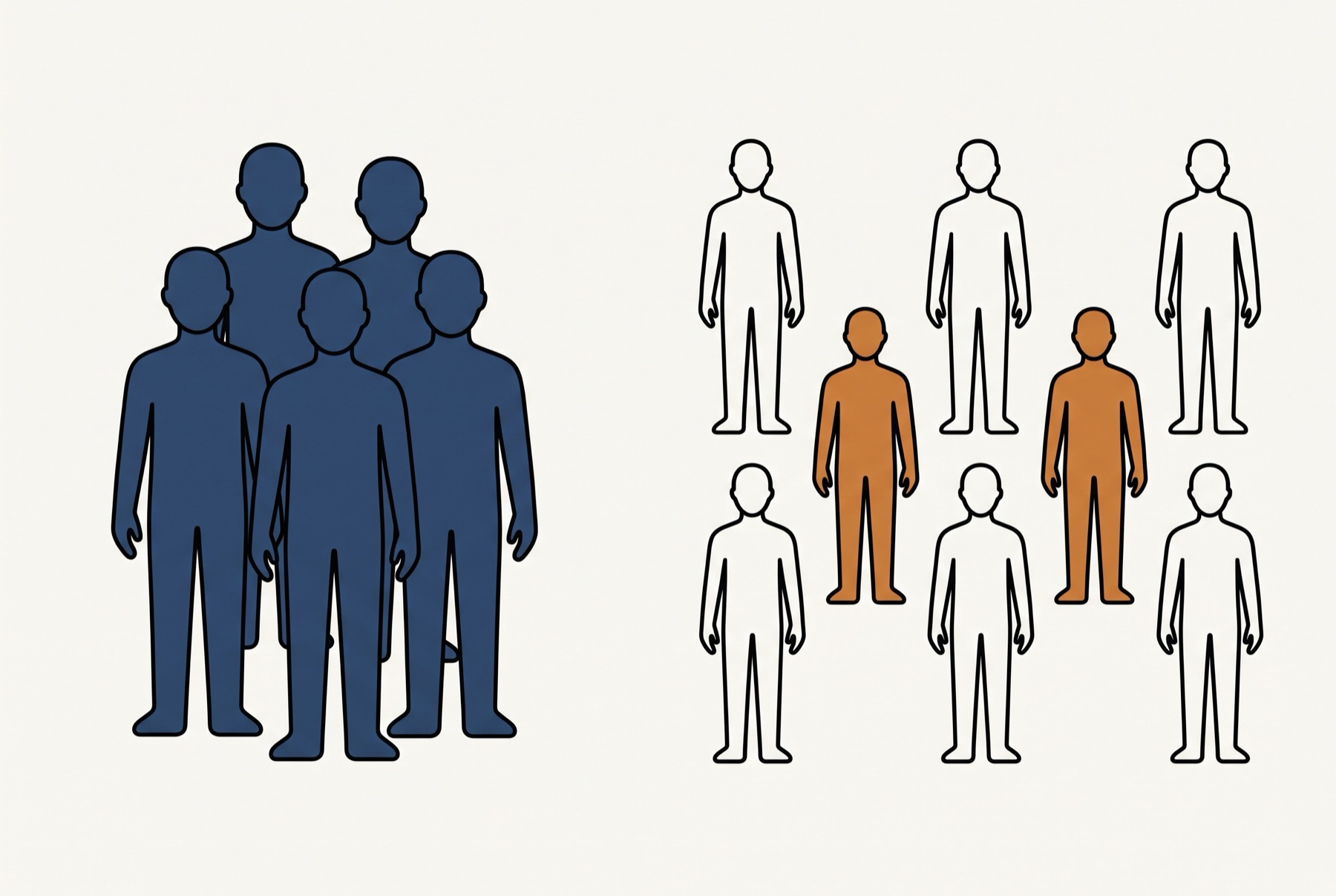
Whether the room is one group or several. In Fay, Garrod and Carletta's five-person groups, people were influenced most by whoever they had actually talked to. In their ten-person groups, people were influenced most by whoever talked most. Those groups were undergraduates discussing a plagiarism case for twenty minutes, not a room guessing, and five and ten were the only sizes tested. Ten people guessing out loud is one loud person guessing and nine people watching. Either split into teams, or have people type their guesses instead of shouting, so volume stops deciding who gets heard.
One thing the product does not do, worth knowing before you plan around it. Decka's charades activity scores individuals rather than teams. The person who guesses correctly earns the points, and the performer earns the same amount, but only when somebody solves it. Team scoring is on paper, on a flipchart, or not at all.

Act it out. No sounds or spelling.
2 rounds played.
Scores
Start a round when your group is ready.
What to do when nobody can guess it
The silence is more normal than it feels, and there is a number for how normal.
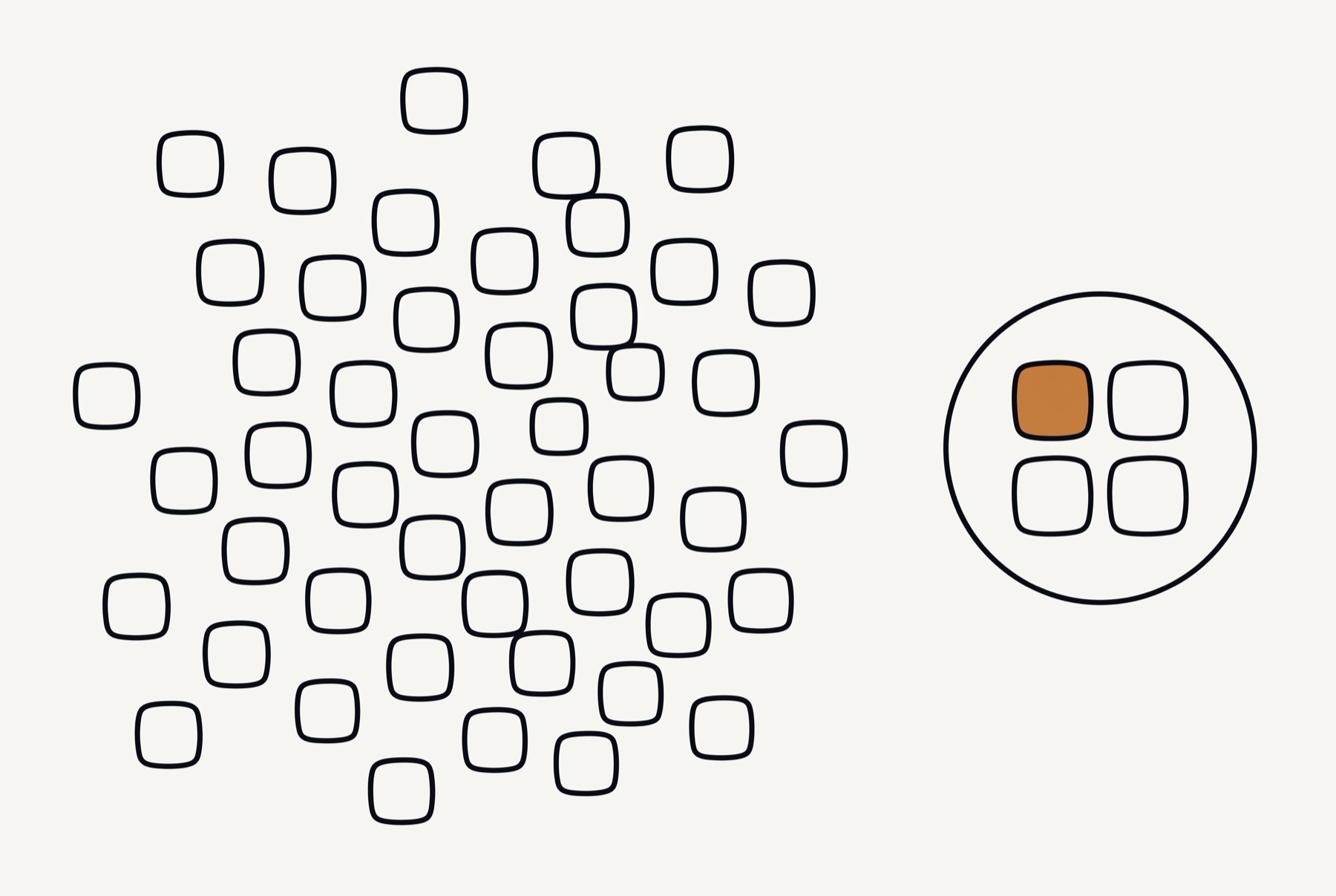
In van Nispen and colleagues' study, judges who watched a mimed object and wrote down what it was named it correctly 29% of the time. A second set of judges watched the same clips with four pictures to choose from, one of them the answer, and scored 97%. The mime did not change. What changed was how much of the answer the guesser was handed before they started.
Say the category out loud before the clock starts. Name the list the word came off: animal, job, action, object, food, sport, phrase, or a state of mind. A category is the cheapest thing you can tell the room. No study on this page measures that, so treat it as a house rule rather than a result.
The rest of the rescue, in the order to try it:
- Name the category, if you have not. Then name the tier, so the room knows the word was picked to be hard rather than acted badly.
- Let the room guess out loud, continuously. Galantucci and Garrod review drawing experiments in which a partner could signal back. Even a tick to say they understood changed what the person drawing did next. Guesses aloud are how an actor finds out which half of the mime landed.
- Let the actor restart. A second attempt from a different angle is worth more than the rest of the clock on the first one.
- Offer the swap once. One pass per performer per game, and they get a new word from the same tier. Allow unlimited passes and the hard tier stops being played.
- Call it and move on. Say the word, start the next round, and if the word was unfair give the actor the point anyway on paper. In the app a round nobody solved pays neither side. The next round starts straight away.
When a word dies twice in one session, cut it from the list rather than blaming the actor. A word nobody can act is a bad word, and the three tests above are the cheapest way to find the next one before a room does.
The house rules that stop an argument
Charades has no governing body and its rules genuinely vary. Agree these five out loud before the first round and you will not be settling them mid-game.
No talking, no mouthing, no pointing at objects in the room. Pointing at a real chair to mean chair is where groups disagree. Ban it explicitly, because the ambiguity is what causes the row rather than the pointing.
Sounds are out, including humming. If you want sounds, say so at the start and apply it to everybody, and expect the game to get easier and less funny.
Say the category before the clock starts. This is the rule from the section above, and it is the difference between a round and a staring contest.
Close enough counts, and the actor decides. Not the room, not the presenter. The person holding the word answers with a nod or a shake of the head, once, and the round ends. Any other arrangement produces a committee.
The clock is the clock. Nobody gets a bonus ten seconds for being nearly there. Everybody is nearly there.
Start from one of these
Each one opens in your dashboard, ready to run. You can change every word of it.
Charades, first round
Easy bank words on a sixty-second clock, with the word on the performer's phone and the room guessing out loud. Built to hand a first-time group a fast win.
4 slides · 1 activity
Office charades
Charades run on eighteen office references typed into the word list, with guesses typed from phones so the loudest voice stops deciding. Ninety seconds a round.
4 slides · 1 activity
Charades, idioms only
Twenty-four idioms on a two-minute clock, for a room that has already won a few rounds. The performer signals the word count first, then acts the words in order.
4 slides · 1 activity
What makes a word actable
A six-question quiz on what makes a word actable, scored on speed. Run it before the acting starts to settle why the hard words are hard.
4 slides · 1 activity
Charades ideas for kids
Children need a different list, and not because they know fewer words. Reading meaning off a moving body is a skill that keeps developing well into the teens.
Ross, Polson and Grosbras showed people short clips of actors performing an emotion, once in full light and once as moving dots on a black background. Adults named the emotion correctly 94.3% of the time in full light and 81.1% from the dots alone. Sixteen and seventeen year olds managed 90% and 68.7%, still significantly below the adults. Their study was about emotion rather than charades and only fourteen adults took part, so hold it loosely. It points where common sense points. Give a child a thing with a shape, never a feeling.
For younger children
- Riding a bike
- Blowing bubbles
- A butterfly
- A snowman
- A birthday cake
- A rocket
- A train
- A lion
- A helicopter
- A teddy bear
- A dinosaur
- A wobbly tooth
- Eating an ice cream
- A bouncy castle
- A slide
- A kite
- A tractor
- A pirate
- A ballerina
- A crocodile
- Brushing a dog
- A caterpillar
- Hopscotch
- A frog jumping
- An aeroplane
- A cat washing itself
- A snail
- Building a sandcastle
- A duck in a puddle
- Carrying a very full cup
For older children
- A superhero landing
- Scoring a goal
- A magician
- A robot
- A skateboarder
- A scientist with a test tube
- A ninja
- Carrying far too much at once
- A rollercoaster
- A goalkeeper diving
- An astronaut
- A chef tasting soup
- A cheerleader
- A detective following a clue
- A knight
- A dragon
- Someone stuck in a lift
- A tightrope walker
- A drummer
- A vet with a very large dog
Running it with a class
Keep rounds to sixty seconds, keep teams to four, and let two volunteers act together for the first round of the day. A pair is far less exposed than a soloist, which matters most in the round where nobody has seen anybody else do it yet. If you want printed words rather than a screen, the charades generator prints the list it gives you.
What a round of charades actually does
Charades pages tend to claim the game builds memory, communication skills and team bonding, usually with no source at all. Two of those three are worth stating carefully, and one is worth taking off the table.
Take the memory claim off the table first. Steffens, von Stülpnagel and Schult reviewed the literature on whether doing a thing is remembered better than watching somebody else do it. Across the 36 free-recall experiments where every action was either performed or watched, never mixed, only seven reported an advantage for doing. Mixed lists are the case where the advantage does turn up, and their own conclusion is still that a memory advantage of enactment over observation does not generally exist. Anyone who tells you charades makes the words stick is ahead of the evidence.
What the evidence does support is narrower. Fay, Lister, Ellison and Goldin-Meadow had 92 students build a communication system from scratch in pairs, with no shared words. Some pairs used gesture alone, some used non-linguistic vocalisation alone, and some used both. Gesture alone beat vocalisation alone, both at getting meaning across and at building a shared vocabulary inside the pair. Hands are what people reach for when language is taken away, and they are good at it.
The kind of gesture matters as much as the fact of it. Macedonia and von Kriegstein's review describes an experiment in which German speakers learned 92 invented nouns, half encoded with gestures that depicted the meaning and half with gestures that meant nothing. The depicting gestures produced better memory in the short term and after sixty days. Movement alone was not the thing that helped. Movement that pictured something was.
The laughing is doing something too. Dunbar and colleagues ran six experimental studies using pain threshold as a proxy for endorphin release. Thresholds came out significantly higher after laughter than in a control condition, an effect they put down to laughter itself rather than to a change in mood. They suggest it may play a part in social bonding. Suggest is their word and it is the right one.
There is a cost that none of those claims mention. Charades is a spotlight. One person stands at the front, alone, watched on purpose, and that is the game working rather than the game going wrong. Being the named person at the front is the specific thing people object to about openers, and ice breakers that aren't cringe carries the survey evidence for it. So take volunteers, and only volunteers. If no hands go up, that is the room answering, and there are plenty of icebreaker games that put nobody at the front.
So run charades because a room watching one person fail to mime a woodpecker is a room paying attention, and because it costs ninety seconds a round. That is a good enough reason on its own. If you want the drawing version instead, Doodler Decoy puts one team on the pen and every other team on inventing a convincing lie about what is being drawn.
The game is older than most of the arguments about it. The word charade reached English in 1776 from French, where it meant a syllable riddle rather than anything acted. The silent acted version came later. Nobody has agreed on the rules since. Which is why you say them out loud first.
FAQ
Common questions
What are good charades words?
Words your body can perform. Ortega and Özyürek's ratings put actions well above objects for how obviously a silent gesture carries its meaning, and objects you cannot pick up came last of all. Start with verbs. If you want a noun, pick one somebody would hold in their hands rather than one they would have to draw in the air.
What are some hard charades ideas?
Abstract states and idioms. Procrastinating, gloating, reluctantly agreeing, being politely bored. Then phrases like spill the beans, walking on eggshells, or a needle in a haystack. They are hard because the actor has to build the meaning from two or three ideas in sequence, so give them two minutes rather than ninety.
How long should a charades round be?
Ninety seconds is the right default, and thirty seconds to five minutes is the range worth using. Sixty suits easy words and a warm room. Two minutes suits idioms and nothing else. Whatever you pick, hold to it, because an extra ten seconds for one team is the argument the house rules exist to prevent.
How many people do you need to play charades?
Two can play, one acting and one guessing. Above about ten, split into teams of four to six rather than running one large group. Latané, Williams and Harkins found individual effort dropped steeply as group size rose in a physical task. Fay, Garrod and Carletta found that ten-person groups follow whoever talks most, while five-person groups behave like a conversation. That was a committee discussing a case, not a room guessing.
What happens if nobody can guess the word?
Say the category. In van Nispen and colleagues' study, judges naming a mimed object from scratch were right 29% of the time. A second set of judges picking from four pictures were right 97%. Narrowing what the answer could be is what moved it. Naming the category is the cheapest way to narrow it, and that part is a house rule rather than a finding. After that, let the actor restart, then offer one swap per person per game.
Can you play charades with a large group or remotely?
Yes, as long as the guessing stops being shouted. The problem with forty people is that only the front rows can see and only the loudest person gets heard. Put the word on the performer's phone, the clock on the big screen, and let everyone type their guess, so remote players guess on the same terms as the room.
Are charades good for team building?
They are good for attention and they are cheap, which is a fair reason on its own. Be careful with the bigger claims. Steffens and colleagues reviewed 36 free-recall experiments in which every action was either performed or watched, never mixed, and found the advantage of doing in only seven. The memory argument is weaker than the internet suggests.
Run this with your own team
Start free, no credit card. Your audience joins from their phones with a code — nothing to install.