Trivia questions that work on a live room
135 checked questions, and the evidence on what makes one land
· Updated
Being asked a question you half know beats being told the answer twice. Karpicke and Roediger had students learn foreign vocabulary, then either keep retrieving it or keep restudying it. A week later, the groups that kept retrieving recalled about 80% of the pairs. The groups whose learned items were dropped from testing recalled 36% and 33%.
None of them saw it coming. Asked to predict their own score before they left, students in all four conditions guessed about 50%. The people who had spent the session rereading felt as ready as the people who had spent it answering, and finished with less than half their recall.
That result changes what a trivia round is for. The 135 questions with answers start below, grouped by category and marked easy, medium or hard.
Start from one of these
Each one opens in your dashboard, ready to run. You can change every word of it.
Office trivia, ready to run
Twelve questions from easy to hard, scored on speed, with the room answering on their phones. No printing, no teams to pick, no host who already knows the answers.
4 slides · 1 activity
Trivia, answered in teams
Four teams, assigned as people join so the usual pairs get broken up, then six questions from six different categories with a full minute to argue each one. No one person holds all six; four people between them usually do. Name the winners out loud and buy them nothing.
5 slides · 2 activities
Five questions, hard end only
Five questions from the hard tier and nothing else, a minute on each, and no warm-up to hide behind. Everyone predicts their own score on a poll before the first question, which is the part almost nobody gets right.
5 slides · 2 activities
Six you will get wrong
Six questions most rooms answer wrongly and confidently, on a fifteen-second clock that takes the first answer rather than the second thoughts. Then one private round where everybody names the one they would have bet money on.
5 slides · 2 activities
Why asking a room beats telling it
The effect is old, large and easy to miss. Roediger and Karpicke gave students prose passages, then had one group reread and another take recall tests with no feedback at all. On a test five minutes later the rereading group won, 83% against 71%. On a test a week later the order flipped: the tested group recalled 61% and the rereading group 40%.
The lopsided part is the effort. The rereading group got through the passage 14.2 times on average. The tested group read it 3.4 times and still came out more than twenty points ahead a week later.
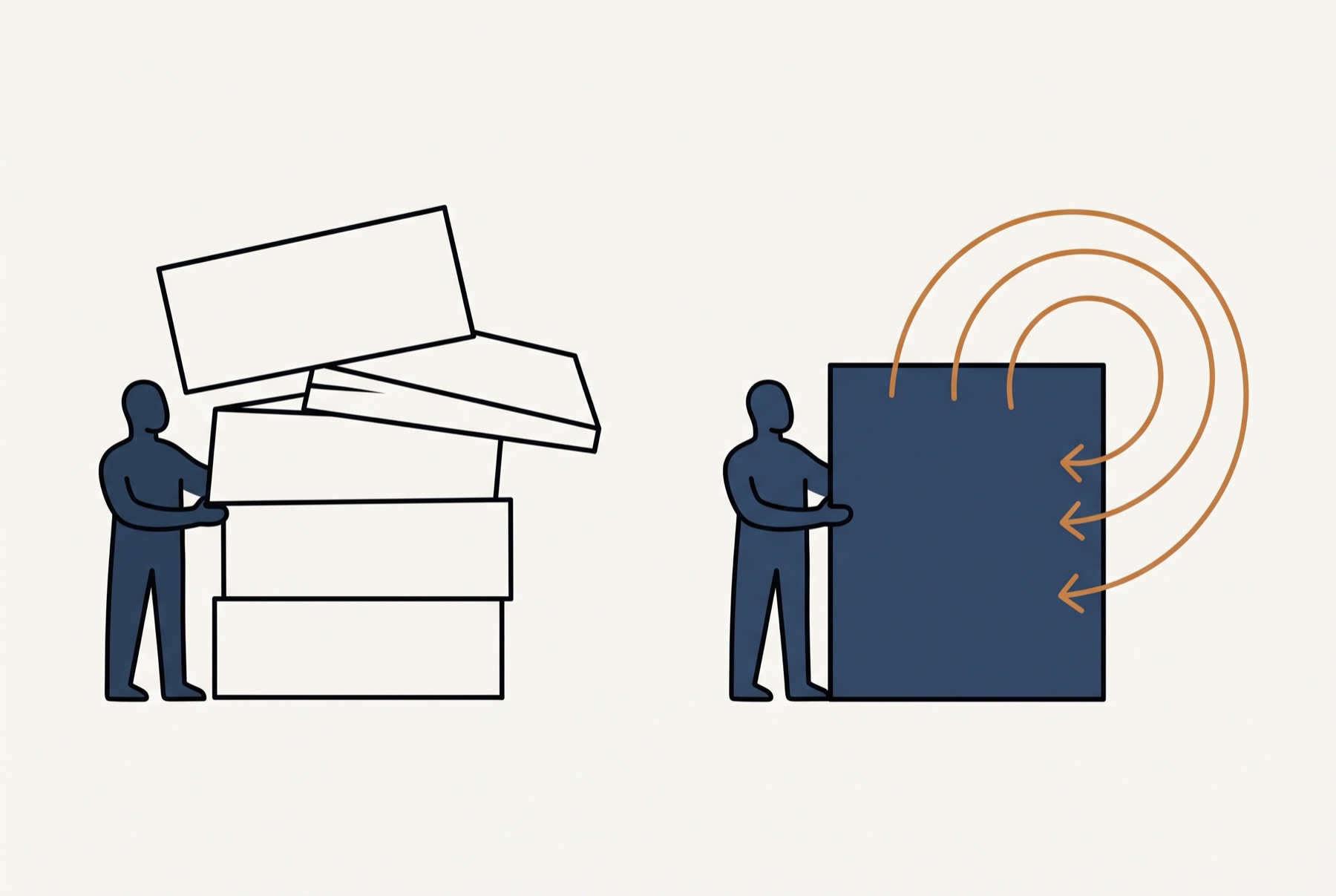
Take that five-minute result seriously, because it is the one you will feel in the room. Straight after a session, rereading looks better and feels better. A quiz makes people feel less prepared and remember more. Judge the round by how the room feels at the door and you will stop running it.
A quiz also changes the hour it interrupts. Szpunar, Khan and Schacter had students watch a 21-minute statistics lecture in four segments, testing half of them after each segment and half only at the end. The tested students reported less mind wandering. They took notes on 17% of slides against 6%, and on the fourth segment, which neither group had seen a question on before, they scored 84% against 59%.
You cannot ask a room for attention. You can give it a reason to expect a question, which is a different and much cheaper thing.
What makes a trivia question worth asking
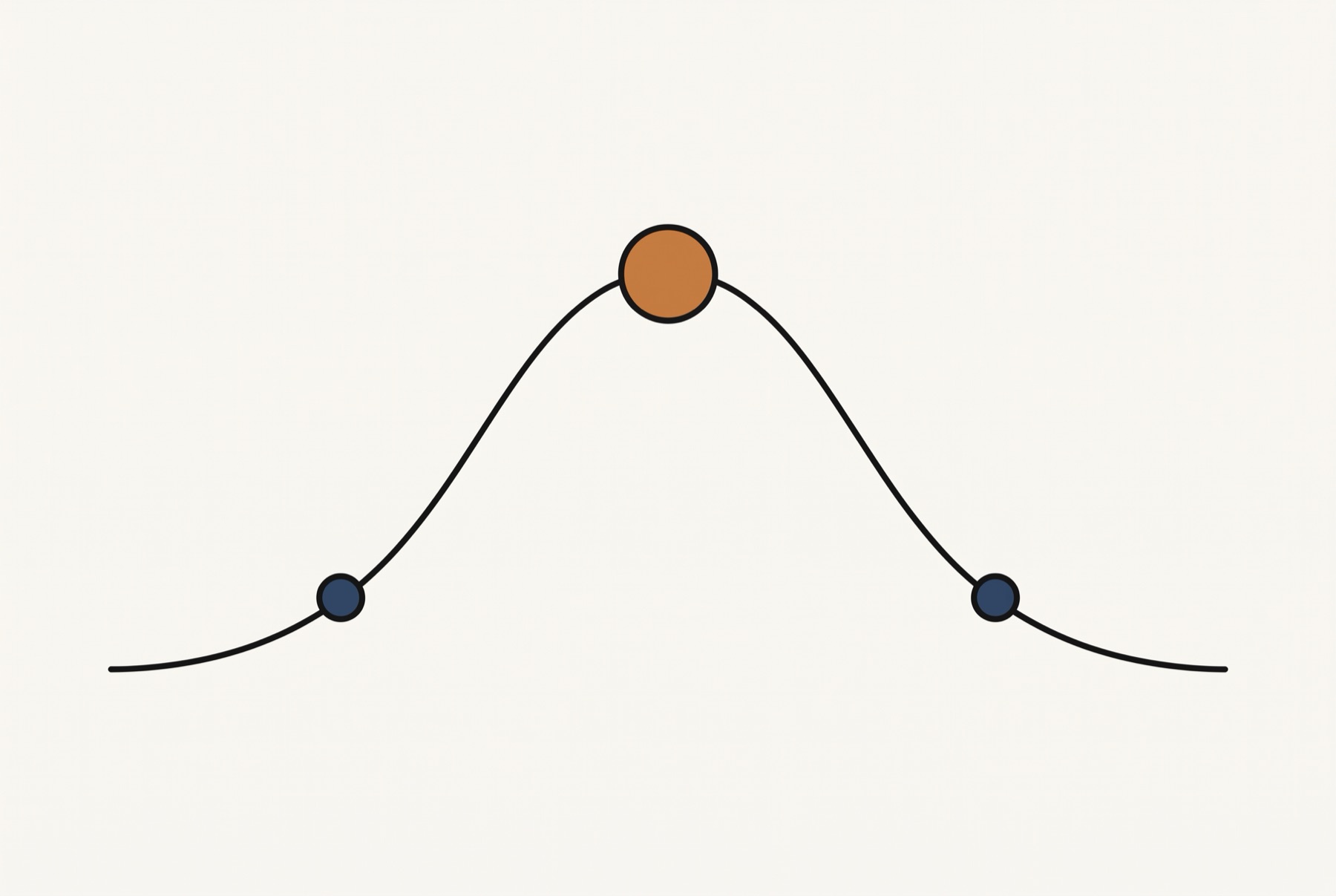
Kang and colleagues scanned nineteen people while they read trivia questions, asking after each one how curious they were and how likely they thought they were to know the answer. Curiosity was an inverted U. It peaked when a person put their own chance of knowing at around .50.
The best question in your set is the one most of the room feels it should know and cannot quite retrieve. A question everyone answers is a warm-up rather than a test. A question nobody can touch is just an unfamiliar word on a slide.
Curiosity pays out in memory, not only in mood. Gruber, Gelman and Ranganath had people rate trivia questions the same way and then tested them on the answers. Recall for high-curiosity answers ran 70.6% against 54.1% in the same session, and 45.9% against 28.1% in a second experiment a day later.
Difficulty helps as well, as long as people still get there. Pyc and Rawson call it the retrieval effort hypothesis, and state it flatly: difficult but successful retrievals are better for memory than easier successful retrievals. Aim just under the room's ceiling rather than at it.
So write the set harder than feels comfortable, and write one more question than the slot has room for. Five questions a room finds genuinely hard beat twenty it can recite. Mark your own difficulty as you write, because the tag is what tells you which one to drop.
Why the wrong answers are the part that teaches
Confidence and correctness come apart in a way that works in your favour. Errors made with high confidence turn out to be the easiest ones to fix. Metcalfe names the pattern the hypercorrection effect and puts it plainly: a strong degree of belief in the truth of one's errors makes them more, rather than less, susceptible to being correctable. It holds for grade-school children as well as adults, and in children it comes with the same claim that they knew the answer all along.
The confident wrong answer is the one your quiz exists for. When the room agrees on the same wrong option, you have found something you would not have thought to say.
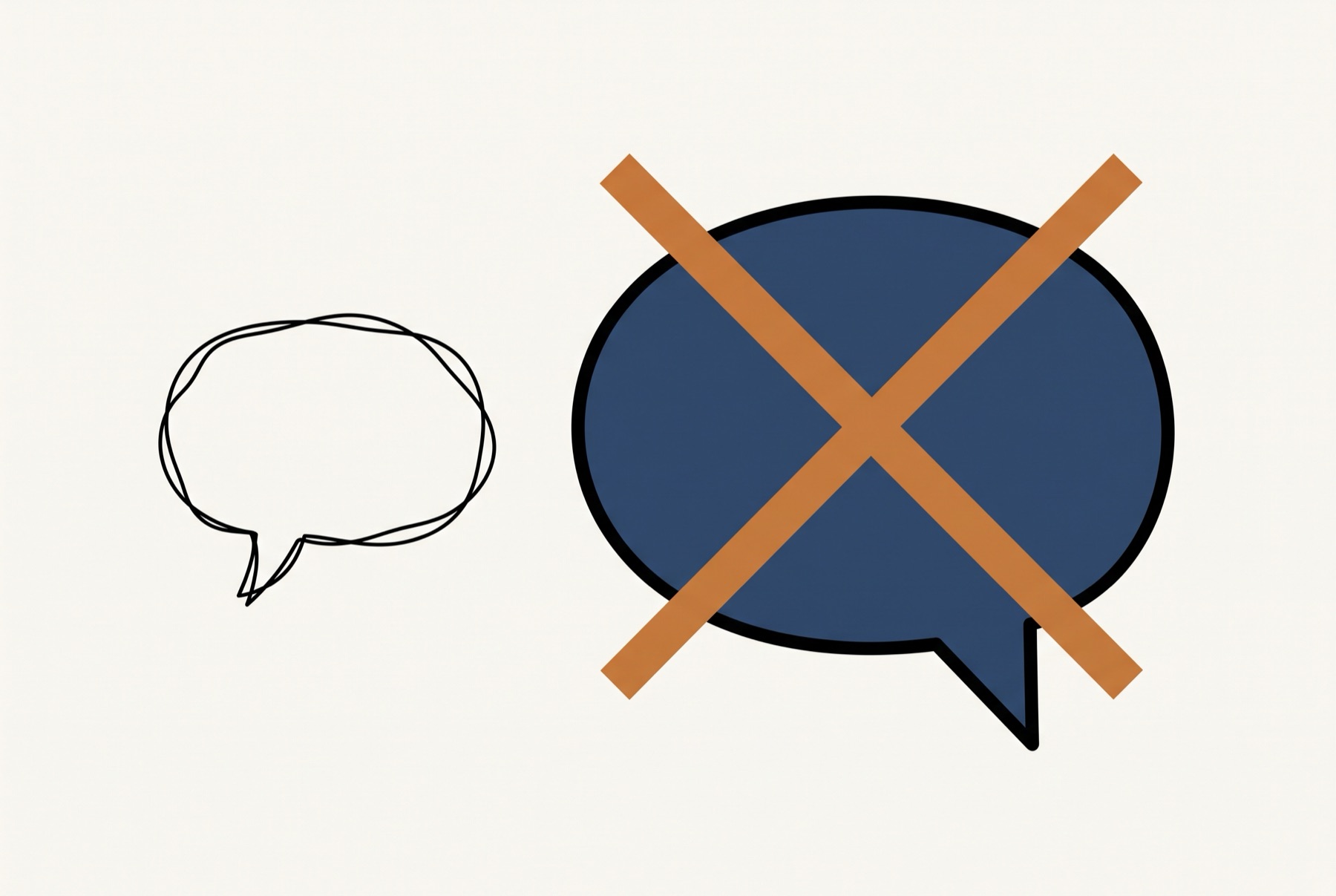
Wrong answers pay off before the explanation as well as after it. Richland, Kornell and Kao had people answer questions about a passage before reading it, then read the passage. Those people later scored 75% against 56% for people given extra reading time instead, counting only the items they had failed to retrieve on the pretest.
Multiple choice adds a condition of its own, and skipping it does real damage. Butler and Roediger gave people multiple-choice tests with immediate feedback, delayed feedback or none, and reduced the finding to one sentence: educators should provide feedback when using multiple-choice tests.
Without feedback, a multiple-choice round can teach the wrong answer. Roediger and Marsh found that reading more wrong options cut the benefit of the test and raised how often people produced those wrong options later. Their phrase for the risk is that multiple-choice testing may inadvertently lead to the creation of false knowledge.
So the rule is short. Show the answers, and the end of the round is soon enough. Butler and Roediger's delayed condition showed them at the end of the test rather than after each question, and beat the immediate condition a week later, 56% against 45%.
Teams or individuals, and whether to offer a prize
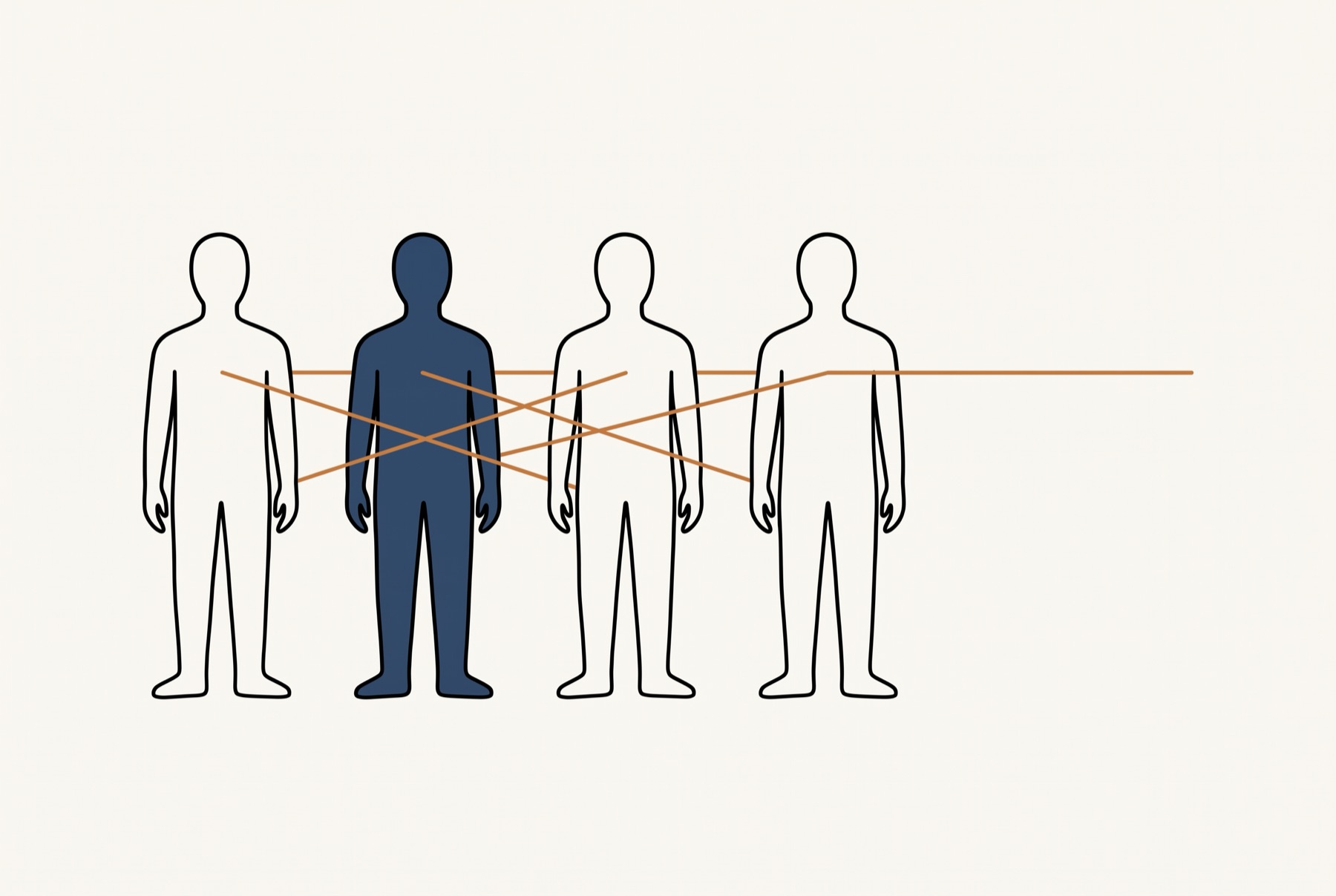
Teams change what happens in the gap between the question and the answer. Smith and colleagues ran clicker questions in a genetics course at Colorado. Students answered alone, discussed with their neighbours, answered the same question again, then took a fresh question on the same idea alone. Among the students who got both tries at the first question wrong, 44% then answered the new one correctly. The authors report that as significantly better than random guessing, on questions that averaged four options each.
The conclusion they draw is the one worth carrying into a trivia night. Peer discussion improved understanding even when none of the students in a discussion group originally knew the correct answer. Those students discussed with whoever sat next to them, so a table is usually team enough, and the random team generator is for when you want the usual pairs broken up.
Turning a lesson into a game works, modestly and measurably. Sailer and Homner's meta-analysis put the effect on cognitive learning outcomes at g = 0.49 across 19 studies. Their moderator analysis picks out combining competition with collaboration as particularly effective for behavioural outcomes, alongside the inclusion of game fiction.
Then leave the prize at home. Deci, Koestner and Ryan pooled 128 studies on extrinsic rewards. Tangible ones pushed down people's willingness to do the activity again for its own sake, at d = -0.40, -0.36 and -0.28 depending on what the reward was contingent on. Positive feedback moved the same measure the other way, at d = 0.33.
Say the winning team's name out loud. Do not buy them anything.
How to run a trivia round in a meeting
Three to five questions, once, at the end of a section. That is the whole shape, and the temptation to run thirty at the end of the quarter is the thing to resist.
Cepeda and colleagues pooled 839 assessments of distributed practice in 317 experiments. Their conclusion is that the gap between sessions and the delay before the test operate jointly: the longer the delay you care about, the wider the gap should be. So ask the same three questions again a fortnight later. Splitting six different questions across two sessions is a scheduling choice rather than something Cepeda measured.
Low stakes is doing a lot of the work. Agarwal and colleagues surveyed 1408 middle and high school students about classroom retrieval practice. In the classes where it was running, 92% said it helped them learn and 72% said it made them less nervous for unit tests and exams. Frequent and small lowers the temperature. Rare and heavy raises it.
In a classroom the same three questions are a check on your teaching rather than a game. That is what formative assessment means, and there are thirty-two ways to run one.
General knowledge trivia questions and answers
A general knowledge round is a warm-up, and its job is to get everyone answering rather than to test anyone. Five easy, five medium and five hard.
- How many sides does a hexagon have? Six. (Easy)
- What is the capital of Australia? Canberra. (Easy)
- Which Roman numeral stands for fifty? L. (Easy)
- Which is the only mammal capable of true flight? The bat. (Easy)
- Which country gave the Statue of Liberty to the United States? France. (Easy)
- What is the collective noun for a group of crows? A murder. (Medium)
- What is the currency of Poland? The zloty. (Medium)
- In Morse code, which letter is a single dot? E. (Medium)
- How many minutes are there in a full day? 1440. (Medium)
- Counting polar deserts, which is the largest desert on Earth? Antarctica. (Medium)
- Which letter of the alphabet appears in no United States state name? Q. (Hard)
- What is the study of fungi called? Mycology. (Hard)
- What does the word "laser" stand for? Light amplification by stimulated emission of radiation. (Hard)
- What colour is a polar bear's skin under its fur? Black. (Hard)
- Which mythical animal is the heraldic symbol of Scotland? The unicorn. (Hard)
History trivia questions and answers
History rewards specific questions over sweeping ones, so these ask for years and names rather than causes. Four of the fifteen ask for a year.
- In which year did the Second World War end? 1945. (Easy)
- Who was the first President of the United States? George Washington. (Easy)
- Which English king had six wives? Henry VIII. (Easy)
- Who was the first person to walk on the Moon? Neil Armstrong. (Easy)
- Which empire did Genghis Khan found? The Mongol Empire. (Easy)
- In which year did the Titanic sink? 1912. (Medium)
- Which city-state was Athens' main rival in the Peloponnesian War? Sparta. (Medium)
- Which 1919 treaty formally ended the state of war between Germany and the Allies? The Treaty of Versailles. (Medium)
- What was the name of the first artificial satellite put into orbit? Sputnik 1. (Medium)
- Which country was known abroad as Persia until 1935? Iran. (Medium)
- Which navigator completed the first circumnavigation of the globe after Magellan died? Juan Sebastian Elcano. (Hard)
- Who was British Prime Minister when Britain declared war on Germany in 1939? Neville Chamberlain. (Hard)
- In which year was Magna Carta sealed? 1215. (Hard)
- Which civilisation developed cuneiform writing? The Sumerians. (Hard)
- In which year did the French Revolution begin? 1789. (Hard)
Geography trivia questions and answers
A map is the same everywhere, which is what carries a geography round across an international room. Capitals are the reliable middle tier.
- Which is the largest ocean? The Pacific. (Easy)
- Which river runs through Paris? The Seine. (Easy)
- Which country has the largest land area? Russia. (Easy)
- Which canal links the Mediterranean Sea and the Red Sea? The Suez Canal. (Easy)
- Which United States state is largest by area? Alaska. (Easy)
- What is the capital of Canada? Ottawa. (Medium)
- What is the capital of New Zealand? Wellington. (Medium)
- Which strait separates Spain from Morocco? The Strait of Gibraltar. (Medium)
- Which is the only country with a land border with Portugal? Spain. (Medium)
- Which is the world's largest island? Greenland. (Medium)
- Which mountain range contains K2? The Karakoram. (Hard)
- Greenland is an autonomous territory of which kingdom? Denmark. (Hard)
- Which is the deepest lake in the world? Lake Baikal. (Hard)
- Mount Kilimanjaro stands in which country? Tanzania. (Hard)
- Which city is the seat of the Swiss federal government? Bern. (Hard)
Science trivia questions and answers
Science questions are easy to pitch at the half-known, which is where curiosity peaks. Keep the wording short so nobody is decoding the question as the clock runs.
- What is the chemical symbol for gold? Au. (Easy)
- Which planet is closest to the Sun? Mercury. (Easy)
- What is the largest organ of the human body? The skin. (Easy)
- Which gas do plants take from the air to make food? Carbon dioxide. (Easy)
- What is the hardest naturally occurring substance? Diamond. (Easy)
- How many bones are in the adult human body? 206. (Medium)
- What is the study of earthquakes called? Seismology. (Medium)
- Who discovered penicillin? Alexander Fleming. (Medium)
- How many hearts does an octopus have? Three. (Medium)
- Roughly how long does sunlight take to reach Earth? About eight minutes. (Medium)
- How many elements does the periodic table currently hold? 118. (Hard)
- Which tree species grows the tallest? The coast redwood. (Hard)
- What is the most abundant gas in Earth's atmosphere? Nitrogen. (Hard)
- Which is the hottest planet in the solar system? Venus. (Hard)
- What does DNA stand for? Deoxyribonucleic acid. (Hard)
Music trivia questions and answers
Music splits a room by age. No chart act below is more recent than Michael Jackson, which is safe in a mixed room and thin in a young one. Bring two of your own if everybody in the room is under thirty.
- How many strings does a standard guitar have? Six. (Easy)
- Which Beatle played the drums? Ringo Starr. (Easy)
- Which country was Bob Marley from? Jamaica. (Easy)
- Which singer is known as the King of Pop? Michael Jackson. (Easy)
- Which Queen song opens with the line "Is this the real life?" Bohemian Rhapsody. (Easy)
- How many lines make up a standard musical stave? Five. (Medium)
- What does the marking "forte" tell a musician to do? Play loudly. (Medium)
- Which Swedish group won the 1974 Eurovision Song Contest with "Waterloo"? ABBA. (Medium)
- What is the lowest male singing voice? Bass. (Medium)
- What is the Italian term for gradually getting louder? Crescendo. (Medium)
- How many keys are on a standard full-size piano? 88. (Hard)
- Which composer wrote The Four Seasons? Antonio Vivaldi. (Hard)
- Which instrument is Yo-Yo Ma known for playing? The cello. (Hard)
- In which city was the Motown label founded? Detroit. (Hard)
- In which country was Frederic Chopin born? Poland. (Hard)
Film and television trivia questions and answers
Film and television run together here, and five of the fifteen below are television or animation rather than live-action cinema. The fifteen run from 1927 to 2019, because a set that sits in one decade tests age rather than film.
- Which 1975 Steven Spielberg film is about a great white shark? Jaws. (Easy)
- Which studio made Toy Story? Pixar. (Easy)
- Which sitcom is set around a coffee house called Central Perk? Friends. (Easy)
- Which series follows a chemistry teacher called Walter White? Breaking Bad. (Easy)
- Which animated film features a snowman called Olaf? Frozen. (Easy)
- Who composed the music for Star Wars? John Williams. (Medium)
- Which film includes the line "Here's looking at you, kid"? Casablanca. (Medium)
- What is the name of the hotel in The Shining? The Overlook. (Medium)
- Which South Korean film won the Academy Award for Best Picture? Parasite. (Medium)
- Which Studio Ghibli film features a forest spirit called Totoro? My Neighbour Totoro. (Medium)
- Which film won the first Academy Award for Best Picture? Wings. (Hard)
- What is the name of the commercial spaceship in Alien? The Nostromo. (Hard)
- Which director's run of cameos in his own films began with The Lodger in 1927? Alfred Hitchcock. (Hard)
- Which 1972 film opens with the line "I believe in America"? The Godfather. (Hard)
- Who played the title role in the 1962 film Lawrence of Arabia? Peter O'Toole. (Hard)
Sport trivia questions and answers
Sport divides a workplace into people who follow it and people who do not, so keep it to rules and firsts rather than last season's results. A record dates as well, unless the question pins it to the year it was set.
- How many players from each team start a football match on the pitch? Eleven. (Easy)
- In tennis, what word is used for a score of zero? Love. (Easy)
- How many rings are on the Olympic flag? Five. (Easy)
- How many holes are played in a full round of golf? Eighteen. (Easy)
- Which sport is played with a shuttlecock? Badminton. (Easy)
- Which country hosted and won the first FIFA World Cup, in 1930? Uruguay. (Medium)
- How high above the floor is a basketball hoop, in feet? Ten. (Medium)
- What colour is the jersey worn by the leader of the Tour de France? Yellow. (Medium)
- Which wrestling style is regarded as Japan's national sport? Sumo. (Medium)
- Which chess piece moves only diagonally? The bishop. (Medium)
- In which country did table tennis originate as an after-dinner parlour game? England. (Hard)
- What is a score of three under par on a single hole called? An albatross, or a double eagle in the United States. (Hard)
- Which sprinter set the men's 100 metres world record of 9.58 seconds in Berlin in 2009? Usain Bolt. (Hard)
- How many points is a converted try worth in rugby union? Seven. (Hard)
- How long is a marathon, in kilometres? 42.195. (Hard)
Food and drink trivia questions and answers
Everybody eats, so a food round leaves nobody out. Keep the questions to ingredients and origins, which have one answer, rather than to what tastes best.
- What is the main ingredient of guacamole? Avocado. (Easy)
- Which herb is the main ingredient of pesto? Basil. (Easy)
- Which cheese tops a Margherita pizza? Mozzarella. (Easy)
- What is tofu made from? Soybeans. (Easy)
- Which fruit is cider made from? Apples. (Easy)
- Which spice is the most expensive by weight? Saffron. (Medium)
- Which nut is marzipan made from? The almond. (Medium)
- Which country does feta cheese come from? Greece. (Medium)
- Which drink is made by fermenting sweetened tea? Kombucha. (Medium)
- Besides eggs, what is the main ingredient of a Spanish tortilla? Potato. (Medium)
- Which part of a chilli holds the most capsaicin? The white pith the seeds attach to. (Hard)
- Which fish is a key ingredient in modern Caesar dressing, though Cardini's 1924 original left it out? Anchovy. (Hard)
- Which sauce made from egg yolk, butter and lemon goes on eggs Benedict? Hollandaise. (Hard)
- Which pastry is used to make profiteroles? Choux. (Hard)
- Which Spanish region gives its name to a red wine made mostly from Tempranillo? Rioja. (Hard)
Literature trivia questions and answers
A literature round can quietly become a class marker, so lead with the books people met at school. Three of the hard five leave the British and American canon on purpose.
- Who wrote Romeo and Juliet? William Shakespeare. (Easy)
- Who wrote Pride and Prejudice? Jane Austen. (Easy)
- Who created the detective Sherlock Holmes? Arthur Conan Doyle. (Easy)
- What is the name of Harry Potter's owl? Hedwig. (Easy)
- Which play contains the line "To be, or not to be"? Hamlet. (Easy)
- Who wrote the novel 1984? George Orwell. (Medium)
- Which novel opens "It was the best of times, it was the worst of times"? A Tale of Two Cities. (Medium)
- Who wrote The Great Gatsby? F. Scott Fitzgerald. (Medium)
- Who wrote Frankenstein? Mary Shelley. (Medium)
- Which Dickens novel features Ebenezer Scrooge? A Christmas Carol. (Medium)
- Which Colombian writer wrote One Hundred Years of Solitude? Gabriel Garcia Marquez. (Hard)
- Which Nigerian writer wrote Things Fall Apart? Chinua Achebe. (Hard)
- Which Japanese writer wrote Norwegian Wood? Haruki Murakami. (Hard)
- What was Mark Twain's real name? Samuel Clemens. (Hard)
- Who wrote the Discworld novels? Terry Pratchett. (Hard)
Start from one of these
Each one opens in your dashboard, ready to run. You can change every word of it.
Office trivia, ready to run
Twelve questions from easy to hard, scored on speed, with the room answering on their phones. No printing, no teams to pick, no host who already knows the answers.
4 slides · 1 activity
Trivia, answered in teams
Four teams, assigned as people join so the usual pairs get broken up, then six questions from six different categories with a full minute to argue each one. No one person holds all six; four people between them usually do. Name the winners out loud and buy them nothing.
5 slides · 2 activities
Five questions, hard end only
Five questions from the hard tier and nothing else, a minute on each, and no warm-up to hide behind. Everyone predicts their own score on a poll before the first question, which is the part almost nobody gets right.
5 slides · 2 activities
Six you will get wrong
Six questions most rooms answer wrongly and confidently, on a fifteen-second clock that takes the first answer rather than the second thoughts. Then one private round where everybody names the one they would have bet money on.
5 slides · 2 activities
How to write trivia questions about your own material
A general knowledge round warms a room up. The three questions after it are the ones that earn the slot, and they are about the thing you have just finished explaining.
Write them against the part people get wrong, not the part you enjoyed presenting. Then put one of them before the explanation rather than after it. Richland, Kornell and Kao's pretested readers came out ahead at 75% against 56% on the items they had failed to retrieve. A question the room fails still earns its slot: it is what makes the explanation after it land.
Read the answer split rather than the leaderboard. It is not on the reveal screen: the activity's report on the dashboard lists every question with a count against each option. A question where the room spreads evenly across the options is a topic to reteach. A question where most of the room picks the same wrong option is more useful still, because you now know the shape of the misunderstanding rather than just its size.
Write plausible wrong options and then always show the answer, because a plausible wrong option is exactly the one Roediger and Marsh watched turn into false knowledge when nobody corrected it. Distractors and feedback are a pair. Write both or neither.
Live Quiz is the version of a round that lives inside a deck. Players join by link or QR code and answer in a phone browser. Every question runs on a countdown. A correct answer is worth between 200 and 1000 points depending on how much of the timer was left, and a wrong answer scores nothing. The default per-question timer is 30 seconds, and the presets are 15, 30, 60, 120 and 300.
Two settings change the shape of the round. Group-paced walks the whole room through one question at a time, which is the mode for a live audience. It reveals each answer before the next question rather than holding them to the end. Self-paced lets people run ahead on their own phones, which suits a workbook rather than a stage. A quiz can also be set to No right answer, which drops the leaderboard and reports how many people answered rather than who won. What the room picked shows up on the activity's report on the dashboard afterwards, not on the screen.
Skip to Reveal is the control this kind of round needs, because a factual question is finished the moment the last person answers and the clock does not know that. Writing the set is one sentence of description to Doodle, which returns "each question with four options and the correct answer marked", and every question stays editable afterwards.
A single quiz activity holds up to 20 questions, so a full pub-style round is several activities across several slides. That is the better shape anyway, because 135 questions in one sitting stops being a game.
One thing the product will not do for you: participants cannot write the questions. Quiz content is presenter-authored, so any variant where the room submits its own trivia is not available today. If what you want is audience-generated material, that is a different activity rather than a setting.
For a session where you want attention without a right answer, Presentation Bingo binds words to your slides. Reaching a slide makes its word tappable on people's phones, and they mark their own cards. It solves the attention half without pretending to test anyone.
And if you want the quiz shape with nothing factual to test, two truths and a lie runs on the same stage. The room votes on which of three statements is the false one.
On the big screen

Question 1 of 1
A supplier emails an unexpected invoice attachment. What do you do?
0 / 31 answered
On their phone
Question 1
A supplier emails an unexpected invoice attachment. What do you do?
Answer on your phone. Everyone sees the same question.
When to skip the quiz
Some rooms should not be quizzed, and the discipline of naming them is what keeps the format welcome in the rooms that should.
Skip it when the meeting is bad news. Nobody wants to be ranked on their knowledge of anything in the hour they hear about the restructure.
Skip it when the questions are really an audit. A leaderboard with real names on it, built from questions about mandatory training, is a performance review wearing a party hat. If you genuinely need to know who is behind, ask them directly and take the awkwardness yourself.
Skip it with four or five people. A leaderboard of four colleagues is a ranking of four colleagues, and the cover a big room gives does not exist at that size. Just ask the questions out loud.
Skip it when you have no time to show the answers. A quiz that runs out of clock before the reveal leaves its wrong options uncorrected, which is how a round teaches something nobody meant to teach.
And retire a round once the answers come back without effort. Asking the same three questions again a fortnight later is spacing. Asking them every Monday for a year is recitation.
FAQ
Common questions
What makes a good trivia question?
One that sits at the edge of what the room knows. Kang and colleagues found curiosity peaks when a person puts their own chance of knowing the answer at about half. A question everybody gets right is a warm-up rather than a test, and one nobody can touch is dead air. Aim just under the ceiling.
How many trivia questions should a round have?
Three to five at the end of a section, rather than twenty at the end of the day. Cepeda and colleagues pooled hundreds of experiments on spaced practice and concluded that the longer you need the material to last, the wider the gaps between sessions should be. That is an argument for asking the same few questions again a fortnight later, rather than for any particular round length.
Do you have to show the answers?
Yes, and the end of the round is soon enough. Butler and Roediger tested multiple-choice questions with feedback after each item, feedback at the end of the test, and none. Both feedback conditions beat none, and the end-of-test group did best a week later. Without any feedback, Roediger and Marsh found the wrong options themselves can end up remembered as facts.
Are trivia questions better in teams or individually?
Teams. Smith and colleagues had students answer a question alone, discuss it with their neighbours, answer it again, then take a fresh question on the same idea alone. The students who got both tries at the first question wrong still beat guessing on the fresh one, even when nobody in their group had known the answer. Sailer and Homner found competition combined with collaboration particularly effective for behavioural outcomes, along with the inclusion of game fiction.
Should the winner of a work quiz get a prize?
Name them and move on. Deci, Koestner and Ryan pooled the experimental literature and found tangible rewards reduced people's willingness to do an activity again for its own sake, while positive feedback increased it. Say the winning team out loud. Do not buy them anything.
What are good trivia questions for work?
A general knowledge round to get everyone answering, then three questions about your own material. The general round is the warm-up. The specific three are the ones you actually want people to hold next month, and the answer split on them tells you what to reteach.
Are trivia quizzes stressful for people?
Not much, as long as the stakes stay low. Agarwal and colleagues surveyed 1408 middle and high school students about classroom retrieval practice. In the classes where Agarwal's team ran it, 72% said it made them less nervous for unit tests and exams. Frequent and small beats rare and heavy.
Run this with your own team
Start free, no credit card. Your audience joins from their phones with a code — nothing to install.