An escape room game for groups, with every clue on a different phone
Escape Room is an escape room game for the big screen. Crews of about four race to crack a vault, lock by lock, and every phone holds a different piece of each lock: the dial, the clue, the cipher wheel. Nobody can open one alone, so the crew has to talk.
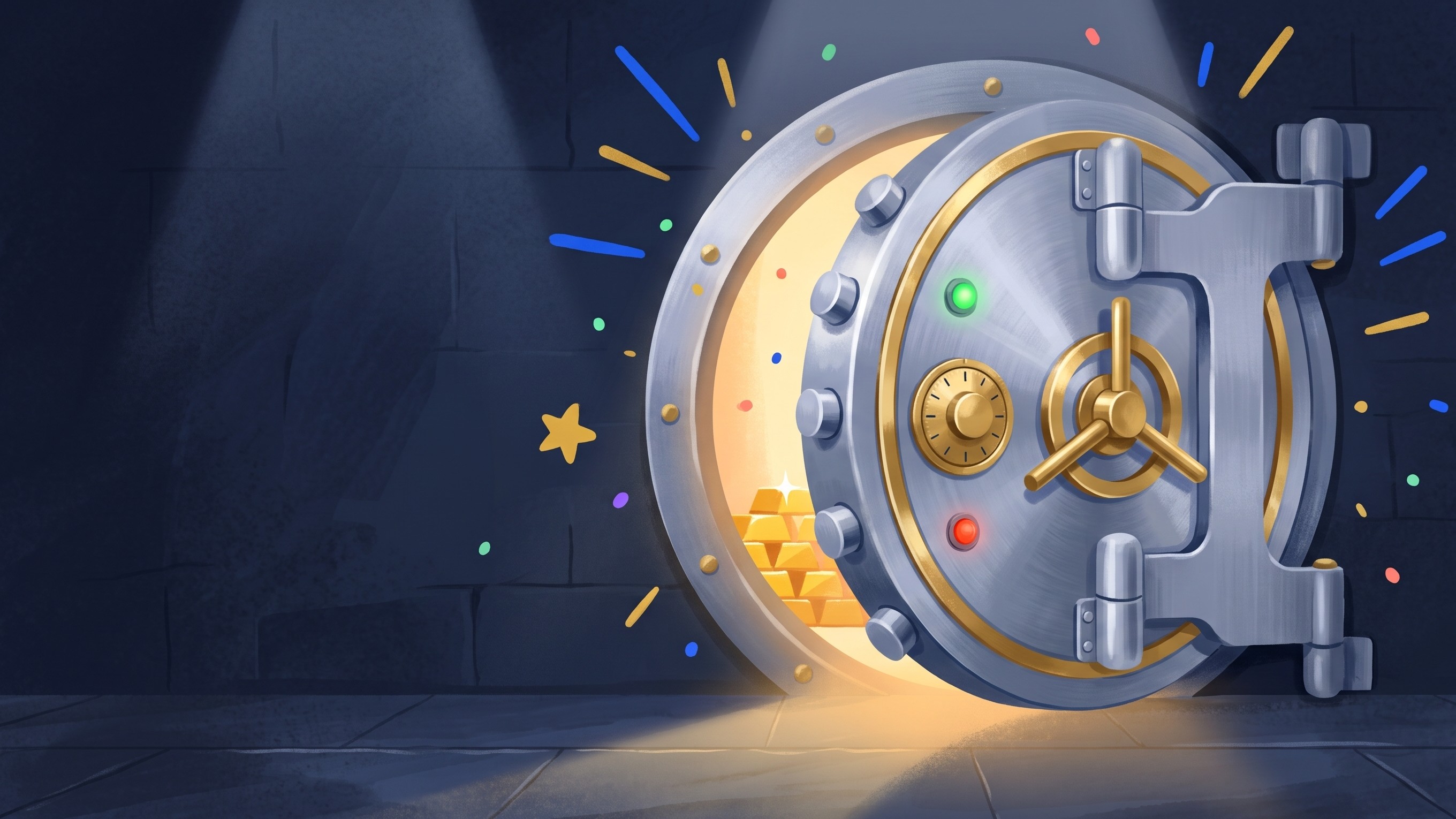
How the escape room game plays
Players scan the code on the big screen and land in the lobby, where every phone can warm up on a practice dial. Any number can join, from one player to a hall.
Press Start and the game deals the room into crews of about four, by seat. Each phone shows its crew's colour and its crewmates, and the big screen lists every crew. Crews take the gem names Ruby, Amber, Citrine, Jade, Topaz, Sapphire, Amethyst and Rose, with numbers added past eight crews.
The crews have fifteen seconds to find each other and sit together. Then the heist starts on its own, or sooner if you press Start the heist.
Every crew gets the same kinds of lock: three to five of them, one after another. The combination dial on the door is always the last.
Every phone holds one piece of the lock
Each lock splits across the crew. One phone works the lock: it holds the symbol plates, the keypad, the letter rings or the dial. The other phones hold what the lock needs, such as the clue, the cipher wheel or half of a display.
The lock phone reads "You work the lock." Every other phone says "Only you can see this. Read it out to your crew." No phone ever holds the lock and its clues together, unless it's the only phone the crew has left.

The lock passes round the crew from one lock to the next, so a different phone works each one. A strip on every phone shows who holds what, so nobody has to ask.
The four locks, from the symbol plates to the combination dial
Every lock is a fresh puzzle, made for each crew as it reaches it. In the bank heist, the four are these:
- The symbol plates. The lock phone has eight plates of symbols. Crewmates hold a colour chart that pairs symbols with colours, two of them decoys, and the order card, a list of colours. Read together, they tell the crew which plates to press, in order.
- The alarm keypad. The code is four digits. One phone shows the top half of each digit and another shows the bottom half, and every digit is picked so that half of it could be another digit. The two have to describe their halves to each other.
- The letter rings. The answer is a four-letter word, such as GOLD or LOOT. One phone holds a cipher wheel with letters on an inner ring, and the clue says where the wheel's red gem must point. Turn it there, and each symbol on the clue sits beside one letter.
- The combination dial. The same cipher wheel, with numbers on the ring. It gives three numbers for the dial on the vault door.
With three locks, the vault skips the letter rings. With five, a second set of plates comes fourth and takes five symbols.
Hints, wrong codes and stuck crews
Any phone in the crew can ask for a hint, and the phone checks first. The first hint says where to start. Each one after it gives one value of the code, so a crew that takes every hint can always open the lock.
By default a hint adds 30 seconds to the crew's time. Set A hint costs anywhere from free to two minutes.
A wrong code jams the lock for a few seconds and clears what was entered. The big screen shows it on that crew's door.
A crew stuck on one lock for three minutes has it opened for them, at the price of two hints or a minute, whichever is more. Change that with Open a stuck lock by itself, or choose Only when I press it. Once a crew has spent 90 seconds on a lock, Open stuck locks appears on your panel.
Crews race on the big screen
With one crew, the big screen shows its door, its clock and every lock beside it. With more, every crew gets a door, and its locks light up one by one as they open. A race bar shows how far each crew has got.

A big room still fits. Past eight crews, the big screen shows the four leaders' doors and a wall of small vaults for everyone else. The race bar then counts how many crews are working on each lock.
The race ends when every crew is through or time runs out. If a crew got through, its door swings open, and the standings rank every crew by its time, with hints included. A crew that didn't finish ranks by the locks it opened.

Three vaults: bank heist, ancient tomb and space station
On the create form, The vault picks the story, the symbols and the look of every door. In the ancient tomb, the locks become the carved stones, the number tablet, the scroll rings and the stone dial. On the space station, they're the glyph panel, the hatch keypad, the code rings and the airlock dial.
Each theme has its own words for the letter rings. The tomb has words like NILE and SAND, and the space station has words like NOVA and MOON.
The quick starts cover the usual rooms: Bank heist, Ancient tomb, Space station, Ten-minute break, and Free hints, quick help. Ten-minute break plays three locks in ten minutes. Free hints, quick help makes hints free and opens a stuck lock after two minutes.
Escape room games for groups of any size
Players in a crew sets crews of three to six, with four by default. A small room plays as one crew against the clock. No crew has more than six players, and none has fewer than three unless the room is that small.
Locks on each vault runs from three to five. Three takes about eight minutes and five about fifteen. Time limit runs from 5 to 30 minutes, with 15 by default.
A player who arrives late joins the smallest crew. If a phone drops out, its piece moves at once to a crewmate, and it comes back when the phone rejoins.
For a work team, the article on escape room team building covers how to run it and what to talk about after. For puzzles to make yourself, see escape room ideas.
What the host does
A few buttons on your panel run the heist:
- Start deals the crews once a player is in, and Deal new crews shuffles them.
- Start the heist begins the race before the fifteen seconds are up.
- Open stuck locks opens the lock for every crew that's been stuck on one.
- Add 5 minutes gives every crew more time.
- End the heist stops the race at once and shows the standings.
- Finish closes the room.
The results stay on the big screen for two minutes, or until you press Finish. The report afterwards counts the crews, the vaults cracked, the hints taken and the wrong codes that jammed a lock, and shows how long each lock took on average.
In a classroom room
A classroom room sends no names, and Escape Room needs none. Crew lists show seat numbers in place of names, and players find their crew by its colour. Nobody types anything: every answer is a tap, a turn or a press.
The locks are logic puzzles, the same for every class, so they practise talking and listening rather than a subject. The guide to a classroom escape room covers building one around your own lesson.
FAQ
Escape Room, explained
What is an escape room game?
A team puzzle game against the clock. Players find clues and solve puzzles to open a series of locks. In Escape Room, each crew's clues are split across its phones, so it has to talk to get through.
How long does the escape room game take?
Three locks take about eight minutes and five about fifteen. Set the time limit from 5 to 30 minutes, and press Add 5 minutes if the crews need longer.
How many players can play?
Any number, from one player to a hall, within your plan's limit. The game deals crews of three to six, four by default, and a small room plays as one crew.
Do players need an app?
No. Everyone joins with a QR code, with no app to install.
Can we play the escape room game on a video call?
Yes. Share the big screen on the call, and players scan the code on it with their phones. Up to five players make one crew by default, or six with Players in a crew set to 6. For more, put each crew in its own breakout room, because crews solve by talking.
What happens if a crew gets stuck?
Any phone can take a hint, which adds time to the crew's clock. After three minutes on one lock, the lock opens by itself for the price of two hints or a minute. You can also press Open stuck locks.